Wirecard Scandal - Fresh Leads Point to a Gambling Kingpin
Wirecard Scandal Fresh Leads Point to a Gambling Kingpin Stand: 25.11.2025 • 07:54 Uhr
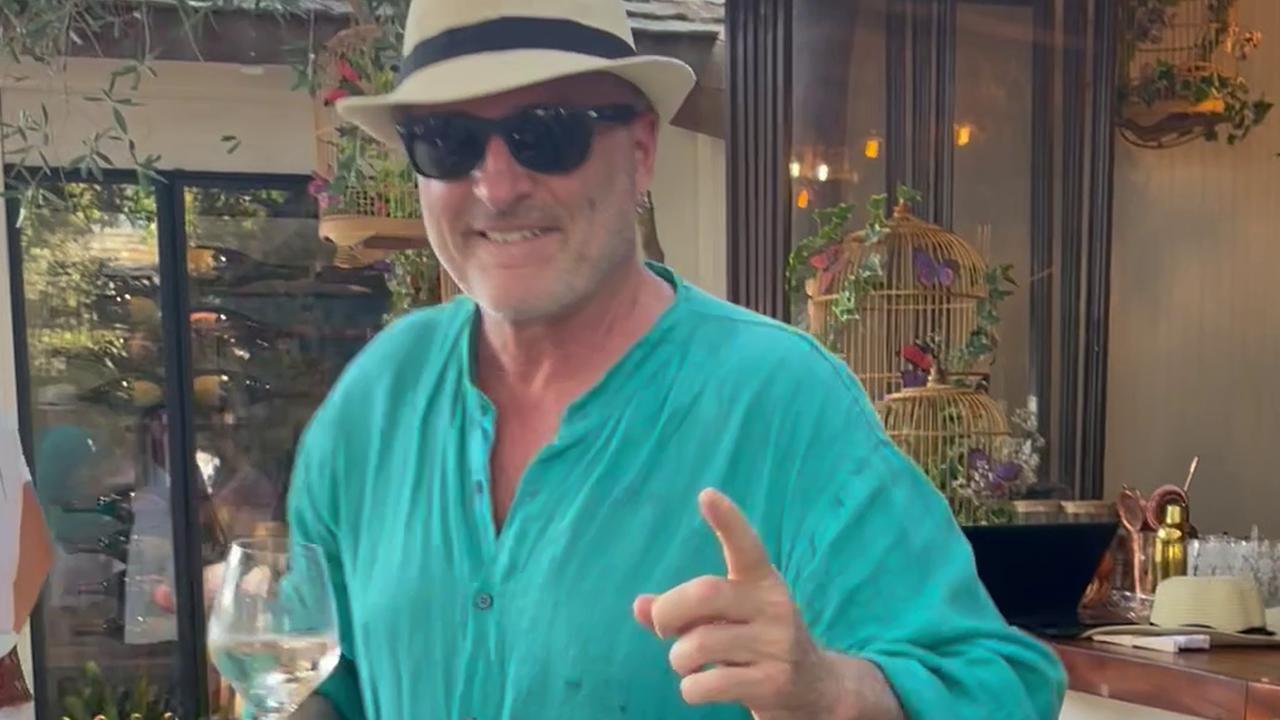
Hundreds of millions of euros flowing through accounts at Wirecard Bank: Reporting by BR has revealed that much of that money belongs to Calvin Ayre, an online gambling tycoon who lives in Antigua.
It is the biggest financial scandal in the history of postwar Germany: In June 2020, the payment service provider Wirecard collapsed because 1.9 billion euros could no longer be located. Investors were hit hard, losing more than 20 billion euros. For the past three years, former Wirecard CEO Markus Braun and two former company executives have been standing trial at the Munich I Regional Court, charged with conspiracy to commit fraud, among other violations.
After 230 days of trial, there is no longer any doubt: The 1.9 billion euros purportedly held in trust accounts in Singapore and in the Philippines resulting from, according to Wirecard, business dealings with so-called third-party partners never actually existed. "At this point, we can no longer dispute that. It’s incontrovertible," admits Theres Kraußlach, Braun's defense attorney.
But what about the hundreds of millions of euros that flowed through accounts held by foreign third-party partners at Wirecard Bank? These third-party acquirers were responsible for processing payments primarily in Asia. In 2022, Bayerische Rundfunk (BR) published initial reporting on this issue. In total, around 2 billion euros are thought to have been paid into these companies’ accounts, as calculated by Braun's lawyers. He claims this money belonged to Wirecard. But a criminal network surrounding fugitive former Wirecard manager Jan Marsalek embezzled the money, he says.
For many years, reporters from BR Recherche, BR’s investigative unit, have been following the money trail. In 2022, they discovered emails from Marsalek that included Excel files listing all transfers made through Wirecard Bank in 2018 – around 500.000 transactions. An analysis of this data shows that shell companies in Prague, the Montenegrin city of Podgorica and elsewhere in the world transferred multi-million-dollar sums to the alleged Wirecard third-party acquirers companies. Wirecard was a "collection point for these funds, from illegal gambling for example," an insider explains regarding these transfers. He has asked to remain anonymous.
Over the past few years, our reporters have reviewed additional account documents and records, spoken with numerous corporate insiders and consulted with experts both in Germany and abroad. This has made it possible to identify to whom large portions of the funds in the accounts at Wirecard Bank belong: namely to Calvin Ayre, a flamboyant gambling entrepreneur and Bitcoin investor from Canada who has lived in Antigua for many years. The links to him, however, are far from straightforward. The deposits and withdrawals at Wirecard Bank run through complex corporate structures and, in most cases, several different countries.
Ayre, the son of a Canadian pig farmer, became a billionaire through online gambling. In a 2007 film by German public broadcaster ARD, Ayre can be seen posing at the railing of a yacht, several women in skimpy bikinis in his arms – and riding a Harley through the living room of his luxurious villa in Costa Rica. At the time, Ayre was in the process of relocating his business to Antigua. The gambling billionaire made no secret of his contacts with political decision-makers on the sunny Caribbean island: "We are already the largest private employer in the entire country, and that gives us a lot of political influence as well."
Elsewhere, he had considerably less influence: In 2012, U.S. authorities indicted Ayre and three employees for illegal gambling and money laundering and seized $66 million in gambling stakes from accounts belonging to his gambling platform Bodog.
For a time, Ayre was on the U.S. Immigration and Customs Enforcement's "Most Wanted List." In 2017, he cut a deal with the U.S. judiciary: He pled guilty to a single charge and paid a fine of $500,000. The $66 million, though, was not returned.
The account data from Wirecard Bank shows that around 135 million euros flowed to Antigua via accounts allegedly held by third-party acquirers at Wirecard Bank. The recipients of that money are nine companies, most of them headquartered in a property known as Fitzgerald House, located at 44 Church Street in St. Johns. Only two of these firms are registered in Antigua's company registry – and those registrations only exist since 2020.
The law and notary firm Cort & Cort is likewise based in Fitzgerald House. It’s run by Errol Cort, Antigua's former finance minister. In an email, Ayre described Cort as his "lawyer and best friend." That email was sent to Christen Ager-Hanssen, an entrepreneur and investor from Norway who worked for Ayre in a key position for almost a year. In an interview with BR’s political magazine report München, he spoke for the first time about the connections between Ayre and Wirecard.
The insider confirmed that the companies headquartered at 44 Church Street in St. Johns, Antigua can be attributed to the gambling mogul Ayre: "His problem was that he has a lot of money at his disposal, has enormous cash flow, but has to forward it without ever acting in his own name. This takes place through various structures. One of these structures involves Antigua's former finance minister, Errol Cort."Ayre needed Wirecard just as Wirecard needed him, Christen Ager-Hanssen said. He believes that without the payment service provider, the gambling mogul's business would not have been possible.
Christen Ager-Hanssen became CEO of the technology company nChain at the end of 2022. "I was hired by owner Ayre as group CEO at nChain, which at the time was considered one of the most innovative companies in the world," “”, he says. In August 2023, Ayre allegedly invested $570 million in the company. Shortly thereafter, Ager-Hanssen quit his job because he had uncovered the "biggest scam in history," as he calls it today.
In a whistleblower report (known as the “Fairway Brief"), Ager-Hanssen described a conspiracy operating under the umbrella of nChain. Accordingly, Ayre had provided significant assistance to Australian computer expert Craig Wright, then chief scientist at nChain, in his efforts to present himself publicly as Satoshi Nakamoto.
Craig Wright has been publicly claiming since 2016 that he is Satoshi Nakamoto, the inventor of the digital currency Bitcoin and blockchain technology. Satoshi Nakamoto, who owns 1.1 million Bitcoins currently worth more than 80 billion euros, has been missing without a trace for about 15 years.
Ager-Hanssen says that Ayre and Wright had been planning to establish their own Bitcoin version and collect license payments from other Bitcoin currencies. Such an arrangement would likely have made Ayre and Australian IT specialist Wright the richest people in the world. Last year, however, a London court clearly determined that Wright's story was completely fabricated.
According to account records, large sums of money flowed not only to Antigua, where Ayre still resides today. The transfer data also includes companies directly connected to Ayre's online gambling businesses. A software company from Spain called RGT, for example, received 6.6 million euros. Furthermore, a company called Tyche Consultingfrom Manila received almost 8 million euros back in 2014. Later, Wright, the man who claimed to be the Bitcoin inventor, worked temporarily at the Tyche Consulting subsidiary in London.
Vast sums of money also flowed from Wirecard Bank to Hong Kong, primarily to the company Pittodrie Finance Limited. According to BR's calculations based on available documents, the total amounts to over 177 million euros. BR reporting has found that this money also belongs to Ayre and does not come from Wirecard's third-party acquirers, as former Wirecard CEO Braun claimed.
Pittodrie Finance Limited is an investment vehicle of the Monterosa Group from Zurich, which managed the assets. The transfer trail leads to the Zurich asset manager Fairway Family Office. According to Ager-Hanssen, that is where the "mastermind" behind Ayre's financial dealings operates. When asked for an explanation of the money flow, the company stated that the processing of bank payments is "part of their usual business activities." The company declined to comment on specific questions.
"Calvin was known for having built one of the biggest gambling companies in history. And a lot of money flowed through this system. Those flows started running through Wirecard. He was the man behind Wirecard. He is the big fish.” Ager-Hanssen said in describing his role. Transfers also went to Ayre himself. The account documents note that money was transferred multiple times to a "Calvin Wilson" residing in the Philippines. BR reporting has found that Ayre used this name as an alias.
A clue to this financial architecture comes from Jan Marsalek of all people: In July 2023, a good six months after the trial began, the fugitive Wirecard manager contacted the Munich I Regional Court through his lawyer in an eight-page letter.
It states, among other things, that "de facto a single customer" had stood behind the alleged third-party partner business, and he – Marsalek – had "restructured a Canadian customer's corporate legal structures." Marsalek's lawyer did not comment on this matter when approached by BR.
Wirecard thus enabled Ayre to funnel payments through alleged third-party partner accounts. Did Wirecard also profit from these money flows? In fact, transfers to third-party partner accounts at Wirecard Bank served the auditors from EY as evidence of an existing Wirecard third-party partner business. The scandal-ridden corporation was thus able to conceal that these businesses were completely fabricated.
The secret "Wambach Report," compiled for the Wirecard investigative committee in the German Bundestag, notes that the auditors had obtained account statements from Wirecard Bank – as proof "of payment receipts at Wirecard that are attributed to the TPA business." When approached by BR, EY stated that the auditors had "in the described context, adhered to applicable professional standards."
The Munich I Public Prosecutor's Office is making "no further statements due to the ongoing trial" on these issues. In an interview with BR, Braun's attorney Kraußlach emphasized that her client knew nothing about these processes. "He himself has essentially become a victim of a crime."
Both Calvin Ayre and Antigua's former finance minister Cort ignored queries sent to them by BR to multiple email addresses. Ayre likewise failed to respond to multiple calls and text messages.
Report München also did not receive a filming permit for Antigua. The "media commissioner" responsible said in a phone call that an official invitation from him would be necessary for an interview with Ayre. Antigua, he said, wants to be portrayed positively in the media.