Why the world should care about these U.S. midterms

Global power is in flux. Your daily guide to what comes next.
Welcome to POLITICO Forecast. This is Jack Blanchard, mesmerized as always by the special blend of bloody political warfare and gruesome fancy dress that dominates the pre-election weekend in America.
And nowhere better was it on show than at Mar-A-Lago last night, where (as the NYT details) wealthy guests in fabulous Halloween costumes dined on caviar and Alaskan king crab at a jungle-themed party. “Look at all my rich members,” the club’s owner, President Donald Trump, proudly told reporters, three days before midterm elections where the high cost of living is voters’ chief concern.
Still, they couldn’t complain he was overdressed. “I came as Donald Trump,” the president explained, referencing his trademark suit and red tie. “[Some of the guests] spent nine hours getting ready. I had 10 minutes — so I came as Donald Trump.” Happy Halloween!
— Russia bombed Ukrainian power plants and Ukraine targeted Russian oil refineries as the energy war between the two sides intensified.
— A bitter feud erupted between rival Democrats in the battleground state of Michigan, two days before the U.S. midterm elections.
— Massive cost-of-living protests swept France, Germany and other European countries for the third week in a row.
— Canadian Prime Minister Mark Carney told POLITICO he’s prepared to wait for a new U.S. president if he cannot cut a suitable trade deal with Trump.
— A U.S. federal judge threw out President Trump’s lawsuit against the Wall Street Journal over its reporting of his bawdy birthday note to Jeffrey Epstein.
U.S. President Donald Trump speaks at a midterm campaign rally in Rock Hill, South Carolina on Oct. 29, 2026. | Andrew Harnik/Getty Images
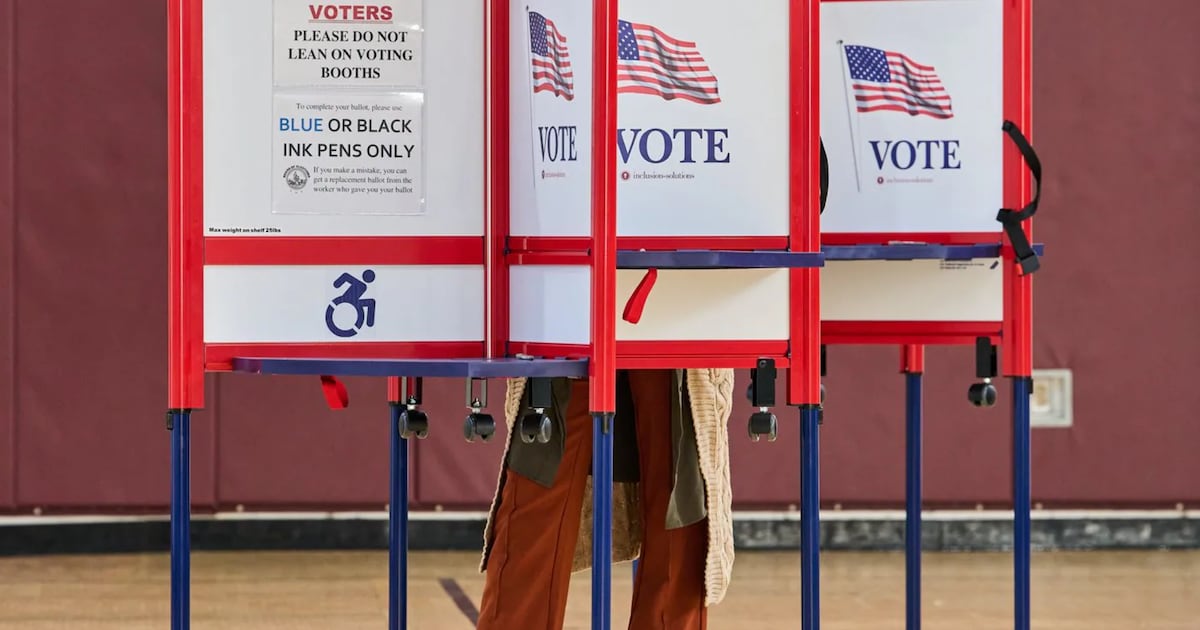
HAPPY ELECTION EVE EVE: America goes to the polls this week for midterm Congressional elections, and it’s time for the whole world to tune in.
Of course: Donald Trump will remain U.S. president for two more years and 11 more weeks beyond Tuesday’s vote, health permitting — but these elections will frame how his final period in power. Today’s Forecast sets out eight big reasons why the whole world should care about how a seismic week in U.S. politics plays out.
1. A REFERENDUM ON TRUMP: Determined to boost turnout among his supporters, the president has repeatedly asked Americans to pretend he’s on the ballot on Nov. 3. Expect critics to use that statement in the aftermath to hang Republican losses around his neck.
Trump still boasts almost daily about the size of his 2024 election victory. A seismic Republican defeat on Tuesday should in theory start to eat away at his political authority, given the salience of his war in Iran as an election issue — and especially as the clock ticks down toward the end of his term.
The unknown question is how far and how fast that process plays out, especially in Republican circles. As Forecast editor Charlie Mahtesian never tires of telling me, observers have been anticipating a Republican backlash against Trump for a decade. Ten years on, we’re still waiting.
2. REPUBLICANS CONSTRAINED: The Republican Party’s knife-edge majority in the House of Representatives has made for fractious negotiations in Washington — but it was still sufficient for Speaker Mike Johnson to chart one major piece of legislation through Congress, delivering tax cuts and a huge funding boost for immigration enforcement. If Democrats win back one or both chambers on Tuesday, it marks the death knell for the GOP’s legislative agenda.
But we also know this: Trump has shown he’s prepared to push what presidential powers he has to their absolute limits — and still holds near-total control over U.S. foreign policy. Diplomats from more liberally-minded foreign capitals say their chief concern is that Trump will be more inclined to throw his weight around on the world stage as he becomes more constrained at home.
3. DEMOCRATS UNLEASHED: Winning back one or both branches of Congress would give Dems control of powerful Congressional committees — and they’ve already made clear that a flurry of investigations would follow. The Dems have a long list of targets, ranging from Trump’s financial interests to the way he and Elon Musk tore through the federal government last year.
Of course: Trump and his allies are unlikely to be constructive witnesses, to say the least. But two years of bitter warfare with Democratic-led committees will suck up at least some of the president’s energy and attention.
4. AND IT MIGHT START WITH IRAN: “The most immediate impact globally of a sweeping Democratic victory Tuesday would be over the fate of Defense Secretary Pete Hegseth and the Iran war,” POLITICO’s Jonathan Martintells Forecast. “The last time a wartime GOP president suffered catastrophic midterm defeat was in 2006 — and then-President Bush immediately sacked his Pentagon chief, Donald Rumsfeld.
“If President Trump doesn’t fire Hegseth he may have a mess on his hands. Congressional Democrats have made clear they’re open to impeaching the Defense secretary, an inquiry that could become a de facto referendum on the war. That would serve, at very least, as a distraction as Trump considers restarting hostilities or pursuing a peace deal in the months ahead.
“More broadly, Democrats taking control of Congress would hand them the power of the purse. All federal spending comes from the legislative branch and that gives them a measure of control over not just the war, but all military spending and foreign aid. Past American conflicts effectively ended when Congress stopped funding the operations.”
But here’s a final thought: “There’s what Rumsfeld himself would call ‘the known unknowns and the unknown unknowns.’ Namely, how does a politically humiliated Trump act in defeat? He’s predictably unpredictable on the world stage. That’s the known unknown. But the unknown unknown about what lays ahead is humbling — and not a little unnerving.”
5. AND WHAT ABOUT UKRAINE? If Democrats take control of both branches of Congress they may try to push through new U.S. financial support for Ukraine, POLITICO’s global security reporter Paul McLeary reckons. “If they have Congress, they have the power of the purse. They could attempt to double or triple financial support if they wanted.”
The issue would be the presidential veto. “It’s hard to say if they’d have the numbers to get it into the annual budget,” Paul goes on. “There are Republicans in Congress who want to offer more support to Ukraine. We could well see that struggle for numbers playing out. We may even see Dems cutting a deal with Trump – offering money for his own defense projects if he signs off on money for Ukraine.”
What we most certainly would see, Paul adds, is much-increased scrutiny of the administration’s actions.”They can make life uncomfortable. They can pressure the administration, with investigations into the slowdown of weapons; into Trump’s games of footsie with Vladimir Putin. But they would not be able to make him fundamentally change course.”
6. AI SAFETY ON THE AGENDA: One domestic U.S. issue above all others is going to resonate around the world in the years ahead. “The future of global AI governance will start in these midterms,” POLITICO Decoded’s Calder McHugh tells Forecast. “How far voters are making their decision based on AI as an issue is up for debate; what’s not is that the new Congress will immediately be charged with trying to figure out how to keep America’s frontier AI models safe.”
Remember: Democrats are much more enthusiastic about AI regulation than their Republican counterparts, with a few notable exceptions. But as president, Trump holds veto power over legislation that does not have two-thirds support in the Senate — a threshold Dems are unlikely to be able to reach.
Which means it might be time to compromise. Trump told Fox News this weekend he is ready to become “Mr. Veto” if Democrats take control of both chambers. But he added: “At some point, we’ll probably make deals.” So what might an AI compromise look like? “The only thing that Trump might actually want that’s on the table is a bill that does some safety stuff while preempting state legislation,” Calder predicts. Expect the detail around that to be a key legislative struggle of the next Congress.
7. AND THEN THERE’S THE DATA CENTERS: It’s not just congressional seats up for grabs in Tuesday’s elections, but 36 governors’ mansions too. And these state leaders will play a key part in the rollout — or otherwise — of the AI infrastructure that much of the world will be using in the years ahead.
Remember: Data centers have become a proxy battleground for the broader political conversation around AI, and local leaders across America have grown far more cautious in supporting new projects as voter concerns have grown. A wave of Democratic victories in Tuesday’s gubernatorial elections could slow the rollout of this infrastructure — and so in turn slow the growth of the entire industry.
8. GET READY FOR TARIFF WARS: POLITICO’s economics columnist Victoria Guida tells Forecast she expects to see Democratic “pushback” on Trump’s tariff regime if the party regains control of Congress — though just how meaningful that proves to be is uncertain. “Congress has the constitutional authority to impose import taxes on goods,” she says, “and Democratic majorities in both chambers could constrain Trump’s tariff powers through oversight and funding bills.”
“But Dems are highly unlikely to achieve the margins necessary to roll them back entirely,” Vic notes. And the White House has already shown it is prepared to be highly imaginative in its use of presidential powers. Reuters reports that key Trump operatives like White House policy chief Stephen Miller are already considering how to flex the president’s constitutional muscles to stay one step ahead on tariffs.
ON YOUR MARKS: Tuesday’s midterm elections will also sound the starting gun for the 2028 U.S. presidential race.
And that means the civil war that’s bubbled beneath the surface of the Democratic Party these past two years will come bursting to the fore.
Excitingly, we don’t even need to wait until Tuesday night to see the internecine warfare playing out. Look no further than the battleground state of Michigan, where Dem Senate candidate Abdul El-Sayed is the progressive wing’s great hope of the current cycle. As Forecast has previously noted, a big win for al-Sayed on Tuesday would give leftist Democrats enormous succor as they try to secure the ultimate prize — a progressive candidate on the presidential ballot in 2028.
The primary battle that played out in Michigan earlier this year between El-Sayed and two much more moderate opponents, House Rep. Haley Stevens and state Sen. Mallory McMorrow, was already one of the most bitter of recent times. Stevens’ allies have sniped at El-Sayed for some time, and POLITICO scooped Friday that El-Sayed had told her to stay away from his closing events.
Today things got really ugly — with Stevens publicly endorsing El-Sayed’s Republican opponent, a man she had previously branded “MAGA Mike Rogers.” “Abdul said that I was no longer welcome in his campaign and that I should stay away. And he’s right,” Stevens said in a video posted to social media. “And that’s why I am endorsing Mike Rogers for the United States Senate today.”
Republicans are predictably gleeful, with President Trump himself firing off a Truth Social message within minutes of the shock endorsement, showering praise on the “respected” Stevens’ decision. Dems are in disarray, with Stevens’ long-serving staff quitting en masse and some Congressional colleagues discussing throwing her out of their caucus.
Whether her 11th-hour flip-flop is enough to actually swing the state back toward the Republicans remains to be seen, given the political headwinds. But as a sneak preview of the depth of bitterness between rival progressive and moderate camps within the Democratic Party as we head toward 2028, it will surely take some beating.
“No, I’m going to accept the election results.” — U.S. Republican Sen. Dan Sullivan of Alaska says he will not cry foul if he’s defeated by his Democratic opponent, despite the bitter row over the presence of another Dan Sullivan on the ballot.
British Prime Minister Andy Burnham pictured at 10 Downing Street on Oct. 21, 2026 in London. | Alastair Grant/WPA Pool/Getty Images
Not content with opening one Pandora’s Box in British politics, new Prime Minister Andy Burnham is reaching for another.
Having just restarted the Brexit debate that dominated U.K. politics for much of the past decade, Burnham this weekend waded into a hotly-contested and long-simmering row with Britain’s Commonwealth allies over the nation’s slave-trading past.
Burnham will join King Charles III this week on the Caribbean island of Antigua for the Commonwealth Heads of Government Meeting. And this weekend, ahead of the trip, he broke with decades of tradition among British leaders by saying he was open to discussing a formal apology for the centuries of abuse committed by U.K. slave traders.
“We led the world in abolishing slavery — and we can show leadership again today,” Burnham wrote in the Guardian. While dismissing campaigners’ calls for the U.K. to pay financial reparations, he suggested he would be open to restructuring debt for the poorest Commonwealth countries, helping them repay debt over a longer period and with better interest rates.
The political reaction back in the U.K. has been divided, with progressives and liberals supporting Burnham’s intervention and conservative opponents bitterly opposed. It’s unclear exactly how the debate will now play out — but as with Burnham’s determination to put Brexit back on the agenda, the debate shows Britain now has a prime minister who actively embraces controversy.
After 55 years in the game, Bob Woodward — one of the reporters responsible for breaking the story of the 70s-era Watergate scandal that toppled then-U.S. president Richard Nixon — has once again gripped the attention of Washington’s chattering classes. His forthcoming memoir, the aptly-titled “Secrets,” unmasks a slew of sources who supplied Woodward with his groundbreaking scoops over the years.
There’s Brent Scowcroft and Lawrence Eagleburger, two top government officials who were sources for one of Woodward’s most famously-reported scenes: Nixon, deeply distraught, praying on his eve of his resignation. Then there’s Richard Darman, one of his closest sources — and friends — in the Ronald Reagan and George H.W. Bush administrations.
“The most celebrated source of my career was Mark Felt,” Woodward writes about his key Watergate informant in an excerpt, “the No. 2 man at the F.B.I. during the Nixon years, who died in 2008. I referred to him as Deep Throat. But if Felt was on one end of the source spectrum — a secret source for thirty-three years, who operated entirely in the shadows, deeply paranoid and careful about what information he provided me and how he did it — Darman was his opposite.”
Most of his unveiled sources are dead, Woodward explains in his manuscript; others have allowed him to name them, or have since become identifiable via public records. His revelations are enabling a peek behind the curtain at some of the most consequential reporting in American history, but Woodward’s decision to name names has also set off an ethical debate about how long a reporter’s promise of anonymity lasts — and whether it extends into death. See you tomorrow.
— Final day of campaigning in the U.S. midterm elections.
— President Trump to hold eve-of-elections speech at the Lincoln Memorial Reflecting Pool in Washington D.C.
— Tech giant Apple to release Q4 financial results.
SUBSCRIBE to the POLITICO newsletter family: Brussels Playbook | Brussels Playbook Capitals | London Playbook | London Playbook PM | Playbook Paris | Berlin Playbook | Madrid Playbook | Sunday Crunch | EU Influence | London Influence | D.C. Playbook | D.C. Influence | Decoded | Canada Playbook | POLITICO Forecast | Canberra Playbook | All our POLITICO Pro policy morning newsletters