Why China is giving its Arunachal claim fresh push on the ground
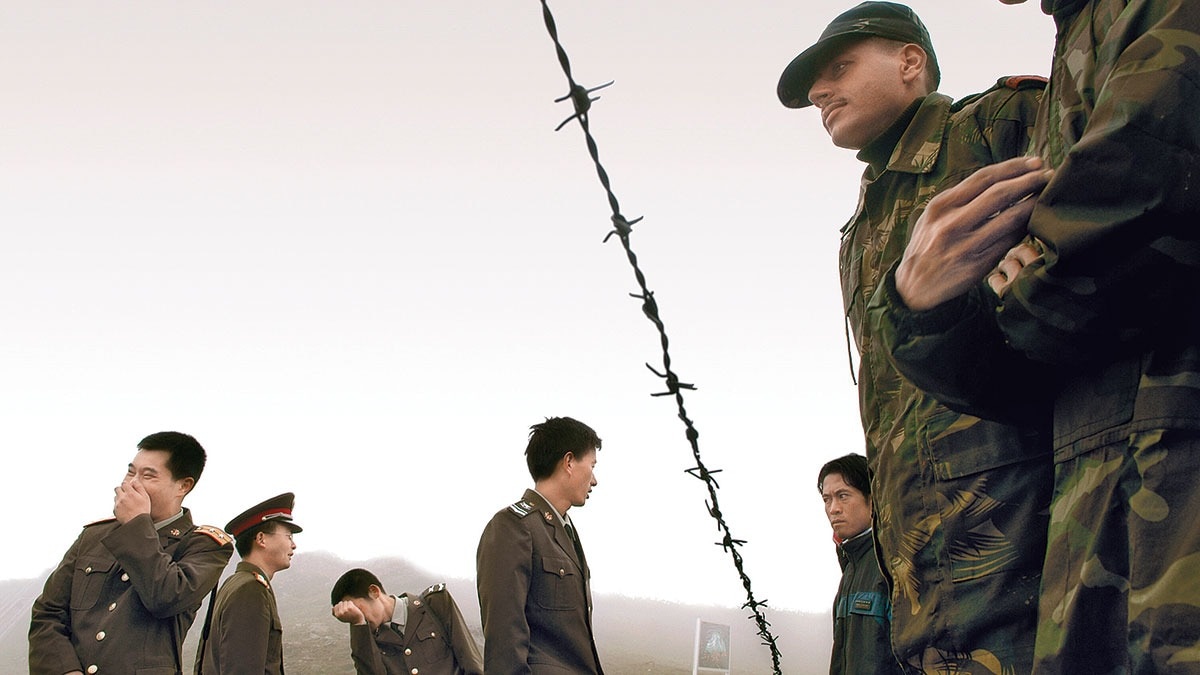
The first signs of a border shift do not always come from a military confrontation. Sometimes, they come from villagers noticing unfamiliar troops, from changes in military patrol patterns or from the growing sense that the situation on the ground is no longer the same.
Reports of increased Chinese military activity in parts of Arunachal Pradesh, particularly around Taksing and Asaphila, have raised precisely such concerns. If the local accounts are substantiated, India could be facing a challenge that goes beyond another routine face-off along the Line of Actual Control (LAC).
The timing is significant. India and China have made efforts to stabilise relations after years of tension since the 2020 Ladakh incursion by Chinese troops and the deadly Galwan Valley clash. Yet, experts say, a diplomatic thaw does not necessarily translate into a softer Chinese approach on the LAC.
Beijing may be willing to improve political ties while continuing to press its territorial claims on the ground. For China, keeping the contested border with India active could be a way of ensuring that normalisation of ties proceeds on its terms rather than allowing India to believe that the underlying dispute has eased.
According to military experts, the top rungs of China’s Central Military Commission (CMC), the supreme military leadership body of the Chinese Communist Party (CCP), has decided on aggressive patrolling in order to reassert its claim in Arunachal Pradesh and dispel any notion that Beijing has made a “gradual acceptance” of the ground situation, just like the case of Aksai Chin where the Indian military no longer conducts patrols.Military observers say a more worrying possibility is of China pursuing the familiar strategy of ‘salami slicing’, that is making incremental territorial advances that are difficult to reverse without risking a larger confrontation. “The objective need not be to seize territory outright. It could be to improve access, increase the frequency of patrols and gradually establish a stronger presence in areas that were previously difficult to reach,” said a key military official, cautioning that over time, such changes could alter the practical balance on the ground even when neither side formally changes its territorial position.
Various narratives help explain the timing of China’s current activities in Arunachal Pradesh. First, Beijing appears to be applying pressure during a period of thaw: Prime Minister Narendra Modi and Chinese president Xi Jinping met on September 12 during the BRICS Summit in New Delhi. A G20 interaction is likely in December. By keeping the border live, China seeks to ensure that any normalisation proceeds on its terms.
Infrastructure is central to this calculation. Reports of new roads linking Lhnz county with the Tsari region deserve close scrutiny because improved connectivity gives the People's Liberation Army (PLA) greater flexibility in deploying troops and sustaining operations in remote terrain. The strategic advantage lies not simply in the construction but what it enables. Whether these developments have actually restricted Indian patrol access, however, will need to be established through verifiable evidence.
There is also a political dimension to the growing tension. India has sought to reinforce its territorial claims through the renaming of places in Arunachal Pradesh and Ladakh, while China has repeatedly rejected India's position on Arunachal. Beijing's own naming exercises and administrative assertions serve a similar purpose: to reinforce its claims and challenge India's sovereignty narrative.
Experts say it is possible that recent Indian naming moves have contributed to Chinese calculations, but a direct link between these exercises and the reported military activity remains unproven. What is clear is that the contest extends beyond maps and diplomatic statements. Both sides understand that territorial claims are strengthened politically by the ability to maintain presence on the ground.
Tibet adds another layer to the picture. The question of the Dalai Lama's succession has the potential to become a major political confrontation between Beijing and the Tibetan religious establishment. Tawang, home to the historic Tawang monastery and associated with the birth of the sixth Dalai Lama, holds particular religious and strategic significance.
China has strong reasons to pay attention to the region as the Dalai Lama succession debate evolves. But this cannot explain every reported military movement along the eastern frontier. Taksing, for instance, lies far from Tawang, and activity there would need to be understood in the context of local military objectives, infrastructure and the broader territorial dispute. The succession question is an important part of the strategic backdrop but not a complete explanation for the developments across Arunachal.
Military experts pointed out that for India, the most important issue is whether Chinese activity has changed its ability to patrol areas it previously accessed. The comparison with Ladakh in 2020 is relevant, but must be made carefully. That crisis exposed how disagreements over patrol routes and competing perceptions of the LAC could escalate into a prolonged military standoff.
“If reports from Arunachal Pradesh point to a similar erosion of access, the implications would be serious. But evidence must establish where Indian patrols operated earlier, what has changed, and whether Indian personnel have actually been prevented from reaching those locations. Increased Chinese presence alone does not prove that India has lost ground,” said a military expert, adding that the best way to avoid face-offs in Arunachal Pradesh was to create ‘buffer zones’ similar to the ones done in Ladakh.
Another military official said that looking ahead, more face-offs could be expected through the winter in Taksing and Asaphila, and possibly even Yangtse. The December Modi-Xi meeting will serve as a test; observers should watch whether either side names Taksing or Shera-5 (patrolling point) in any official readout.
Opposition parties in India are likely to keep the “surrender to China” narrative alive while the Modi government counters that “fake videos” are doing the rounds. The real purported issue—lost patrolling points—risks being buried in this war of words. Over the longer term, the border thaw and the Dalai Lama succession have become linked, and when the succession occurs, the eastern sector is where its effects would be felt most sharply.
Besides incursions, Arunachal Pradesh is also in the news over the proposed 11,200 MW Siang Upper Multipurpose Project (SUMP), which has been facing stiff local resistance. The intelligence community has apprehensions about Beijing’s involvement in fuelling the agitation.
SUMP, a dam on the Siang river in Arunachal Pradesh’s Upper Siang, Siang and East Siang districts, has sparked intense controversy. Promoted by the Centre and state government as a strategic counter to China’s massive upstream dam on the Yarlung Tsangpo river in Tibet, the project aims to enhance India’s water security, regulate floods and generate power.
But local indigenous communities, primarily the Adi and Galo tribes, strongly oppose it, fearing submergence of around 27 villages, displacement of up to 150,000 people, loss of ancestral lands, livelihoods, cultural sites, and the river they revere as “Aane Siang” (Mother Siang). Protests by groups such as the Siang Indigenous Farmers’ Forum escalated this year, including bandhs and violence in Pasighat, with demands for halting pre-feasibility surveys without consent.
On November 2, Arunachal Pradesh chief minister Pema Khandu issued an open letter to the Adi community and assured no construction decision had been taken and none would proceed without public consultations and consent. Emphasising on dialogue and transparency, he clarified that only a pre-feasibility report was underway to assess viability, while acknowledging local concerns and the need to prepare for upstream Chinese impacts.
Deputy Editor with India Today magazine. Primarily reports on defence and strategic affairs. An old school journalist, who believes in plainspeak. A print journalist who has worked at several mainstream national newspapers and magazine. In over two decades of journalism journey, he has been breaking stories and shaking things up with his investigative reports. He enjoys tracking political upheavals in the country.