Westpac expects 11 per cent house price fall, posts $6.8 billion profit
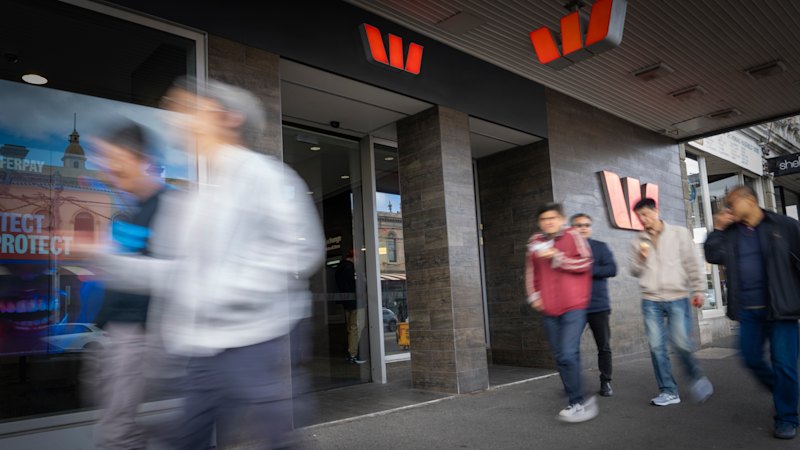
Westpac expects interest rates to remain “elevated” into 2027 and house prices to fall by nearly 11 per cent by March as it reported a $6.8 billion profit.
On Monday, the country’s oldest bank said the Australian economy was holding up “relatively well” on the back of strong business investment, but that price growth remained above the Reserve Bank’s target.
Westpac has posted a $6.8 billion profit.Eamon Gallagher“This is presenting challenges for many households and businesses, although impacts are uneven across the economy,” it said in an announcement to the ASX ahead of the next RBA meeting on Tuesday, when the bank is widely tipped to raise rates for the fifth time this year.
Westpac also said it expected house prices to fall by 10.9 per cent from March 2026 to March 2027. In September, house prices nationally were 5.2 per cent below the peak reached in March.
Westpac’s $6.8 billion profit in the year to September was down 1 per cent from the previous year.
The bank’s net interest margin – a key measure of profitability – fell by 3 percentage points to 1.86 per cent for the second half of 2026 as lending competition remained strong and more customer accounts qualified for savings bonus rates.
Westpac said it expected house prices to fall by 10.9 per cent.Sitthixay DitthavongThis was partly offset by stronger business and institutional lending, which grew 12 per cent and 18 per cent, respectively.
“Business investment has strengthened, supported by infrastructure, data centres and the energy transition,” Westpac chief executive Anthony Miller said in an analyst and media call following the latest results.
Despite cost of living pressures, the bank said the share of mortgage balances in hardship “remained low” at 0.6 per cent.
“In the space of six months, we’ve seen four rate rises, likely a fifth, we’ve had Hormuz, oil, Middle East conflicts, cost of living challenges ... so it does make sense that there would be a shift in hardships,” Miller said. “Hardship has picked up a little bit … but it feels incredibly proportionate and appropriate in the context of what has gone on.”
While there are several reasons people can enter into hardship, including divorce, injury, death or losing a job, Miller said the only one that had increased in the past 12 months was overcommitment.
“What’s driving that [overcommitment] is just how fast things have moved,” he said. “Three rate cuts, and then 12 months later, four rate rises.”
Westpac provided more than 42,000 tailored financial hardship assistance and disaster relief packages over the year, but said more than 60 per cent of assisted customers required less than three months of hardship support.
The bank said credit quality metrics “continue to reflect customer resilience” despite cost of living pressures and higher interest rates.
“We are cautious of the impacts of the ongoing Middle East conflict and higher rate environment, with the balance sheet provisions well-placed for potential deterioration,” Miller said. “The unemployment rate will continue to be the major determinant of mortgage asset quality.”
Westpac chief executive Anthony Miller.Peter RaeIn September, the unemployment rate hit 4.7 per cent, the highest level since October 2021 but below historical standards.
The bank said while consumer spending had slowed marginally, it remained at a “reasonable rate of growth” by historical standards and that businesses continue to show resilience.
Mortgage applications were 15 per cent lower in the fourth quarter than a year ago, but total applications remained above their five-year average.
The share of accounts held by customers ahead on their mortgage repayments – including offset account balances – remained steady at 86 per cent. Nearly four in ten customers are more than two years ahead on their repayments, about one in ten are on-time and only 1 per cent are behind on their repayments.
However, Westpac’s credit impairment provisions – money set aside for potential losses when borrowers fail to repay loans – increased to $5.2 billion with the bank citing “economic and geopolitical uncertainty” affecting energy-intensive sectors and discretionary spending.
UBS head of Australian bank research John Storey said Westpac’s results showed weaker revenue in the second half was offset by the bank’s cost discipline and lower than expected credit impairment charges.
“The result confirms competitive pressure remains material, with deposit competition combined with lending shaving 5 basis points off [the bank’s] core net interest margin,” he said.
The bank will pay a final dividend of 77 cents a share, taking the full-year dividend to $1.54, up 1 per cent from the previous year.
Shares in Westpac were trading mostly flat around midday after an initial jump following the latest results.
The Business Briefing newsletter delivers major stories, exclusive coverage and expert opinion. Sign up to get it every weekday morning.
You have reached your maximum number of saved items.
Remove items from your saved list to add more.
You've used all of your gift articles. 3 more will become available on the 1st of every month.