
Watching the U.S. Midterm Elections: Impact on Trumps Direction and Asia - Thairath English
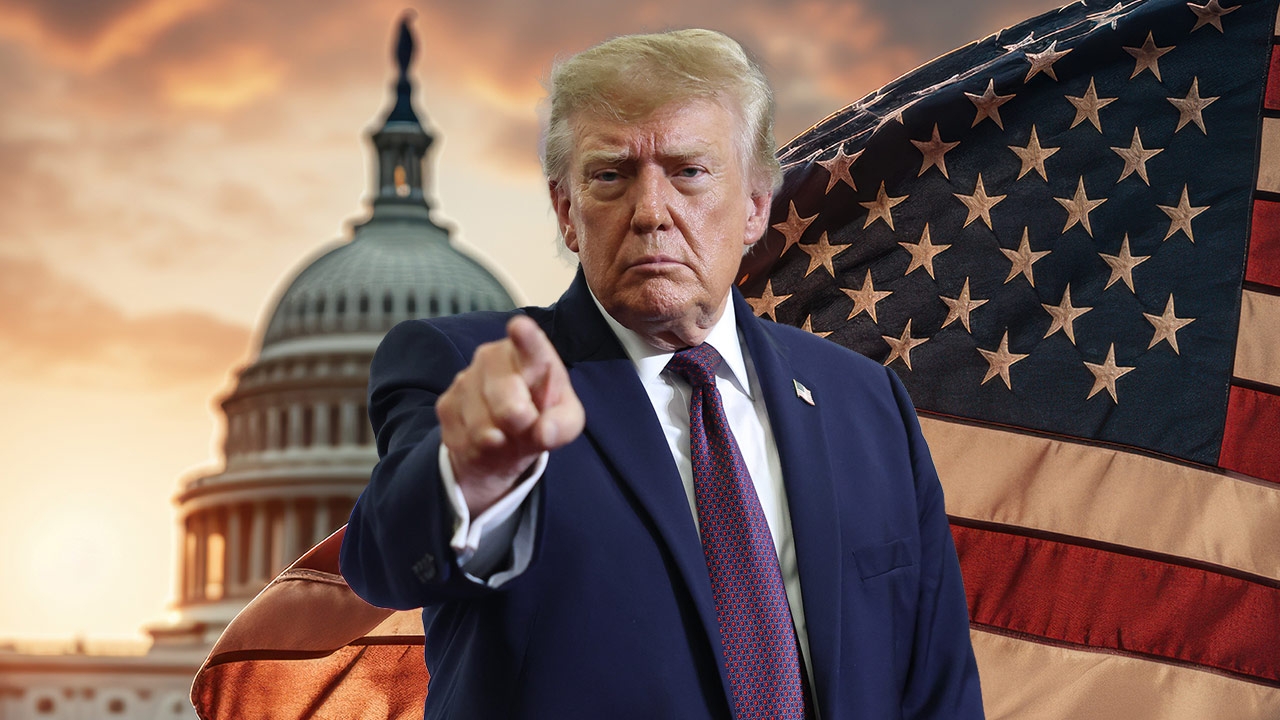
Get to know the U.S. midterm elections. Polls indicate Democrats may overturn to win control of the U.S. Congress, disrupting Trump’s direction for his final two years. Analysts assess impacts on the Asia-Pacific region, with foreign policy risks of severe volatility and continued efforts to control Chinese technology.
Today (3 Nov 2026) is the U.S. midterm election day, where Americans vote to elect members of the U.S. Congress: all 435 House representatives and one-third of the 100 Senators. These elections play a crucial role in shaping U.S. domestic and foreign policies and will affect all countries, including Thailand.
In the U.S., the president serves a 4-year term, House representatives serve 2-year terms, and Senators serve 6-year terms. Senate terms expire on a staggered basis by state, so every two years only one-third of the Senate seats are up for election along with all House seats.
Elections held in years without a presidential election are called midterm elections. This is because they occur halfway through the president’s 4-year term, where the president’s performance so far strongly influences election outcomes.
The U.S. House has 435 members representing 435 districts; each state’s number varies by population size. The Senate has two members per state, totaling 100 Senators.
In the major 2024 elections, the Republican Party won decisively across the board, with Donald Trump winning the presidency and the Republicans holding a majority in Congress: 218 House seats (Democrats 214, Independents 1, 2 vacant) and 53 Senate seats (Democrats 45, Independents 2).
Besides national elections, this cycle also includes state-level elections for legislative, executive, and judicial officials such as governors and state attorneys general.
Since the 1930s, the president’s party typically loses an average of 27 Congressional seats in midterms. Only twice did the president’s party gain seats: under Clinton in 1998 and Bush in 2002. During Trump’s first term, the 2018 midterms saw Republicans lose 41 House seats.
Currently, President Trump’s approval ratings have plummeted to near historic lows, mostly due to rising living costs, inflation, and the Iran war.
Charlie Cook, a U.S. political analyst and election expert, predicts Democrats will gain 5-30 House seats, enough to control the lower chamber for Trump’s remaining two years. However, flipping the Senate is more difficult and depends on tight races in certain states.
Meanwhile, many analysts caution that although a “Blue Wave” or Democratic victory is likely, Democrats face disadvantages from district boundaries and Republicans have greater campaign funding.
Although President Trump says he does not care about midterm results, if Democrats control either chamber, they can limit or block his policies, budgets, and legislation for the remaining two years, especially in the Senate, where Democrats could block high-level appointments, notably to the Supreme Court.
There is also a chance of initiating a third impeachment of Trump, though Democrats have signaled shifting focus to other government positions since impeachment without Senate support is unlikely.
Countries worldwide are closely watching the midterms, including Thailand and the Asia-Pacific region, which faces severe economic effects from the energy crisis caused by the Iran-U.S.-Israel conflict.
However, analysts believe that even if Democrats win Congress, they may not stop Trump’s policies regarding the Iran war.
Steven Okun, a trade expert and CEO of APAC Advisors in Singapore, says a Democratic Congress might only be able to conduct investigations or, at most, impeach the Defense Secretary, but this would not change the overall impact of the war.
Under U.S. constitutional law, Congress has authority to declare war, but Trump claims attacks on Iran were self-defense and has so far ignored Congressional resolutions ordering U.S. troop withdrawal.
Also, even if a Democratic-controlled Congress passes laws limiting military actions or budgets, Trump can veto them. Overriding a veto requires two-thirds votes in both chambers, which Democrats likely lack.
Regarding the trade war and tariffs, analysts expect little change. Congress has limited ability to block Trump’s trade policies, so midterms likely won’t affect U.S. trade policy.
In 2025, Trump shocked the world by imposing reciprocal tariffs ranging from 10-50%, initially hitting Thailand first at 36%, later reduced to 19% after negotiations.
However, the U.S. Supreme Court struck down these tariffs in February. Trump’s administration then applied 10% and 12.5% tariffs on goods from 60 countries accused of failing to stop forced labor imports, including China, Japan, South Korea, and seven Southeast Asian countries: Cambodia, Indonesia, Malaysia, Philippines, Singapore, Vietnam, and Thailand.
Some analysts see potential opportunities, as Stephen Olson, a visiting researcher at ISEAS-Yusof Ishak Institute, believes that if midterm results strongly rebuke Trump, free trade supporters in the Republican Party may oppose his policies.
This offers a small hope for ASEAN countries dependent on U.S. trade that Congress might push for exemptions or special measures to ease impacts on regional exporters, though policy changes may await the 2028 presidential election.
Meanwhile, Joshua Kurlantzick, a senior researcher on Southeast and South Asia at the Council on Foreign Relations, says the Asia-Pacific region cares more about “security” than trade and tariffs, including stable trade and tax policies and the U.S. role in regional conflicts involving China's territorial claims in the South China Sea affecting Taiwan and five ASEAN countries.
The clearest and most decisive expected change after the election is U.S. policy on restricting Chinese technology. Analysts believe that whether Democrats or Republicans control Congress, the new legislature will pass strict laws to regulate technology exports to China, as both parties agree on confronting China technologically.
Key expected bills include the Remote Access Security Act, which expands export controls on U.S. software and technology, the Chip Security Act, requiring companies to monitor AI chip storage to prevent leaks to rival countries,
and the Multilateral Advanced Technology Control Harmonization (MATCH) Act, which pressures allies to align chip manufacturing controls with Washington to block advanced chip technology from reaching China.
"The next Congress will definitely pass these laws regardless of midterm outcomes because both parties agree," Okun said, adding, "The least tough on China currently is the U.S. president," referring to Trump’s rapport with Xi Jinping.
This year, Trump and Xi have met twice after relations escalated due to last year’s trade war. Trump also delayed approving $14 billion in arms sales to Taiwan to maintain trade peace with China.
However, some analysts worry that a “lame duck” Trump, facing a Democrat-controlled Congress, might pursue unpredictable foreign policies, increasing instability in Asia-Pacific.
James Guild, assistant professor at the International Islamic University Indonesia, suggests the world may see ongoing erratic foreign policies from Trump, while Democrats have a history of using Congress to oppose and pursue legal action against him. It remains to be seen if they succeed this time.


