Vivek Ramaswamy Discontinues Amy Acton Attack Ad That Triggered Backlash - Newsweek

Republican Vivek Ramaswamy confirmed Thursday that his gubernatorial campaign had finished airing a disputed advertisement featuring his opponent’s long-estranged mother.
"It ran to completion," Ramaswamy told reporters in Vandalia, Ohio, when asked if his campaign had stopped running the ad.
Its removal signals the end of a deeply divisive campaign message during the closing days of a contest in which Democrat Dr. Amy Acton holds a narrow, statistically inconclusive polling lead.
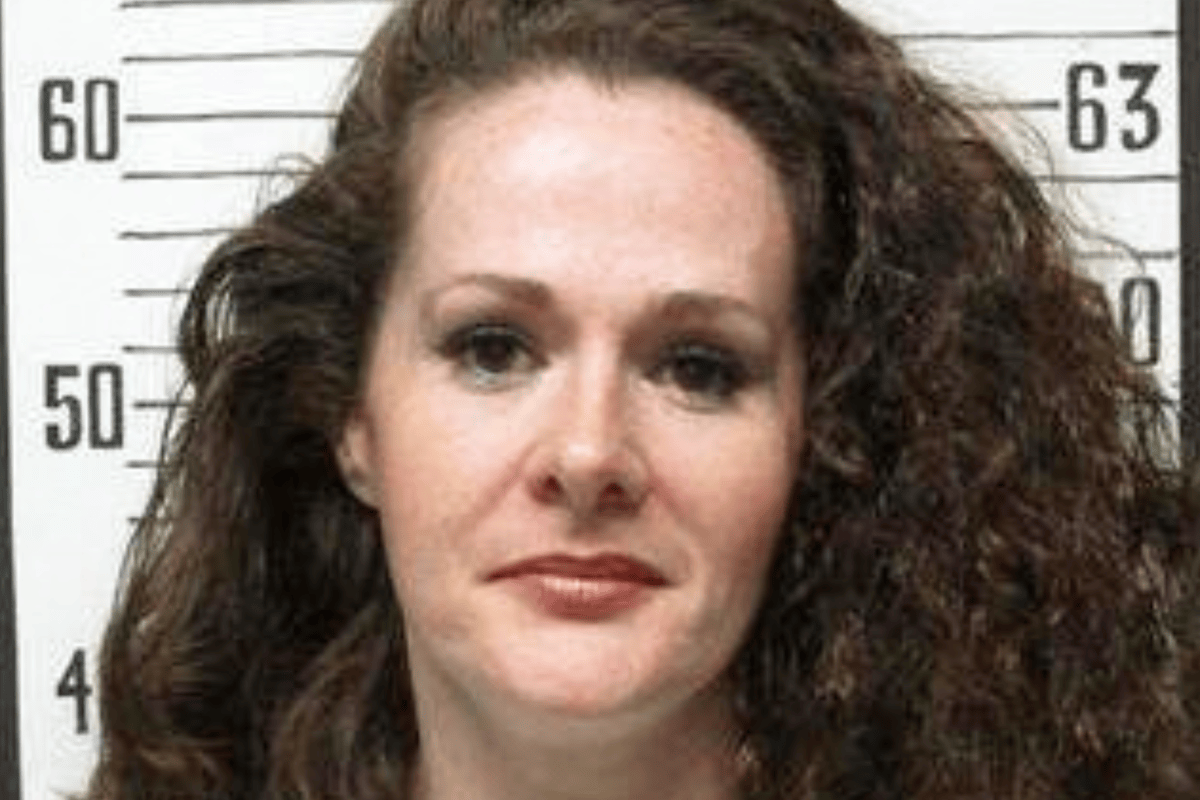
The advertisement featured Donna Arthur, Acton’s birth mother, calling her daughter a liar and disputing parts of her account of an unstable upbringing.
It was especially controversial because Acton says she suffered sexual abuse at the hands of her mother’s partner when she was a child.
“Vivek Ramaswamy should never have run his despicable ad in the first place, and it’s totally unsurprising that he took it off the air in the most cowardly way possible, without even the hint of an apology to Dr. Acton, her family, or to the people of Ohio,” Addie Bullock, a spokesperson for the Acton campaign, told Newsweek in an email.
“Vivek Ramaswamy has shown Ohio exactly who he is: an out-of-touch, self-serving billionaire who will do anything, and harm anyone, to get what he wants. It’s just one more reason for Ohioans to reject him and the private jet he flew in on next Tuesday.”
Newsweek emailed the Ramaswamy campaign for comment on Friday morning.
Ramaswamy confirmed that Ohio voters will now see four replacement commercials from his campaign as both nominees compete to succeed term-limited Republican Governor Mike DeWine, who publicly opposed his own party’s candidate over the contentious spot.
The commercial turned Acton’s childhood trauma into a defining issue in the race and drew condemnation from senior figures in both parties.
Its completion may help Ramaswamy pivot toward policy, although a recent survey suggests the episode did more to repel voters than persuade them.
"For all of the discussion around 30-second ads, I would love, even for this final close, for this campaign to really be about policy," Ramaswamy told reporters before criticizing Acton for not debating him.
His campaign maintained that the spot completed its intended rotation, rather than being withdrawn before the scheduled end of its television run.
That explanation leaves an important question unresolved: the campaign had previously announced plans to put millions behind the advertisement, but it has not publicly established whether the controversy influenced the timing of its departure from the airwaves.
Police and court records show that Arthur lost custody of her children after her husband, Cledith Arthur, was arrested and charged with raping Acton.
He pleaded not guilty, left the area while free on bond, and died without facing trial.
Contemporary records also indicated that Cledith Arthur lived in a tent, supporting an element of the childhood history challenged in the original commercial.
The campaign cut the initial one-minute version to 30 seconds, removing Donna Arthur’s assertion that her daughter had falsely claimed the family lived in such conditions.
At a campaign event on Thursday, Acton described experiencing abuse, neglect, repeated contact with children’s services and housing insecurity during her childhood.
"My opponent has now chosen to exploit my childhood intentionally," she said. "He’s doing it in a desperate attempt to save his struggling campaign."
Her brother, Philip Stearns, has supported key parts of that account, saying in a statement that his sister endured abuse while trying to protect him.
That personal testimony invited voters to judge not only competing versions of a family history, but whether the material belonged in a campaign advertisement at all.
Governor DeWine, who endorsed Ramaswamy, called the spot "deeply, deeply troubling" and urged him to stop showing it.
Former Republican Governor Bob Taft said it exceeded "the bounds of human decency," while former Governor John Kasich also opposed its use.
Rather than a standard clash between Republicans and Democrats, the controversy divided prominent Ohio conservatives during the final stretch.
Trump argued that Arthur appeared lucid and that her accusations deserved attention. Vance praised the candidate for having the "audacity" to run the message.
A Suffolk University-USA Today Ohio survey of 500 likely voters, conducted October 21 to 26 with a margin of sampling error of plus or minus 4.4 percentage points, placed Acton at 48 percent and Ramaswamy at 44 percent. Libertarian Don Kissick received 3.6 percent.
Because the four-point gap falls within the survey’s error range, it does not establish a clear leader.
Seventy-two percent of respondents had encountered the commercial or heard about it. Seven said it moved them from the Republican to the Democrat, while one reported switching in the opposite direction.
That small subgroup cannot prove a statewide movement, but it offers no evidence that the expensive intervention achieved its intended result.
Independent voter Brenda Malcolm, from Columbus’ Northland neighborhood, captured the risk for Ramaswamy: "It just totally ticked me off."
Democrats have won only one of Ohio’s past nine gubernatorial elections.
In 2022, DeWine defeated Democrat Nan Whaley by 62.4 percent to 37.4 percent, making the competitiveness of this year’s race particularly striking.
A victory for Acton would help her party’s campaign for a national majority of governorships.
The winner will influence consequential state decisions involving budgets, education, abortion policy and voting rules.
It also tests two sharply different coalitions. Ramaswamy, a biotech entrepreneur and former presidential candidate, is seeking to preserve Republican dominance, while Acton, a physician and former state health director who rose to prominence during the COVID-19 pandemic, needs support from Democrats, independents and Republican defectors.
Both campaigns have emphasized affordability, taxes and energy costs, giving voters a choice that extends well beyond the controversy surrounding the advertisement.
With the disputed commercial off the air, affordability, taxes, energy costs, and data centers may regain prominence.
The remaining question is whether Ohioans will treat the episode as a passing controversy or carry it into the voting booth.
Newsweek’s reporters and editors used Martyn, our AI assistant, to produce this story. Learn more about Martyn here.
Register for our November 10 discussion, 'Newsweek Webinar: How the Politics of AI Could Shape Midterms,' which will examine how AI policy played in key races, data centers, lobbying and the political lines that emerged.