Toyoda G1 Truck: Toyota’s Pioneer Legend, Even Its Launch Day Was a Gamble - Thairath English
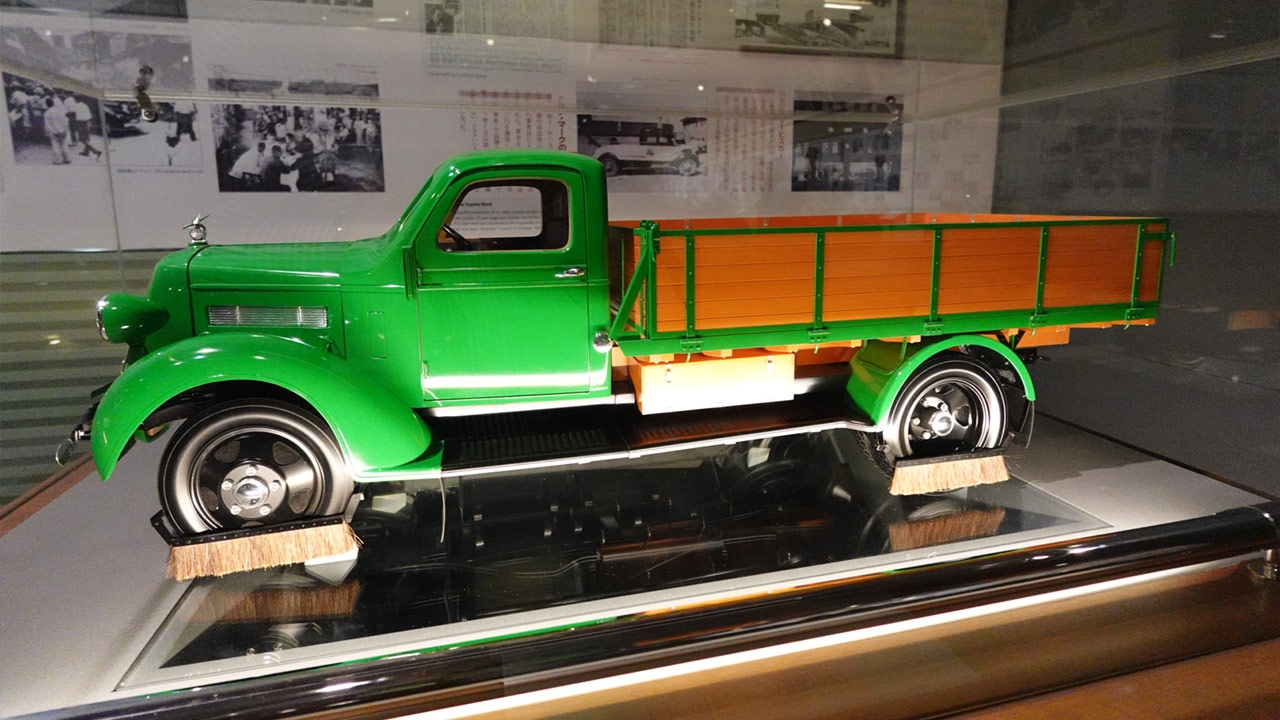
Tracing the path of the 1935 Toyoda G1 truck that led a textile factory into the automotive business, driven by Japanese government policy and facing numerous challenges along the way—from cracked rear axle housings to broken steering components before the launch event.
the story of the Toyoda Model G1 may change that mental picture, because the truck destined to be the star at its Tokyo launch suffered a steering system breakage en route!
This incident dates back to 20 November 1935, when the Toyoda Model G1 truck departed Kariya at 5 a.m., but after repair delays, it only arrived at the Chibaura venue at 4 a.m. on 21 November, the launch day itself.
In other words, before it could be shown to others, the vehicle had to first pass its own rigorous test. This is recorded in Toyota's official history, not a fabricated tale to make an old truck seem entertaining.
Back when the name Toyota did not yet mean cars on roads worldwide, the original business was Toyoda Automatic Loom Works, a textile machinery manufacturer experimenting with engines and automobiles.
Kiichiro Toyoda was key, driving the company's car development by studying small engines since 1930, successfully developing the Type A prototype engine in 1934, and completing the first Model A1 passenger car prototype in May 1935. But the first vehicle to actually enter the market was the G1 truck.
Kiichiro’s dream to build cars came earlier, but the crucial push to expedite truck development came from Japanese government policy.
In late 1934, the Ministry of Commerce and Industry, along with the military ministry, requested companies to produce trucks and buses under national policy, prompting truck design to start in March 1935.
For a company with limited automotive experience, trucks were both a business opportunity and a large learning field, aiming to complete a prototype within about six months.
Building the G1 began by studying existing vehicles; the company bought a 1934 Ford truck to study the chassis, while the Type A engine was developed by studying a 1933 Chevrolet engine.
The development team adopted Ford’s chassis design, Chevrolet’s front axle, and Ford’s rear axle, using readily available parts for components they could not produce themselves in time.
This marked the start for a new manufacturer learning design, materials, and assembly simultaneously, with the first G1 prototype completed on 25 August 1935.
Once the vehicle was built, the next question was: how well would it run? Between 13–18 September 1935, the team tested the G1 on a roughly 1,260-kilometer journey through Tokyo, Gunma, Nagano, Yamanashi, and Hakone, discovering cracked welds on the rear axle housing.
This problem persisted beyond testing; after sales began, rear axle housing damage recurred.
Toyota’s records indicate the team initially missed how the prototype’s parts were joined, welding only the outside of joints, resulting in insufficient strength. They fixed this by redesigning the pipe and flange connection to use a shrink-fit assembly relying on metal contraction.
The phrase "drive and repair" aptly describes the pioneering atmosphere, as defects appeared during testing, the launch trip, and early sales, forcing the company to fix issues one by one based on real experiences.
G1’s problems didn’t stop at the factory; when vehicles failed in customers’ hands, Kiichiro Toyoda himself was among those confronting the issues.
Toyota’s official history notes that upon hearing of G1 troubles, Kiichiro rushed to the site, crawled under the truck to diagnose, and personally apologized to customers—a pivotal image of the company’s automotive beginnings.
For a company learning to build cars, every failure meant returning to fix production methods, assembly, and part strength. Experience from the G1 led to improvements culminating in the Model GA truck in 1936.
The 1935 Toyoda Model G1 truck holds value beyond being an old model; it marks Toyota’s automotive business start, when getting a vehicle to leave the factory was just the first hurdle, followed by making it reliably operational and accountable despite initial flaws.
The G1 was powered by a 3,389 cc (approximately 3.4-liter) six-cylinder inline OHV gasoline Type A engine with water cooling, producing 65 horsepower at 3,000 rpm, capable of carrying 1.5 tons.
The vehicle’s launch price was 3,200 yen, with the chassis alone costing 2,900 yen—about 200 yen cheaper than Ford. These prices must be viewed in the context of over 90 years ago’s economy.
After the November launch, G1 sales began via Hinode Motors, the first dealer, in December 1935, with 14 units sold that year.
Total production of the G1 model reached 379 units before applying lessons learned to develop the Model GA truck in 1936.
Though small compared to later automotive business volumes, for a company just stepping out of textiles, this was a phase of learning—from making a running vehicle to enabling customers to actually use it.
The G1’s importance lies in being Toyota’s first commercially produced and sold vehicle, while the A1 was a passenger car prototype and the AA was a later passenger car developed for production.
The G1 even predates the separation of the automotive business into Toyota Motor in 1937.
Looking back, this truck represents more than a "first model"; it captures the company learning from cracked welds, broken parts, and breakdowns. Every problem had a cost, and every repair posed a question needing answers.
Regarding the 1935 Toyoda Model G1 truck, it holds more value than just being an old truck; it records the starting point of Toyota’s automotive business, when getting a vehicle out of the factory was only the first step, followed by making it truly functional and accountable amid imperfections.
From arriving at the launch event at 4 a.m. after en route repairs, to pioneers crawling under trucks apologizing to customers, the G1’s story is one of struggle, effort, and hard-earned lessons through hands-on work. Toyota’s first step was not smooth, but each breakdown was addressed and fixed to ensure the next vehicle could travel better.