Thailand’s growth forecasts raised on factory data revamp - The Business Times
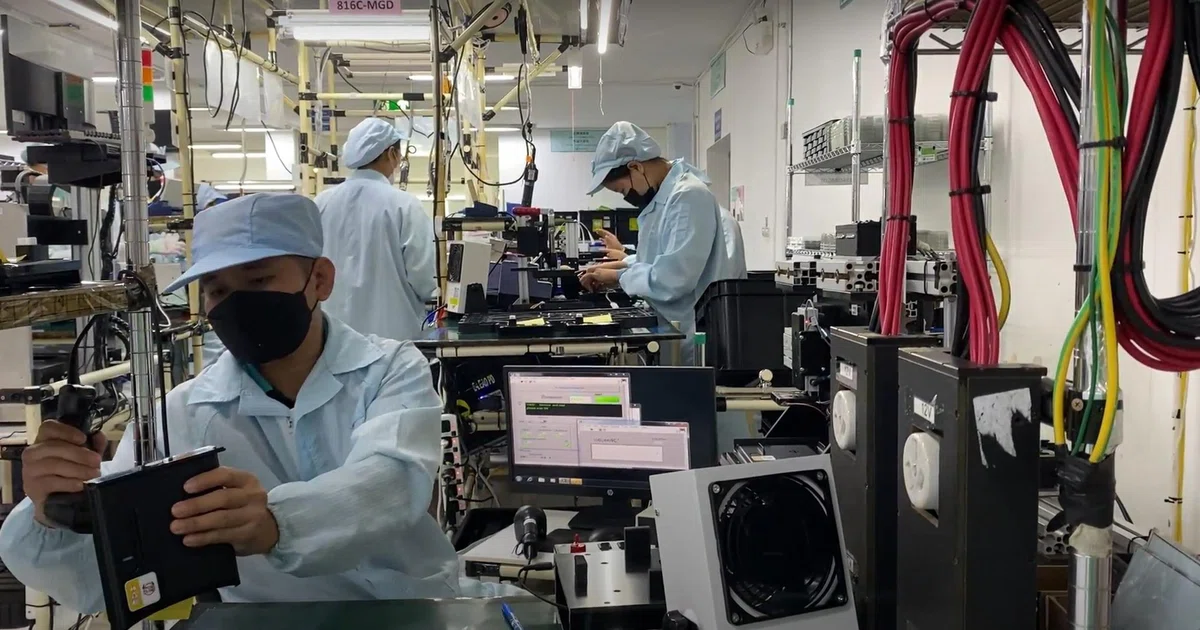
Changes to the factory gauge could add roughly 0.2 to 0.3 percentage point to Thailand’s 2026 GDP growth rate
THAILAND’S growth forecasts are rising as new factory data reveal a bigger boost from the artificial intelligence boom, though much of the economy remains sluggish.
Estimates compiled by Bloomberg News from several banks and research houses suggest changes to the factory gauge could add roughly 0.2 to 0.3 percentage point to Thailand’s 2026 gross domestic product growth rate.
Kiatnakin Phatra Securities now sees Thailand’s economy growing about 2.8 per cent this year, up from 2.5 per cent, while Krungthai Compass, a research unit of Krung Thai Bank Pcl, forecasts 2.6 per cent, up from 2.3 per cent. Standard Chartered expects growth of about 2.3 per cent, compared with its previous 2.1 per cent projection.
Even with those upgrades, Thailand would still be the slowest-growing major economy in South-east Asia. That contrast underscores Thailand’s uneven growth, with booming electronics exports and AI-related investment lifting headline figures while heavily indebted households and subdued consumption leave much of the domestic economy struggling.
“The revision raises the measured level of growth but not its breadth,” said Pipat Luengnaruemitchai, emerging Asia economist at Kiatnakin Phatra Securities. “The larger part of the economy, consumption and services, is still held back by weak household finances, so a stronger GDP print should not be read as a broad-based reacceleration.”
The reassessment follows an overhaul of Thailand’s manufacturing production index that added newer factories and fast-growing products tied to AI and data centres, including laptops, optical transceivers and backup-power equipment.
Those three product groups generated about 802 billion baht (US$24 billion) of exports last year, equivalent to more than 7 per cent of Thailand’s shipments.
Erica Tay, an economist at Maybank Securities, estimates the revisions could add 0.2 percentage point to reported growth in 2024, 0.5 point in 2025 and 0.6 point in the first half of 2026. That would narrow Thailand’s growth gap with other economies benefiting from the global AI supply chain, she said.
But stronger measured output doesn’t necessarily mean households or businesses are better off. “Thai households and businesses won’t feel richer,” Tay said.
Goldman Sachs Group estimates first-half GDP growth could be revised to 2.9 per cent from 2.4 per cent if the newly captured manufacturing output was previously missing from the national accounts.
The eventual boost may be smaller because factories rely heavily on imported components, reducing the domestic value added that counts toward GDP.
The gains are also concentrated. Krungthai Compass estimates labour compensation in computers and electronics amounts to just 10.1 per cent of export value, compared with an average of 16 per cent, limiting how much the technology boom flows through to household incomes.
That concentration means the stronger numbers may do little to change monetary policy. The Bank of Thailand, which raised its 2026 growth forecast to 2.4 per cent last week, has repeatedly said the benefits of the technology cycle remain uneven while domestic demand is subdued.
Standard Chartered economist Tim Leelahaphan said the prospective GDP upgrade would not be enough to justify higher interest rates.
Most research houses are holding off on raising their growth forecasts until Nov 16, when Thailand’s economic planning agency releases third-quarter GDP and new projections. The Finance Ministry will provide an earlier signal when it updates its economic forecasts on Nov 9.
Kasikorn Research Centre is keeping its 2 per cent growth forecast unchanged for now and plans to revise it later this month, economist Nattaporn Triratanasirikul said. Surging imports could also offset some of the boost from strong exports, she said.
“We are still in a K-shaped recovery,” Nattaporn said. “The mood and tone of the sluggish economy remains unchanged.” REUTERS
Decoding Asia newsletter: your guide to navigating Asia in a new global order. Sign up here to get Decoding Asia newsletter. Delivered to your inbox. Free.
UOB Q3 net profit almost trebles to S$1.25 billion off low base, but misses forecasts