
Supermarkets across Europe hit by new fridge cyberattacks
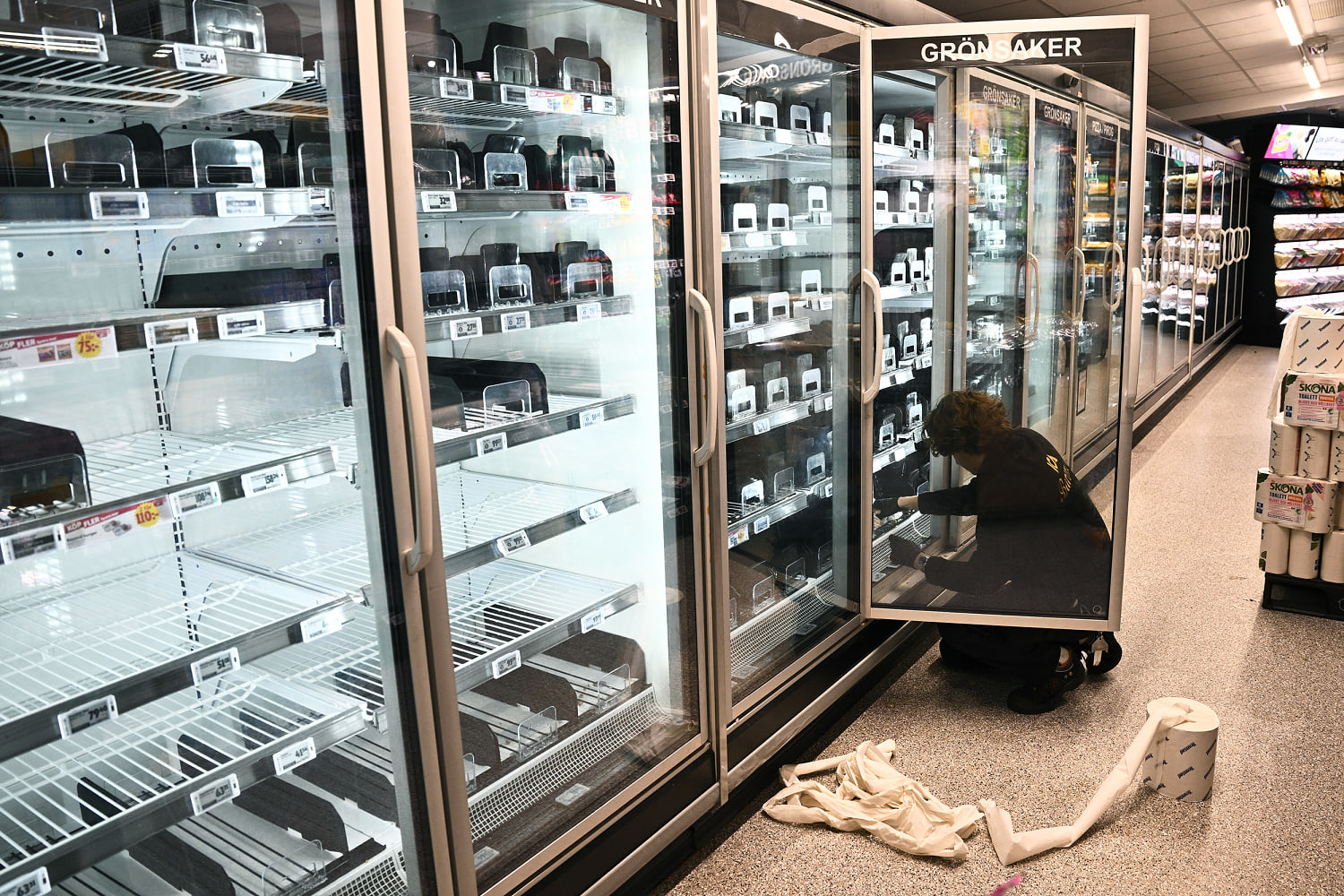
An ICA grocery store in Stockholm that was hit by a cyberattack on Monday.Fredrik Sandberg / AFP via GettyShareAdd NBC News to GoogleNov. 2, 2026, 6:56 AM EST / Updated Nov. 2, 2026, 9:29 AM ESTBy Yuliya Talmazan and ReutersSupermarkets across Europe were hit Monday by a new wave of apparent cyberattacks affecting fridges and freezers.
The incidents caused temperature spikes and spoiled food at stores in Sweden, the Netherlands, Belgium, Ireland, Luxembourg, and Estonia.
It follows a cyberattack in France last month, in which police said hackers seized control of cooling units at hundreds of supermarkets, raising temperatures as high as 122 degrees Fahrenheit and causing fires and food losses.
Authorities have not indicated who could have been behind the incidents. There were no claims of responsibility.
The issues come as the continent confronts broader security fears stemming from Russia’s war in Ukraine.
The new cyberattack highlights how digital threats can increasingly affect citizens’ everyday lives, the European Commission said Monday.
Spoiled refrigerated food is discarded outside an ICA store in Stockholm on Monday.Fredrik Sandberg / AFP via GettyThe Ahold Delhaize supermarket chain in the Netherlands told NBC News on Monday that it was aware of an “IT incident” affecting the refrigeration systems in a number of its stores. “Our teams are working hard to fully assess the situation,” the company said in an email.
Stephan Moelans, the CEO of Belgian refrigeration company Sabcobel, which operates Delhaize’s systems, told the Belga news agency that the incident was a cyberattack, in which the units’ evaporators were switched to defrost mode.
FOR SUBSCRIBERSWho gets to check the AI giants? A new group wants to set the rulesFOR SUBSCRIBERSThe fight for young men comes to MichiganFOR SUBSCRIBERS‘A genuine toss-up’: Senate battle comes down to red states and Republican votersFOR SUBSCRIBERSEnergy drinks linked to higher risk of cardiac arrest in young adults, study findsFOR SUBSCRIBERSTrump holds final rally of a 28-stop midterm blitz FOR SUBSCRIBERSSome crewmembers on the evacuated cruise ship say they’re waiting without pay in CambodiaFOR SUBSCRIBERSTwo executives tried to build their dream of a never-ending cruise. This is how it all fell apart.FOR SUBSCRIBERSPoll: 2024 Trump voters explain why his coalition is fraying ahead of the midtermsFOR SUBSCRIBERS11 data centers and 264 generators surround this school. Is it safe for children?FOR SUBSCRIBERSBinance hack spotlights North Korea’s multibillion-dollar crypto theft operationFOR SUBSCRIBERSMajority of noncitizen voters charged by DOJ are lawfully in U.S.FOR SUBSCRIBERSSouth Korea had the world’s lowest birth rate. How cash and childcare helped it reboundFOR SUBSCRIBERS‘Sea change’: Early voting numbers show Hispanic turnout exploding in TexasFOR SUBSCRIBERSThe cruise of a lifetime was one thing — getting home after its abrupt end is its own adventureFOR SUBSCRIBERSIn Michigan’s Senate race, everything is on the table — including footballSlide 1 of 1For SubscribersFOR SUBSCRIBERSWho gets to check the AI giants? A new group wants to set the rulesFOR SUBSCRIBERSThe fight for young men comes to MichiganFOR SUBSCRIBERS‘A genuine toss-up’: Senate battle comes down to red states and Republican votersFOR SUBSCRIBERSEnergy drinks linked to higher risk of cardiac arrest in young adults, study findsFOR SUBSCRIBERSTrump holds final rally of a 28-stop midterm blitz FOR SUBSCRIBERSSome crewmembers on the evacuated cruise ship say they’re waiting without pay in CambodiaFOR SUBSCRIBERSTwo executives tried to build their dream of a never-ending cruise. This is how it all fell apart.FOR SUBSCRIBERSPoll: 2024 Trump voters explain why his coalition is fraying ahead of the midtermsFOR SUBSCRIBERS11 data centers and 264 generators surround this school. Is it safe for children?FOR SUBSCRIBERSBinance hack spotlights North Korea’s multibillion-dollar crypto theft operationFOR SUBSCRIBERSMajority of noncitizen voters charged by DOJ are lawfully in U.S.FOR SUBSCRIBERSSouth Korea had the world’s lowest birth rate. How cash and childcare helped it reboundFOR SUBSCRIBERS‘Sea change’: Early voting numbers show Hispanic turnout exploding in TexasFOR SUBSCRIBERSThe cruise of a lifetime was one thing — getting home after its abrupt end is its own adventureFOR SUBSCRIBERSIn Michigan’s Senate race, everything is on the table — including footballSlide 1 of 1A spokesperson for Colruyt Group, which operates Spar stores in Belgium under a franchise system, said five shops had their fridge systems attacked. The Carrefour supermarket chain in the country said a “cyberattack targeting refrigeration installations only had an extremely limited impact,” affecting 15 of its more than 700 stores.
Sweden’s grocery retailer chain ICA told NBC News its systems were not affected, but that it had been informed of “an incident at a small number of stores that use an external supplier and have their connectivity outside ICA’s central network.”
The incident has affected the stores’ refrigeration and freezer systems, the company said in an email. “ICA is currently supporting the affected stores in managing the incident,” it said.
The ICA Kvantum branch in Sjöbo in southern Sweden wrote on its Facebook page that its fridges and freezers had been hacked and set to 122 degrees Fahrenheit. It said it was working to discard the affected items.
Privately held grocery retail group Coop told Swedish daily Aftonbladet that six of its stores had been affected by similar incidents.
In Ireland, food wholesaler Musgrave said that a cyber incident had affected refrigeration systems in 13 of its SuperValu stores, forcing it to remove some chilled and frozen products from sale.
“Our monitoring systems alerted us to the issue and we took immediate action,” it said in a statement. “Our investigation is ongoing.” The company did not immediately respond to a request for comment from NBC News.
In Estonia, a company that makes the affected technology said that one of its clients had been hit by a cyberattack in which attackers accessed a computer controlling refrigeration and also turned up the temperature to 122 degrees Fahrenheit, public broadcaster ERR reported.
From refrigerators and heating systems to security cameras and alarm networks, an expanding range of devices can now be monitored and controlled remotely, creating new opportunities for cybercriminals.
Sweden’s national cybersecurity center — which said it could not speculate on who was behind the attacks — is working on several incidents affecting grocery stores across the country, the head of the center, John Billow, said on Monday.
“We have in recent weeks... identified that we have quite a lot of exposed operational technology devices in Sweden that we have been clear about the necessity to update or patch,” the cybersecurity center’s Billow said.
Yuliya TalmazanYuliya Talmazan is a reporter for NBC News Digital, based in London.

