Supachai Questions Opposition on New Issues Amid Planned Use of Articles 152 and 151 for Government Interrogation - Thairath English
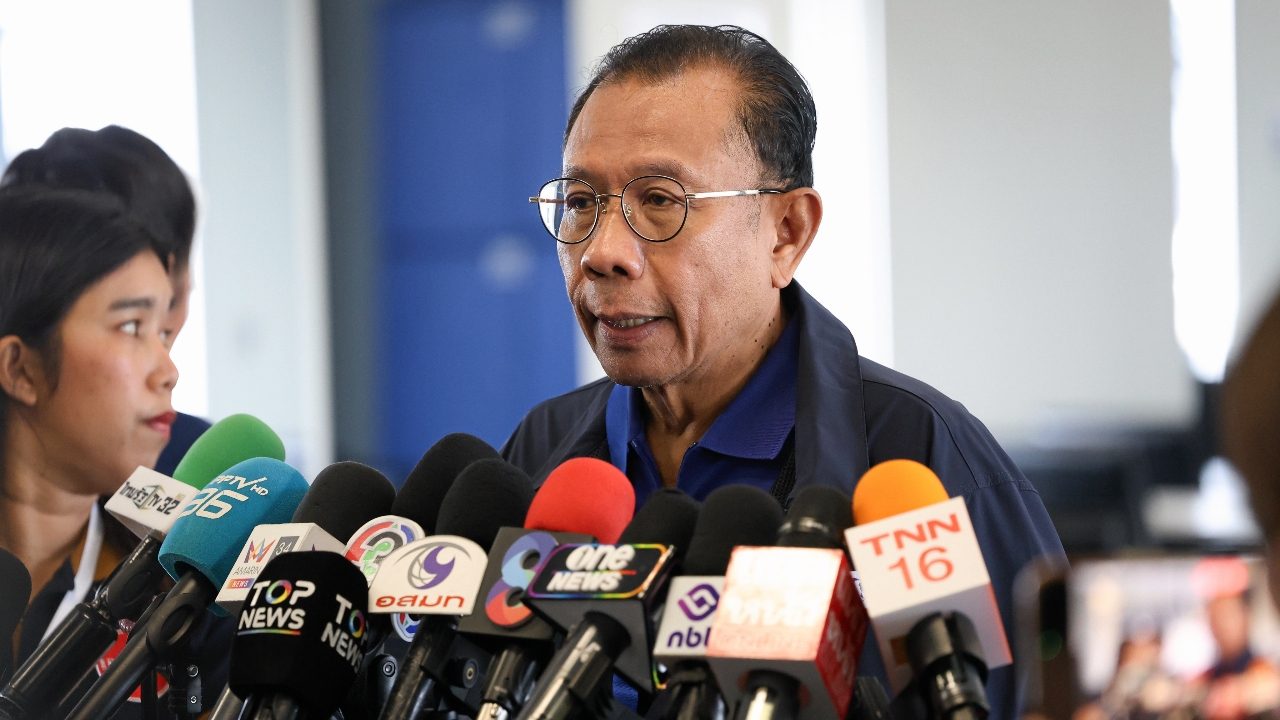
Supachai questions the opposition on whether they have new issues after planning to use Article 152 following Article 151, emphasizing that scrutiny must focus on quality, not the number of times.
On 29 Oct 2026 GMT+7, Supachai Jaisamut, party-list MP from Bhumjaithai Party, posted on Facebook questioning the agreement by the three-party whip to hold a no-confidence debate under Article 151 of the Constitution from 7-11 Dec. He noted reports that the opposition plans to submit an additional debate under Article 152, pointing out that the key issue is not just whether the law permits it, but whether using such parliamentary mechanisms aligns with the Constitution's purpose and intent.
Supachai stated that the 2017 Constitution grants the opposition the power to scrutinize the government, a fundamental principle of parliamentary democracy. However, exercising this power requires considering both the legal provisions and the constitutional intent, as Articles 151 and 152 serve clearly different purposes.
Article 151 concerns a no-confidence debate targeting individual ministers or the entire cabinet, involves a vote, and may lead to dismissal. Article 152 allows a general debate to question facts or suggest issues to the cabinet without a confidence vote. The Constitution thus distinctly designs these mechanisms with different objectives, procedures, and political consequences.
Supachai observed that if the opposition submits a no-confidence debate under Article 151 and then shortly after files a general debate under Article 152, one must consider the necessity of using both mechanisms and whether the content of the motions truly differs.
While the Constitution does not prohibit submitting motions under both articles within a close timeframe, it cannot be automatically concluded that such actions violate the Constitution. However, if the same issues, accusations, and facts are repeated without new substantive points, questions arise about the appropriateness and intent of using parliamentary tools, since Article 152 was not designed as a second no-confidence debate without voting.
Additionally, Article 154 sets limits on the frequency of submitting general debate motions, reflecting the importance of balancing the right to scrutinize the government with the continuity of public administration.
Supachai emphasized that the opposition's right to scrutinize the government must be protected, but exercising this right should be reasonable, necessary, and aligned with the Constitution's purpose. Vigorous government scrutiny is positive, but it should be measured by facts, evidence, and public benefit, not by the number or length of debates.
If new facts, problems, or important unanswered issues arise, using Article 152 is justified even if a debate under Article 151 recently occurred. But if no new issues exist and previous matters are merely repeated, it is appropriate to question whether using these mechanisms is worthwhile and consistent with constitutional intent.
Supachai concluded that democracy does not mean that if the law does not forbid something, all mechanisms can be used without regard to purpose or appropriateness. The opposition has the duty to scrutinize the government, the government must manage the country, and Parliament must maintain a balance of power between these roles.
What the public wants is quality scrutiny by the opposition, responsible answers from the government, and Parliament using time for the nation's true benefit. Good oversight is not about the most frequent debates, but about debates that deliver the most truth to the people.