Speaker defends new House rules - Bangkok Post
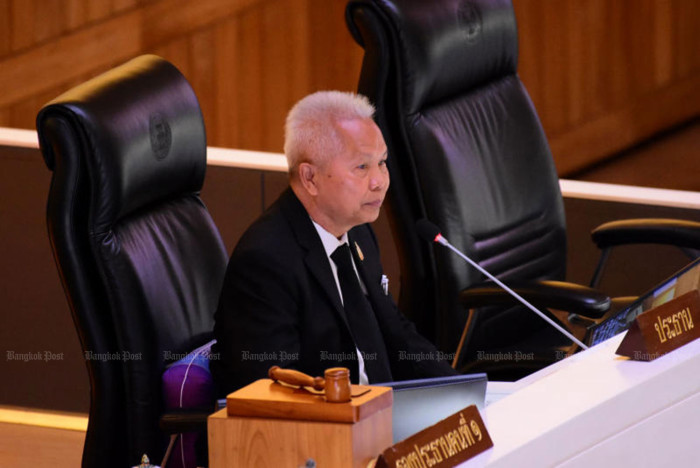
House Speaker Sophon Zarum chairs a parliamentary debate on the 2027 budget bill on Sept 10. (Photo: Chanat Katanyu) House Speaker Sophon Zarum has denied claims that new regulations governing the work of 35 standing parliamentary committees are intended to strip committee chairmen of their authority or silence the opposition.
Mr Sophon said the measures would prevent overlapping investigations and ensure compliance with existing parliamentary rules. He said the regulations followed complaints that the work of standing, ad hoc and subcommittees overlapped, with more than 100 committees operating across the parliamentary system.
Government officials and representatives of various agencies, including senators, were frequently summoned to meetings, leaving them little time for their regular duties.
There were also complaints that some committee chairmen had exercised their authority in ways that violated parliamentary rules, he said.
Having served as a committee chairman for two terms, Mr Sophon said proposals for study or consideration, as well as invitations to outside individuals, should first be discussed and approved by committee members. He subsequently asked the House legal team to review the relevant regulations before approving the guidelines drafted by the secretariat.
He rejected claims that the move was intended to obstruct government scrutiny, questioning how it could silence the opposition when opposition MPs did not chair every committee.
Natha Duangwichai, director of the Parliamentary Committee Bureau 2, said the guidelines were not new but were based on regulations introduced in 2019. He said the lack of previous challenges led to misunderstandings about established practices.
Committee chairmen could still call special meetings, but should first check members' availability to ensure a quorum. Proposals submitted by individual members must also be discussed by the committee before being accepted for consideration.
Regarding the power to summon documents and individuals under Section 129 of the constitution, Mr Natha said the authority belonged to the committee as a whole, not its chairman individually. He cited a Constitutional Court ruling that interpreted the power as an invitation or request for cooperation in providing documents or factual information.
Parit Wacharasindhu, a People's Party list MP and opposition chief whip, said the opposition remained concerned that requiring committee resolutions for virtually all proceedings would undermine committees' flexibility and allow government MPs, who hold the majority, to block investigations into issues involving the administration.
He also questioned the process, saying an earlier meeting involving the House speaker, government and opposition whips, and chairmen of all 35 committees had failed to reach a consensus.
Mr Sophon had agreed to further consultations before issuing the guidelines, but the rules were introduced without those discussions, he said.
Mr Parit said the opposition whip would submit a formal letter objecting to the guidelines and request an official meeting with Mr Sophon to seek a mutually acceptable solution.