Somali man loses refugee status after fraudulent certificate and three-month visit to home country - IOL
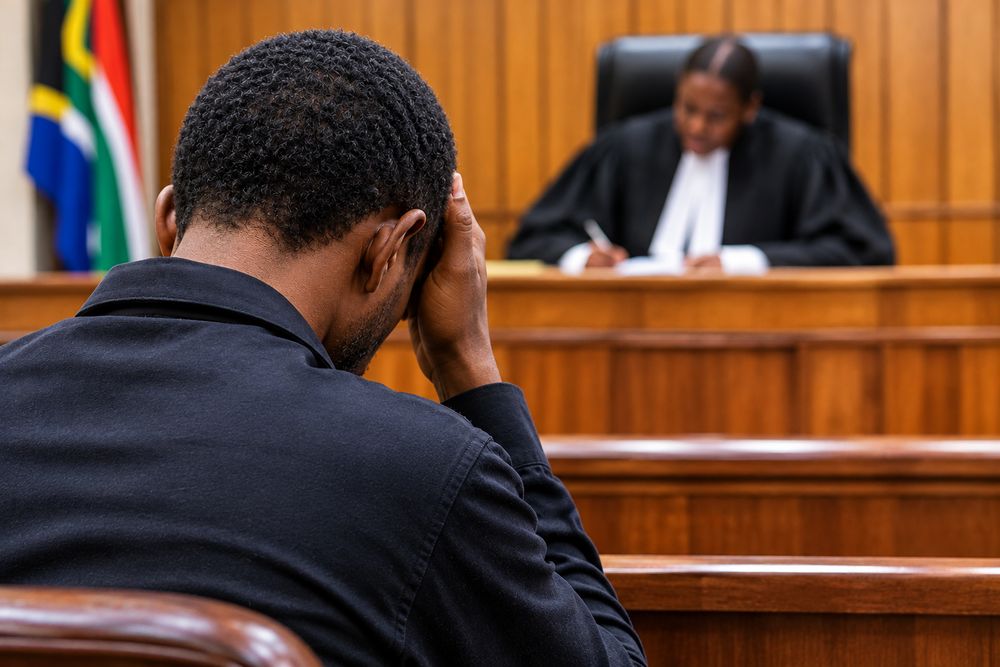
Somali refugee loses review bid over Hargeisa visit and fraudulent certificate.
A Somali national has lost a High Court bid to overturn the withdrawal of his refugee status after travelling to Hargeisa, Somalia, and spending three months there, with the court finding that he had voluntarily re-availed himself of his country’s protection.
The South Gauteng High Court in Johannesburg dismissed Ahmed Mohammed Ali’s application to review and set aside the Standing Committee for Refugee Affairs’ decision to withdraw his refugee status.
In a recent judgment, Judge Mokate Victor Noko found that Ali had failed to challenge one of the legal grounds on which his refugee status was withdrawn and had travelled abroad in circumstances that amounted to re-availment of protection under the Refugees Act.
The court held that the decision to withdraw his refugee status was rationally connected to the information before the authorities and that there was no evidence of bias.
Ali, a Somali citizen who entered South Africa in 2008 after fleeing persecution by Al-Shabaab, was granted refugee status on October 7 that year.
After residing in South Africa, he applied to be certified as an indefinite refugee, a step that could eventually allow him to apply for permanent residence.
The court heard that Ali enlisted the services of a person who claimed to be an immigration agent and promised to expedite his application.
Ali subsequently obtained a certificate and, on December 15, 2017, applied for permanent residence.
However, while processing the application, the Department of Home Affairs discovered that the certificate was fraudulent and rejected his permanent residence application on July 9, 2018.
The authorities later initiated proceedings to withdraw his refugee status, citing the fraudulent certificate.
On March 5, 2024, the authorities issued a notice of their intention to withdraw Ali’s refugee status and invited him to submit written representations.
During an interview on November 7, 2024, it emerged that Ali had travelled to Hargeisa on March 2, 2017, and returned to South Africa on May 15, 2017.
The authorities regarded the visit as re-availment of protection under the Refugees Act, which provides that a person may cease to qualify for refugee status if they voluntarily re-avail themselves of the protection of their country of nationality.
The law also provides for circumstances in which travelling abroad in violation of conditions endorsed on refugee travel documents may be deemed re-availment.
Ali argued that his visit was not voluntary in the relevant legal sense and that he had neither sought nor obtained effective protection from Somalia.
He maintained that Hargeisa was in a “no-man’s land”, which he described as Somaliland.
In his court papers, Ali said he travelled to Hargeisa to visit his terminally ill father, who died and was buried on May 13, 2017.
He argued that his three-month stay should not be regarded as re-availment because the trip was motivated by humanitarian circumstances.
His legal representative, J Malapane, argued that the authorities had failed to establish the requirements for withdrawing refugee status on the basis of re-availment.
The lawyer also contended that the decision was irrational, that the authorities were reasonably suspected of bias and that the withdrawal violated the principle of non-refoulement, which prohibits returning refugees to countries where they face persecution.
However, Noko found that Ali had not mentioned visiting his sick father in his written representations submitted to the authorities in May 2025.
The explanation was raised only in his court papers in February 2026.
The judge said Ali had failed to explain why he omitted the reason for his visit when he initially made representations against the withdrawal of his refugee status.
Noko described the explanation as an afterthought and an attempt to mould his case to fit the requirements of the United Nations refugee framework.
The judge also found that the three-month visit could not be regarded as an occasional visit.
“Without more, this cannot be viewed as an occasional visit; it appears opportunistic and indefensible,” Noko said.
The court found that Ali had travelled voluntarily, knew that citizens were protected in Hargeisa and had accessed that protection.
Noko also rejected the argument that Ali’s deportation would violate the principle of non-refoulement.
The judge said South Africa did not recognise Somaliland as an independent country and found that Hargeisa was in Somalia and safe, with citizens protected there.
The court concluded that Ali could be deported to that part of Somalia without violating the principle of non-refoulement.
Noko said Ali’s application was bound to fail because he had not challenged the withdrawal of his refugee status on the basis of the fraudulent certificate.
The judge also found that his trip to Hargeisa fell within circumstances prescribed by the Refugees Act and regulations as re-availment of protection.