‘reverse discrimination’ argument raised as the president stands at the center of the PC-ism debate… rebuts each criticism as ‘double standards’ - 경향신문

This article was translated by an AI tool. Feedback Here.
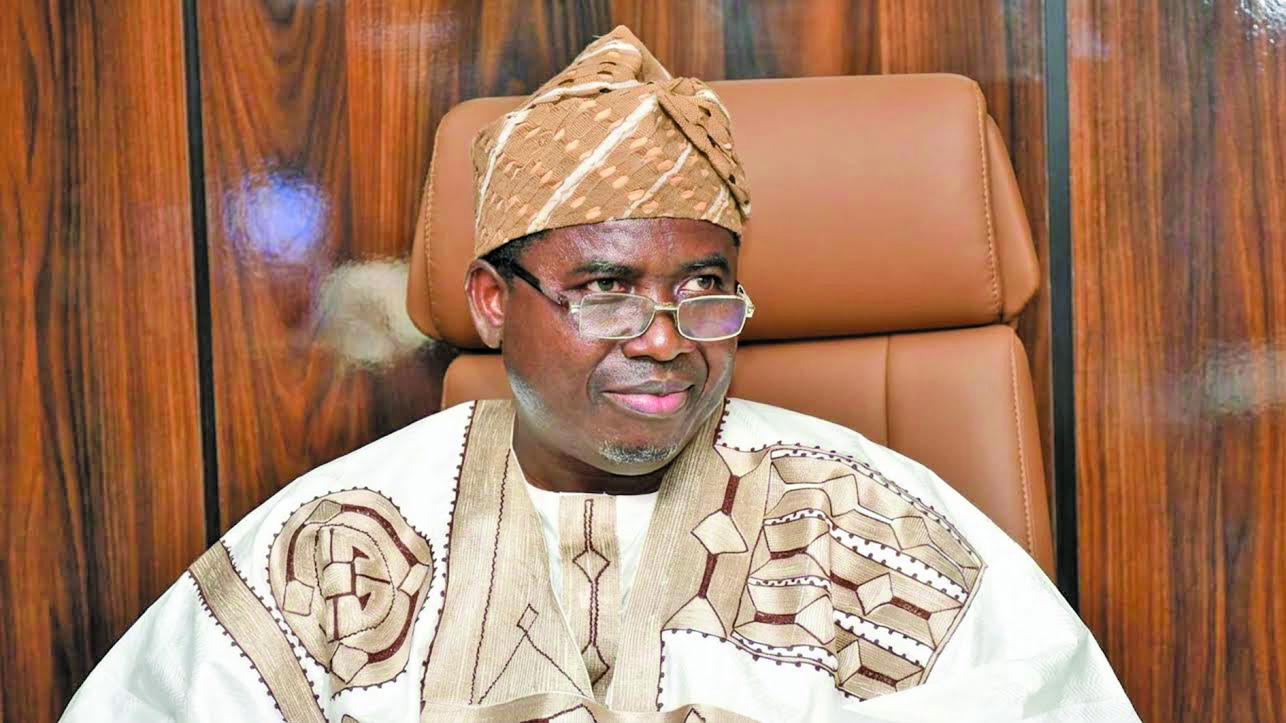
President Lee Jae Myung delivers a policy address on the 2027 budget bill at the National Assembly on the 2nd. Cheong Wa Dae Press Photographers
President Lee Jae Myung is leading a debate over fairness in policies supporting minorities by raising the possibility of ‘reverse discrimination against citizens’ in support policies for multicultural families. Going beyond having previously brought up the issue of ‘discrimination against men,’ he is now seen as having expanded the reverse discrimination and unfairness frame to policies supporting foreign workers and multicultural families. He is also continuing a back-and-forth with the progressive camp, defining criticism of himself as ‘double standards based on PC-ism (political correctness).’ Some experts point out that the president has not only ridden the politics of division, but that the controversy is growing as he responds one by one to criticism from netizens and the media.
On X that day, the president wrote, “The reason political correctness faces public backlash and fatigue today lies not in its aspirational values themselves, but in the inconsistency between words and deeds and the double standards inherent in the attitude of those who advocate it.” He also said, “When Chun Doo-hwan, the most unjust, cried out for the realization of a just society, even the very words ‘justice’ or ‘a just society’ became tainted,” and “As long as the attitude of double standards that forces standards on others that one cannot uphold oneself continues, it will be hard to avoid criticism and cynicism toward political correctness.” He invoked even the case of the Chun Doo-hwan regime to rebut criticism that his remark mentioning ‘reverse discrimination against citizens’ in relation to multicultural family support policies could incite discrimination against minorities.
The controversy began when the president shared on the 28th of last month a post from FM Korea, an online community classified as anti-feminist and conservative-leaning. In response to a post that took issue with multicultural mothers ranking high in reservations for public postnatal care centers, he said, “A good point,” and the next day stated about multicultural family support policies, “It must not, through excess that departs from its original purpose, lead to favoritism or become reverse discrimination against citizen households.” On the 31st of last month, he wrote, “There is no reason to justify even specific flawed policies within multicultural family support that are unreasonable or that produce reverse discrimination.” In the course of rebutting criticism, he used expressions such as ‘PC-ism,’ ‘blind moral sheltering,’ ‘mechanical victimhood,’ and ‘dogmatic attitude.’
This is not the first time the president has raised a reverse discrimination and unfairness frame regarding minorities. On November 10, 2021, when he was a presidential candidate, he shared on Facebook a post by a supporter of Hong Joon-pyo, then a People Power Party primary candidate, that said, “You must stop the madness of feminism.” On September 19 last year, at a 2030 youth communication and empathy talk concert, he said, “In certain areas, men are relatively discriminated against,” and “Before getting a job, women seem a bit advantaged and men seem discriminated against. Men have to serve in the military but do not even get extra points. However, after getting a job, men seem to be preferred more and women seem to be discriminated against.” He then instructed Minister Won Min-kyung of the Ministry of Gender Equality and Family to look into the issue of ‘discrimination against men.’
The president is broadening his focus from ‘discrimination against men’ to ‘reverse discrimination against citizens.’ At a Ulsan town hall meeting on January 23, he said, “In shipbuilding, foreign workers are hired cheaplyhow does that help the local economy?” and added, “Have the job opportunities of local workers not been taken away?” At a Cabinet meeting on the 27th of last month, regarding labor shortages in rural and fishing communities, he said, “Foreign workers do not greatly help the national economy. They remit it all.” At a Cabinet meeting on the 20th of last month, regarding the deferred-payment system of the National Pension for foreigners, he instructed that additional measures for existing beneficiaries be considered even through legislation. This was interpreted as intended to claw back, retroactively, the pensions of foreigners who have already completed deferred payments.
Some interpret these remarks as targeting youth voters in their 20s and 30s who are sensitive to fairness, amid a recent plateau in approval ratings. Kwon Young-guk, former leader of the Justice Party, wrote on Facebook on the 30th of last month, “The president’s recent remarks and writings about migrant workers and multicultural families read as a political intent to draw support from forces sensitive to unfairness by leaning on a fairness frame.”
There are also claims that the president’s remarks align with European far-right politics in that they attribute the causes of social conflict from resource shortages to excessive preferential treatment for minorities. Park Won-seok, a former Justice Party lawmaker, wrote on Facebook that day, “Even hard-right politicians in Europe no longer appeal for support solely with overt racism; they put forward the fair distribution of welfare, the rights of taxpayers, cultural identity, and freedom of expression,” adding, “That politics does not directly deny democracy; rather, it uses the language of democracy fairness, freedom, and popular sovereignty to narrow the boundaries of the community. It is the moment exclusionary politics acquires its most sophisticated face.”
Choi Chang-ryeol, a special professor at Yongin University, said, “Contrary to the intention, the president gives the impression of being excessively fixated on multicultural policy,” adding, “Since public perception is not flowing in the direction the president wants, the president needs to first cut off the pattern of rebutting every single point.” He said, “The biggest problem is the president standing at the center of the dispute while trying to fend off all external criticism alone,” adding, “He should take a step back by leaving the rebuttals to Cheong Wa Dae aides, buy time, and then take two steps forward.”