Redressing the redressed: a lawyer’s case for rethinking affirmative action - IOL
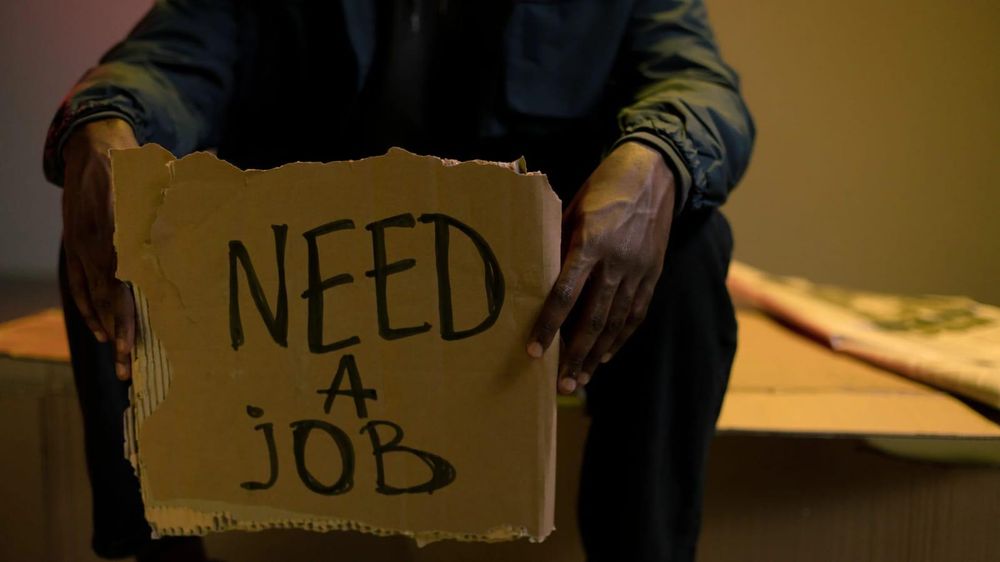
Five million young South Africans remain unemployed.
We have legislation and systems in place to govern our actions, and history teaches that humanity deemed it prudent to establish and enforce principles to create order within civilisation. Throughout history, laws have been repealed, amended, replaced and redefined in an attempt to meet society’s greater needs. One can argue that law and morality are correlated; South African jurisprudence reflects this in its application of boni mores. Although the correlation is not always clear or harmonious, its influence remains. Humanity’s morality, however, is corruptible; it is the same morality that birthed the Nuremberg laws, the Jim Crow laws and the various laws enacted by the then National Party during the apartheid regime.
South Africa is known as the rainbow nation; the characteristics and composition of a rainbow tell us that gloomy circumstances give rise to its existence. As a rainbow nation, South Africa has endured gloomy circumstances in the form of racial segregation and oppression. The effects and consequences are vividly illustrated by the various laws and policies enacted to address the injustices many suffered during apartheid. This article examines the philosophical framework behind race-based laws in South Africa, their effectiveness, and whether they are justifiable in an open and democratic society.
History is important to understanding South Africa’s current climate. South Africa is known as a country that was racially divided by the apartheid regime’s legislation. During apartheid, citizens were treated according to the colour of their skin, their ethnic background and their historical roots. The apartheid system gave life to the ideology portrayed in George Orwell’s novel Animal Farm: that all humans (animals) are equal, but some humans (animals) are more equal than others.
The country in the apartheid era was visibly demarcated between “whites” and “non-whites”. The intentional segregation of these two groups profoundly affected access to public resources, employment and housing. It advantaged some in resources and wealth while denying others the same opportunities. In addition to the unequal allocation of resources, many citizens were stripped of their rightful property so that ownership could be reallocated from the marginalised to the empowered, to further the ideology driving the regime.
For 46 years this ideology nestled and spread within South Africa’s borders, infecting the very grassroots of this beautiful country. It infected resource distribution, employment rates and the level and quality of basic education. It was a system meticulously designed to strip away the hopes and dreams of the marginalised.
The current climate in South Africa is largely shaped by the injustices endured during the apartheid era. The legislation and measures enacted speak directly to the past atrocities faced by many citizens. We have adopted an equity system to place all citizens on an equal footing. This involved enacting legislation and policies that empower the previously marginalised by addressing historical power imbalances. The Broad-Based Black Economic Empowerment Act 53 of 2003, the Preferential Procurement Policy Framework Act 5 of 2000 and the Employment Equity Act 55 of 1998 are prime examples. This is commendable, recognising the intrinsic equality and value of human life while acknowledging the imbalances created during and after apartheid. Various policies have also been enacted to give life to the equity dream, a dream once echoed by Martin Luther King Jr.
Dr King was one of the pioneers who advocated for equal treatment. His dream was simple: that his “four little children will one day live in a nation where they will not be judged by the color of their skin but by the content of their character”. He called for unity and the abolition of racial classification. Sadly, in our day and age, Dr King’s dream has not yet been realised within South Africa’s borders. I say this because race-based laws and policies remain firmly embedded in the system. Their purpose was to remedy past atrocities; however, they have also become corruptible by human nature. We have adopted the same strategy and system we once tirelessly fought against, one grounded in and centred on race. Dr King’s words once more find relevance: “We are not makers of history. We are [sadly] made by history.”
Racial undertones remain present in South Africa, whether admitted or not. We are a culturally diverse country, and often our allegiance to our cultures and heritage leads to the unfortunate exclusion of others. Racial tension has become rife and widely debated. Many of the marginalised, who once stood in solidarity against the apartheid regime, have become each other’s biggest critics. They have become ensnared in racial debates, furthering the narrative of racial segregation rather than its abolition. South Africa, once dominated by two racial classifications, white and non-white, now has additional ones. Ironically, more emphasis is placed on race now than ever before.
This symptom of an internal infection has made its way across borders and into the Oval Office in Washington DC, on 21 May 2025. Our fascination and obsession with race were on full display for the world to witness. The tension is also vividly illustrated within our own borders. Recently, the South African Police Service (SAPS) had to release a formal statement in response to concerns raised about diversity in its new recruitment intake (https://iol.co.za/news/south-africa/2026-09-09-where-are-coloureds-indians-and-whites-saps-responds-to-recruitment-row/, accessed 6 November 2026). This illustrates our continued fixation on race rather than its abolition. As a nation, we have progressed from calling for the exclusion of race-centred approaches to advocating specialised race-based laws and regulations, all in the name of equity.
Addressing the past: are race-based laws justifiable in an open and democratic society?
More than thirty years have passed since the end of apartheid; South Africa has been a democratic state for 32 years. It is trite that redress was essential to recalibrating resource distribution. This served a legitimate governmental purpose: to breathe life into the provisions of section 9 of the Constitution. Section 9(2) states: “Equality includes the full and equal enjoyment of all rights and freedoms. To promote the achievement of equality, legislative and other measures designed to protect or advance persons, or categories of persons, disadvantaged by unfair discrimination may be taken” (my italics).
These laws and regulations, however, would also certainly amount to individuals being treated differently on the basis of the colour of their skin; some would benefit while others would be disadvantaged. The drafters of the Constitution carefully worded section 9(3), which reads: “The state may not unfairly (my italics) discriminate directly or indirectly against anyone on one or more grounds, including race, gender, sex, pregnancy, marital status, ethnic or social origin, colour … culture …”. The inclusion of the word “unfairly” tells us that not all forms of discrimination are prohibited; discrimination in specific circumstances may be regarded as fair, and section 9(5) extends this reasoning.
The different laws and policies addressing racial imbalances each serve their own purpose. The question, however, remains whether these race-based laws and regulations are justifiable after 30 years of democracy. The test laid down in Harksen v Lane NO and Others [1997] ZACC 12 still applies today and need not be repeated. In Jordaan and Others v Minister of Home Affairs and Another (CCT 296/24) [2025] ZACC 19, Theron J eloquently stated: “Constitutional rights violations must be examined with reference to the purpose of the right and the constitutional values which underpin it. The constitutional vision is to achieve a ‘non-racial and non-sexist egalitarian society (my italics) underpinned by human dignity, the rule of law, a democratic ethos and human rights’.”
South Africa has a history embedded with racial classification. Inequality stemmed directly from skin colour, which explains the deep attachment many have to their cultural background and race. It paints a picture of our distorted reality, a reality disconnected from humanity, one that gave birth to tribalism and/or othering instead of unity. As a nation, we have clung to our suffering to preserve who we are, unaware that it is the anchor holding us back. Our allegiance to our culture and race has become a stumbling block on our quest for the constitutional vision of a non-racial society. The anchor has prevented us from shifting from equity to equality. It has deafened us to the outcry in our society that all people be treated equally, and not according to the colour of their skin.
The trek is desperately needed in the current climate in our beloved country. The marginalised have now normalised the unequal treatment of individuals on the basis of the colour of their skin. We have become confident to such an extent that vacancies boldly give preference to individuals based on their race, irrespective of who the most suitable candidates are. One needs to ask: at what point does affirmative action or equity cease to advance equality and instead perpetuate racial classification? When do affirmative measures remain justified, and when do they begin to conflict with the Constitution’s ultimate goal of a non-racial society?
It will only be a matter of time before redressing the past itself needs redress. Solidarity and Others v Department of Correctional Services and Others (CCT 78/15) [2016] ZACC 18 is a groundbreaking Constitutional Court judgment that highlights the lurking dangers of becoming overzealous in affirmative action. In the minority judgment, Nugent AJ quoted Moseneke ACJ, who stated: “Our quest to achieve equality must occur within the discipline of our Constitution. Measures that are directed at remedying past discrimination must be formulated with due care not to invade unduly the dignity of all concerned. We must remain vigilant that remedial measures under the Constitution are not an end in themselves … Their ultimate goal is to urge us on towards a more equal and fair society that hopefully is non-racial, non-sexist and socially inclusive … We must be careful that the steps taken to promote substantive equality do not unwittingly infringe the dignity of other individuals – especially those who were themselves previously disadvantaged” (see South African Police Service v Solidarity obo Barnard [2014] ZACC 23).
The voices of the jammergevalle (see Minister of Finance and Another v Van Heerden (CCT 63/03) [2004] ZACC 3, paras 55 and 56), who often formed part of the previously disadvantaged, should not always be overlooked, as the relative size of a population group should not undermine constitutional equality. It is comforting, however, that the Constitutional Court has not lost sight of the utopian vision of a non-racial and non-sexist society.
Although affirmative action was required to address past injustices, an entire new generation is still paying for past sins thirty years into democracy. We have a new generation still being subjected to racial classification arising from an era they never experienced. Our journey from apartheid to constitutional democracy has been a difficult, ongoing trek, which required equity to confront the enduring consequences of a racially segregated past. Equity aims to achieve equal status among citizens; the Constitution does not merely promote equity but ultimately seeks a non-racial, egalitarian society founded on dignity and equality.
The passage of time might call for reconsideration of whether equity has fulfilled its affirmative purpose, and of when its continued existence and application risk perpetuating the very racial divisions it seeks to overcome. The Great Trek is ongoing, not to swerve away from redress, but towards a utopia where race ceases to determine a person’s opportunities, resources and standing in society. This will give full effect to the radiance and colour of our rainbow nation.