Opinion | Olivia Chow’s secret weapon wasn’t progressivism. It was moderation and a formidable ground game - Toronto Star
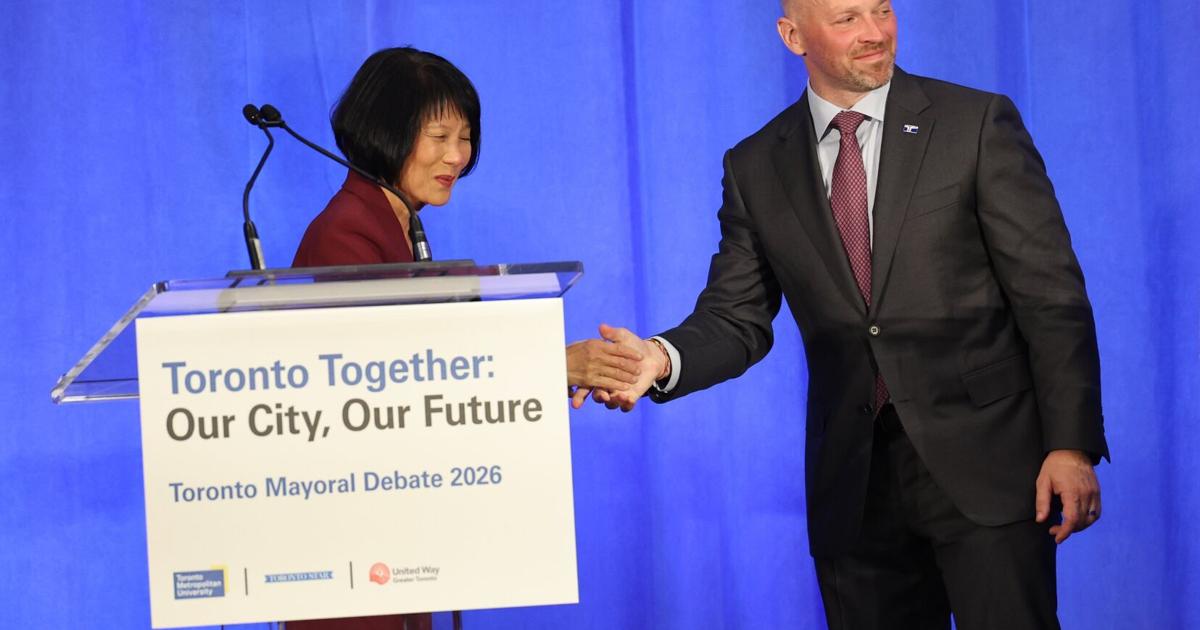
Polls suggested Toronto wanted more change but Brad Bradford wasn’t the change they wanted, writes Martin Regg Cohn.
Mayor Olivia Chow and Brad Bradford shake hands at the end of their Oct. 6 debate. The gap between them politically was never as wide as some people think, writes Martin Regg Cohn.
Martin Regg Cohn is a Toronto-based columnist focusing on Ontario politics and international affairs for the Star. Follow him on Twitter: @reggcohn.
Olivia Chow duped the pollsters, fooled the pundits and gave progressives a scare.
Lest we forget, many of her strongest supporters were wringing their hands about all those public opinion polls suggesting her rival Brad Bradford had momentum. They lamented a campaign that failed to tell her story and sell her successes as mayor, remember?
Now, never mind. She won in a landslide, right?
Wrong. Just because Chow triumphed in the end doesn’t mean it’s time for triumphalism in the aftermath.
Give Chow credit for winning re-election in a tough campaign, in tough times. It’s a testament to her enduring brand and winning persona.
As even Bradford conceded, people think she’s nice. But all is not nice in Toronto the good, which needs to get better — as Chow knows more than most, notwithstanding her no worries rhetoric.
It would be a mistake to believe all the polls were wrong, all the time, when they showed Bradford closing in on her. Or when the surveys tapped into an inchoate feeling of insecurity and a nagging sense of malaise.
So how did Chow regain the lead in the end, after possibly losing it for part of the campaign? Let me count the four ways.
First, she had the incumbency advantage, right? Wrong.
Sitting in the mayor’s chair didn’t spare Mississauga’s Carolyn Parrish from being unseated, nor did it help former NDP leader Andrea Horwath win re-election in Hamilton. Incumbency doesn’t inoculate you if you’re ailing; Chow had the advantage of starting with a healthy lead.
Second, Chow’s campaign had a better ground game. It’s undeniably true that she got out her vote, in a way that B.C. New Democrats didn’t last weekend.
Chow won more than 532,000 votes — besting any previous mayoral ballot count. But the 404,013 votes cast for Bradford would have been enough to make him mayor in many previous races (notably in 2023) if not for Chow’s strength this time. It would be a mistake to discount his vote count.
Third, Chow ran hard because she was running scared — hence the scaremongering in the final stages of the campaign.
Many in the campaign cast Bradford as a tough character, but Chow is no slouch in the heat of battle. For all the soaring rhetoric about “hope over fear,” the Chow campaign tried to sow the fear of God into voters with overheated rhetoric about supposedly ”privatizing” Toronto’s water supply. Legally impossible, but that’s politics.
Fourth, the so-called contrasts between Chow and Bradford weren’t all that sharp. For all the demonization of Bradford as a right-wing bogeyman, and all the hagiography of Chow as a left-wing saint, the two aren’t as different as their campaigns pretend.
One candidate was endorsed by the police union and Doug Ford (read between the lines), and relied on longtime Liberal campaign manager Andrew Bevan to helm her campaign. That would be the bicycle-riding Chow.
Another candidate was endorsed by Gil Penalosa (darling of the progressives when he ran against John Tory in 2022), was backed by Chow’s former deputy mayor Jennifer McKelvie and many other centrist Liberal MPs and MPPs, and was helped by Liberal campaign co-chair (Genevieve Tomney) plus high-profile pollster David Coletto (president of Abacus Data, whose polling appears regularly in the Star). That would be the bicycle-riding Bradford.
True, Bradford tried to recast himself as a right-of-centre candidate aligned with many of Ford’s provincial policies. To be sure, Chow tried to reframe herself as a foe of Ford, despite having worked hand in hand with him on uploading while pulling her punches on Ontario Place.
Bradford pledged to freeze property taxes (hey, it worked for Alvin Tedjo in Mississauga, a favourite of progressives). He also vowed to add 1,000 more cops (never mind defunding, he’s rehiring). And he promised a line-by-line audit to find Chow’s buried blunders.
In fairness, Chow inherited a budget shortfall of nearly $2 billion when she took office. Yet she presided over a credit upgrade for the city on the strength of her brave property tax hikes (see Alvin Tedjo, above) and bold rapprochement with the premier.
The mayor and her NDP allies were wise enough, over time, to rein in some of their excesses and cut their losses. After the fiasco of renaming Yonge-Dundas Square (now officially — if rarely — called Sankofa Square), the left abruptly distanced itself from Sankofa’s steward and chief cheerleader, Chris Moise, who lost his council seat.
Set aside, for the moment, all those faux-ideological and tactical moves. When all is said and done and voted, the truth is that Toronto politics isn’t as polarized as some partisans like to pretend — no matter how hard Ford’s Tories tried to divide Torontonians with a wedge over bike lanes.
The opinion polls suggested Toronto wanted more change. Or at least less of the same.
Bradford presented himself as the politician who could shake things up, but he wasn’t the change voters wanted. And Chow wasn’t one of the bums people are perennially trying to throw out at election time.
Politics aside, people are focused on both fear and hope — which includes safety and security, civic solvency and personal affordability. Between elections, that’s a lesson for the mayor and all councillors at city hall to bear in mind.
Error! Sorry, there was an error processing your request.
There was a problem with the recaptcha. Please try again.
You may unsubscribe at any time. By signing up, you agree to our terms of use and privacy policy. This site is protected by reCAPTCHA and the Google privacy policy and terms of service apply.
Opinion articles are based on the author’s interpretations and judgments of facts, data and events. More details
Martin Regg Cohn is a Toronto-based columnist focusing on Ontario politics and international affairs for the Star. Follow him on Twitter: @reggcohn.