New Ontario law a ‘stealth privatization’ of Toronto Hydro, other local power utilities, critics warn - Toronto Star
A proposed new law would bar municipal representatives from serving on the boards of Ontario's local power utilities — including Toronto Hydro, Alectra and Elixicon in the GTA.
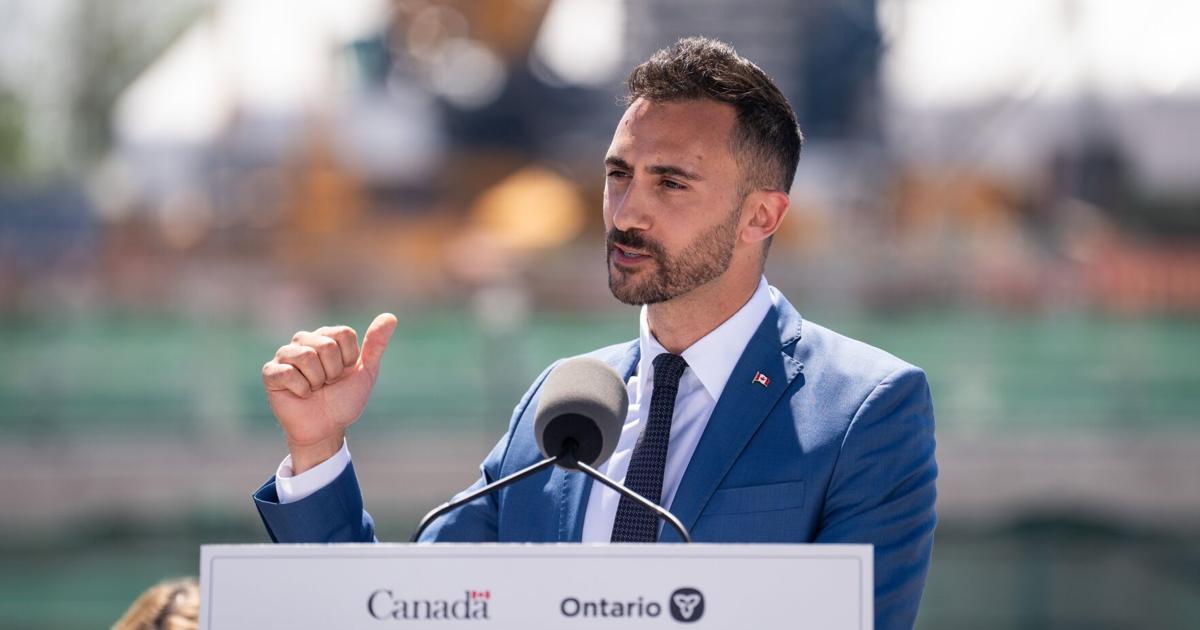
Ontario Energy and Mines Minister Stephen Lecce, seen here in a June 23, file photo.
The province is pushing ahead with legislation that opens the door to the privatization of municipal hydro utilities across the province, including Toronto Hydro.
Before councillors have had a chance to be sworn in following the municipal election, dozens of local public utilities could be forced to kick city staff and elected officials off their boards and replace them with private-sector directors, according to the proposed law being considered at Queen’s Park.
These reforms, critics say, are the first steps on a roadmap to allow institutional investors to take stakes — or even take over — Ontario’s local power companies.
The province says the changes are meant to strengthen and modernize local utilities, based on the recommendations in a new report by a provincial advisory panel. Among other things, the new law would force Ontario’s local distribution companies — including Toronto Hydro, Alectra and Elixicon in the GTA — to change the composition of their boards of directors so they’re entirely made up of independent, “skills-based” directors, who would then have to submit reports to the province identifying future funding shortfalls.
Those directors cannot be elected officials, municipal employees, or members of any local board, reads the proposed law, which was introduced the day after the municipal election and passed second reading at the legislature on Monday.
While the proposal stops there, the new report prepared by the Panel on Utility Leadership and Service Excellence (PULSE) lays out how the funding shortfalls could be addressed with private-sector investment ranging from minority shareholding to majority stakes to outright buy-outs.
The Ministry of Energy stresses that the report is simply a recommendation and that the current reforms do not enable private-sector takeovers of public utilities. But for critics, the legislation amounts to a push toward “stealth” privatization.
“It’s very clearly intended to open the doors to privatization,” said outgoing Coun. Dianne Saxe, who was Ontario’s independent environmental commissioner and a former board member of Toronto Hydro. Saxe said the province starved municipalities of funds and is now using that to justify private investment.
The Ministry of Energy said the reforms will “future-proof” the economy by strengthening the local distribution companies (LDCs) that deliver electricity service to homes, businesses and public buildings.
“Ontario’s utilities were designed for a different era — well before soaring electricity demand and President Trump’s tariffs,” said Energy Minister Stephen Lecce in a news release. “Ontario’s utilities are facing real pressure to expand capacity, replace aging infrastructure and deliver the power needed to grow.”
In background discussions with the Star, ministry officials emphasized that the governance reforms now being proposed have already been implemented voluntarily by some publicly-owned utilities, like London Hydro.
“This reform is about strengthening good governance by separating the role of municipal shareholders from independent board oversight, while preserving a municipal voice,” a spokesperson for Lecce said in a statement.
Privatizing hydro has been politically fraught in Ontario, and former premier Kathleen Wynne suffered a crushing defeat at the polls in 2018 after selling off 60 percent of the provincial transmission utility, Hydro One.
The Toronto Hydro building at 14 Carlton St.
In announcing the legislative reforms for hydro, Lecce credited the PULSE report, which recommends private investment in LDCs to help them meet increasing electricity demand.
“With input from the sector (we’re) taking a phased approach and introducing changes based on several of the recommendations —virtually, almost all of them — from the PULSE panel,” he said.
“Access to external investment, particularly from Canadian institutional investors, is likely to be a critical determinant of whether electricity distribution utilities can deliver required infrastructure on time and at reasonable cost,” the PULSE report states.
The panel recommended a funding strategy that includes “equity investments, debt financing, expectation of dividends and other funding tools.”
In order to “incentivize” these investments, the panel recommended tax reforms that would eliminate tax on investments that take ownership of up to half of any LDC, and charge tax only on any stake that goes past 50 per cent. It also suggested using public funds — in particular, the provincial Building Ontario Fund (BOF) — to spur private investment.
The province’s reforms, which were announced only hours after polls closed in municipal elections across the province, caught city staff and elected officials off guard. Council’s new term doesn’t begin until Nov. 15, and the first council meeting won’t be until December. Meanwhile, councillors are struggling to get a briefing from city bureaucrats.
“The recent election demonstrated clearly that Torontonians will not support privatizing public utilities,” said Shirven Rezvany, spokesperson for Mayor Olivia Chow, referencing the controversy over rival candidate Brad Bradford’s proposal to incorporate Toronto’s water division.
“Mayor Chow will not support any move to open Toronto Hydro to private investment or ownership.”
This past June, council passed a Chow motion affirming that the city would remain sole owner of Toronto Hydro.
Rezvany said the legislation appears to be aimed at addressing governance and finance challenges at smaller LDCs — “issues that Toronto Hydro does not face.”
Newly-elected councillor Mike Layton questioned the timing of the reforms, “when we don’t even have the ability to respond as a council.”
Ontario currently has 58 LDCs, 44 of which are municipally-owned, three are owned by First Nations, three are private, and the rest are co-owned by public and private entities. Collectively, they’re facing $120 billion in upcoming infrastructure costs, according to the province.
Industry has long been ringing the alarm bells about inadequate investment in the electricity grid, says Benjamin Dachis, vice president of research and outreach at Clean Prosperity, a free-market-oriented climate think tank.
“The province has been investing heavily in generation, and we need investment at the local level to get that electricity to consumers,” said Dachis, who previously worked in Premier Doug Ford’s office.
“It’s going to come from one of two sources: debt or equity. Right now, a lot of them are at their debt limits. If they’re going to find equity investment, it’s either going to come from taxpayers or they need to find it somewhere else.”
Other members of civil society warn that private-sector investment comes with strings attached.
“The only thing being future-proofed with this kind of stealth privatization are billionaires’ profits, while the public gets stuck paying the costs through worse service and higher costs,” said Keith Stewart, senior energy strategist with Greenpeace Canada and the co-author of a book on former premier Mike Harris’ attempt to privatize electricity.
The provincial reforms will require LDCs to appoint new boards of directors and remove any existing municipal directors.
A municipality will be able to designate a sole “board participant” who can be an elected councillor or municipal employee, but that participant will not have voting rights, the law says.
During the legislation’s announcement, Lecce quoted an Ivey Business School report that stated: “municipal governments — who are the main shareholders of local distribution utilities — often do not have sufficient industry expertise or professional capacity to effectively monitor LDCs.”
Toronto Hydro’s board is made up of three city councillors and 10 people drawn from the private, non-profit and public sectors.
The new boards will then be required to submit 10-year plans with a funding strategy for additional assets, “ensuring LDCs are financing system investments appropriately,” according to the ministry briefing.
The reforms also include several measures addressing customer protection and streamlining procurement.
The current legislation seems “partially done,” said A.J. Goulding, President of London Economics International and a professor of energy economics at Columbia University.
“This is a beginning and not an ending,” he said. “The authors of the PULSE report put together a package. While you can implement one or two (recommendations) individually, that package works best if they’re all implemented. So far, we don’t know whether there will be additional provisions that will address the other elements of the report.”
Marco Chown Oved is a Toronto-based climate change reporter for the Star. Reach him via email: moved@thestar.ca.
Mahdis Habibinia is part of the Star's city hall bureau, based in Toronto. Reach her via email: mhabibinia@thestar.ca