New Brunswick’s surplus power sales to U.S. could close Irving Paper, firm warns - Global News
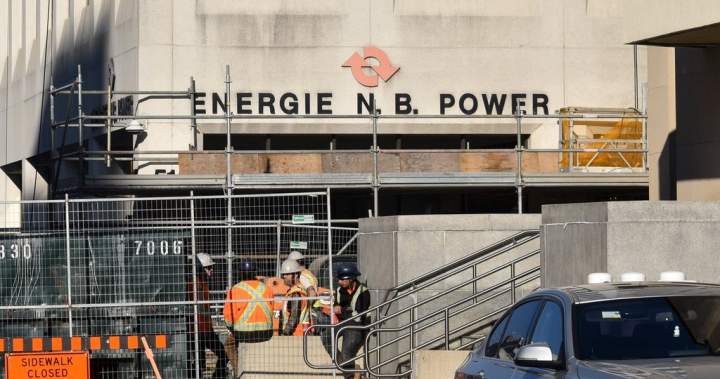
One of Canada’s largest forestry companies is accusing New Brunswick’s public utility of giving preferential treatment to outside industrial customers.
Earlier this year, a provincial regulator gave permission for NB Power to sell cheaper surplus power at market rates to out-of-province customers in a move that could boost the utility’s revenues by millions of dollars.
The regulator’s ruling allowed the utility to prioritize fixed sales contracts with external customers instead of offering discounted surplus rates to local manufacturers.
This would be a departure from the utility’s practices in previous decades, when it sold excess electricity to several large customers in the province at a discount before exporting power.
While the province’s big manufacturers buy some electricity at a fixed rate from NB Power, many are also able to save on energy costs by buying surplus power at a discount.
NB Power says it uses revenues from sales outside of New Brunswick to help offset the cost of providing electricity service to regular customers inside the province.
A statement from the Crown corporation said it “sought changes to better align the price of interruptible energy with the cost of providing this variable product,” referencing excess power sales.
Mark Mosher, an executive at forestry giant J.D. Irving Ltd., alleges that, by prioritizing export contracts, NB Power is selling what was previously the cheap surplus power to external customers in the United States and other provinces.
That forces J.D. Irving and other large-scale industrial customers to purchase more expensive excess power at a higher rate, Mosher told The Canadian Press.
NB Power in a statement late Friday denied selling U.S. customers surplus energy.
“We are not selling hourly export products to anyone before we serve all load, including interruptible power, in New Brunswick,” NB Power said.
A spokesperson did not immediately respond to a question about whether it was selling what was previously the cheap surplus power it sold to local industrial customers to external customers for more money.
Local manufacturers say their costs are rising after losing access to the cheap surplus power.
Mosher said the policy change could drive up power costs for J.D. Irving Ltd. subsidiary Irving Paper by an estimated $10 million annually and cause it to close.
The move “will have devastating consequences” for large manufacturers already facing high rates if it’s not reversed, Mosher said in a statement earlier this month.
J.D. Irving has asked the New Brunswick Energy and Utilities Board to review the decision, arguing that major employers were not notified of the proposal when the regulator approved the changes in April.
Meanwhile, provincial Energy Minister René Legacy says the surplus market pricing benefits NB Power’s fixed electricity customers, including residents, as the corporation is able to find profit elsewhere.
“We could reverse this, and it could be changed, but somebody else would be impacted,” Legacy said in New Brunswick’s legislature on Tuesday.
He added the Liberal government won’t intervene in J.D. Irving Ltd.’s application to the power board.
Jennifer Murray, who as Atlantic regional director for Unifor represents more than 3,000 unionized forestry workers in New Brunswick, says the surplus power change only adds to the economic pressures the forestry sector is already facing.
“In the middle of a trade war, it’s not a wise decision to be selling anything to the United States before looking at taking care of New Brunswickers first,” Murray said in an interview.
She said higher power bills for J.D. Irving, AV Group NB, Twin Rivers Paper Company and other big forestry manufacturers will lead to layoffs and shutdowns, as it has in the past.
Mosher, who is vice president of J.D. Irving’s pulp and paper division, said he’s all too familiar with the relationship between power costs and job losses.
Last year, Irving Paper closed one of its two paper machines and laid off 140 workers in February 2025, blaming a 10 per cent industrial electricity rate increase at the time.
“Successive NB Power rate hikes have resulted in a 38 per cent increase over the last four years, with an additional 17 per cent requested over the next three years, further entrenching an already uncompetitive business landscape,” Mosher said.
“The situation has become untenable, and we know where this leads.”