Mushroom killer Erin Patterson to die in prison
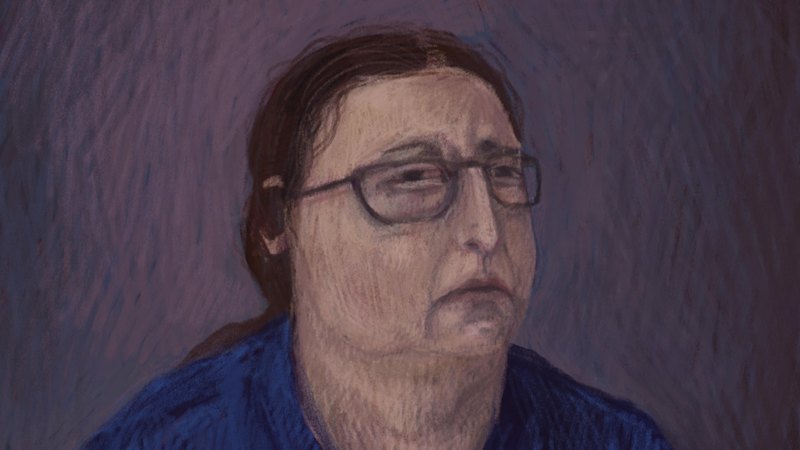
Mushroom cook killer Erin Patterson’s only chance at freedom will lie in a last-ditch plea to Australia’s highest court after three judges found her cold and calculated crimes were so shocking she should die in jail.
Patterson, 52, sat unflinching on videolink from behind bars as Court of Appeal justices Stephen McLeish, Lesley Taylor and Peter Kidd on Friday threw out her appeal against her conviction and instead increased her sentence in response to the prosecution’s appeal, describing it as manifestly inadequate.
Patterson is now the first Victorian woman, and only the second in the country’s history, to receive a sentence of life without parole. The first was NSW abattoir worker Katherine Knight, who stabbed her de facto husband 37 times, skinning him and cooking his body parts as a meal designed for his children in February 2000.
Erin Patterson arrives at an earlier court hearing.Jason EdwardsPatterson had been serving life in prison with a non-parole period of 33 years, after being found guilty by a jury last year of the poisoning murders of her in-laws, Don and Gail Patterson, Gail’s sister, Heather Wilkinson, and of attempting to murder Heather’s husband, Ian Wilkinson.
Sentencing Justice Christopher Beale, who has now retired, resisted calls at the time to jail Patterson for life with no prospect of parole, finding her case was so infamous she was likely to find custody more onerous than others.
However, the Court of Appeal found Patterson’s persistent murderous intent had protracted the suffering of her victims.
The justices said Patterson had coldly planned and executed the murders over nearly three weeks, including extending the invitation to lunch and hiding the truth for nearly a week as her victims lay dying.
Victims Don Patterson, Gail Patterson, Heather Wilkinson and Ian Wilkinson.“Patterson’s conduct was characterised by an elaborate series of deceptions, including the false cancer claims deployed to explain the absence of the children, the false denials of having foraged for mushrooms, the repeated false assertions as to the source of the mushrooms and the destruction of evidence,” McLeish said.
“The offending was carefully planned and deliberate. It represented a cruel breach of trust to members of her extended family.”
McLeish said the court found it “necessary that the sentence vindicated unequivocally the primary value that our society places on each individual human life”.
“This offending was extraordinarily cold and calculated and stood to be denounced in the strongest terms,” he said.
In court to hear the judgment was Erin’s brother-in-law, Nathan Patterson. Surviving lunch guest Ian Wilkinson was notably absent along with Erin’s estranged husband, Simon Patterson.
Nathan Patterson sat with members of the homicide squad – including Nigel L’Estrange and Stephen Eppingstall – who appeared shocked as the decision was handed down. Outside court, they were all smiles, as were the prosecution, who grinned as they walked down William and Lonsdale streets to their nearby offices.
Director of Public Prosecutions Brendan Kissane, KC, and junior barrister Jeremy McWilliams on Friday.Joe ArmaoPatterson’s appeal barrister, Richard Edney, had earlier argued there were a number of potential irregularities in his client’s case, including during the jury’s seven-day sequestration at a Gippsland hotel while they were deciding Patterson’s fate.
The court heard jurors had stayed in the same Traralgon hotel as members of the prosecution and police involved in the case, which Edney claimed amounted to a catastrophic and fundamental failure to comply with the trial rules.
Edney said the “inexplicable failure” to separate the jury created a potential miscarriage of justice with the media seemingly knowing more about potential interactions between the jury and others at the Latrobe Valley hotel than the prosecution did.
It followed an 11-week trial in Morwell, in Victoria’s east, in mid-2025, which heard from more than 50 witnesses.
McLeish, reading a summary on behalf of the three appeal judges, said that while the jury accommodation was “highly undesirable” and “plainly unfortunate”, there was no basis to believe the jury hadn’t reached its verdict according to law.
Jury keepers reported no contact had occurred with anyone outside the jury pool, the court heard.
This, McLeish said, was “significant” because it stood in the face of an argument otherwise based on “conjecture, guesswork or surmise”.
Edney also argued that Patterson had been unfairly grilled by the prosecutor over eight days in the witness box, that 35 errors had occurred in their closing address to the jury, and that large amounts of evidence should not have been allowed into the trial.
Director of Public Prosecutions Brendan Kissane, KC, had dismissed the concerns as baseless and not warranting the granting of an appeal.
The Court of Appeal found five of Patterson’s seven appeal grounds were either without merit or doomed to fail.
After dismissing concerns about the jury’s sequestration, the only remaining appeal ground concerned expert evidence on mobile phone data about Patterson’s visits to two locations where death cap mushroom had been spotted.
But McLeish said the evidence was admissible, and Patterson’s appeal should fail.
“The court has decided that this evidence was admissible as part of the wider circumstantial case advanced by the prosecution, which included the purchase by the applicant of a food dehydrator on the same day as one of the possible visits.”
The trial was told Patterson had fed her four guests beef Wellington laced with death cap mushrooms during lunch at the mother of two’s Leongatha home in July 2023.
Patterson’s Leongatha home, the scene of the fatal lunch.Joe ArmaoSimon Patterson, the killer’s estranged husband, had also been invited to lunch but cancelled the evening before.
Heather Wilkinson and Gail Patterson died on August 4, 2023, from multiple organ failure, with a diagnosis of amanita mushroom poisoning. Don Patterson died the following night.
Local pastor Ian Wilkinson survived after spending several weeks in an induced coma.
Patterson and her legal team now have 28 days to decide if they take her fight to the High Court.
She would have to given special leave to do so, which is granted only in the rarest of cases.
Start the day with a summary of the day’s most important and interesting stories, analysis and insights. Sign up for our Morning Edition newsletter.
You have reached your maximum number of saved items.
Remove items from your saved list to add more.
You've used all of your gift articles. 3 more will become available on the 1st of every month.