
More than Plan B: Bangladesh hockey want to stop being the fallback option
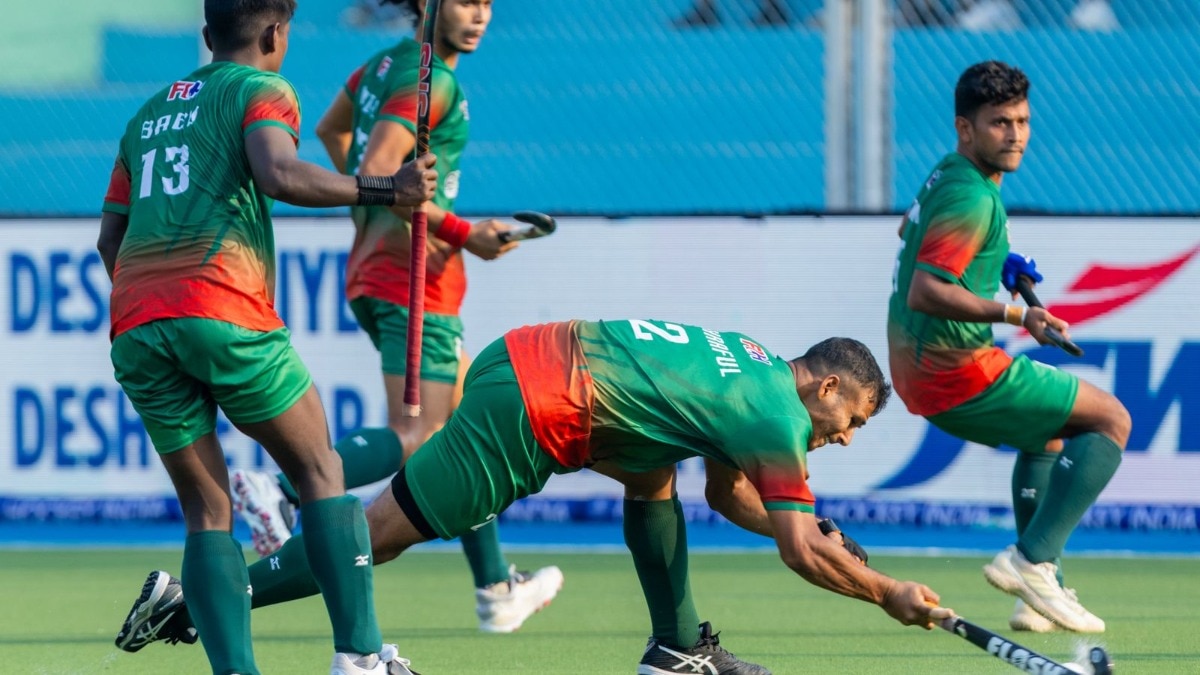
Who doesn't love a good underdog story in sport? A team doesn't have to slay giants or win every match to capture hearts. Sometimes, it's the fight, the resilience and the desire to punch above its weight that make a team special. In Jalandhar, Bangladesh may just be that team.
In hockey, Bangladesh are hardly considered among Asia's elite. Ranked 27th in the FIH rankings, they have never featured in an Olympic Games or a World Cup as an independent nation. Their only World Cup appearance came in 1971, when they were still part of Pakistan.
In a country where cricket and football dominate the sporting landscape, hockey has largely remained in the shadows. And with Bangladesh enduring political turmoil over the past few years, the sport has had to navigate its own challenges.
More often than not, Bangladesh find themselves playing the role of last-minute replacements. When a team pulls out of a tournament, they are among the first names on the speed dial of Hockey India and the Asian Hockey Federation.
It happened at the Asia Cup. And now, when Pakistan declined India's invitation to compete in the Asian Champions Trophy (ACT), Bangladesh stepped in once again.
For a team that rarely gets the opportunity to compete against the continent's best, such tournaments offer invaluable exposure. But this time, Bangladesh arrived in India with a familiar face in their dugout.
Gerhard Rach, who briefly served as India's first foreign coach in 2004, is now tasked with steering Bangladesh's hockey ambitions. His previous stint with India was a turbulent one, with his tenure playing a role in the ousting of Dhanraj Pillay and several other key names.
Alongside him is captain Ashraful Islam, a veteran who has earned 106 caps and scored 82 goals for his country.
Together, the coach and captain have a straightforward mission: to shed Bangladesh's tag as a replacement team and establish themselves as a force to be reckoned with in Asian hockey.MORE THAN JUST THE SCORELINE
Bangladesh's numbers at the ACT make for grim reading. After three matches, they are yet to register a win or earn a point. They have scored just one goal and conceded 20.
On paper, it is a campaign that tells a story of struggle. But the numbers don't quite capture the fight Bangladesh have shown on the pitch.
They were hammered 0-13 by India in their opening match, and another heavy defeat was widely expected when they faced Japan. Instead, Bangladesh produced a display of grit and resilience that offered a glimpse of their potential.
Defending deep and in numbers, they refused to give Japan the space to string together passes or create clear-cut chances. Their resistance was finally broken in the 40th minute, but they held their own for much of the contest, eventually going down 0-1.
Against Japan, Bangladesh showed they could make life difficult for a stronger opponent. Against Malaysia, they offered a glimpse of what they could do going forward.
The finishing touch and composure inside the circle were still missing, but Bangladesh finally opened their account in the tournament, with young sensation Amirul Islam finding the net.
For Rach, the performances need to be viewed in the context of where Bangladesh are in their development.
"People still don't understand where we're coming from. Our opponents are playing at a very high level, and we are not there yet. We have to reach that level, but it takes time," said coach Rach.
Captain Ashraful, meanwhile, believes his side need another year or two before they can consistently challenge their opponents.
"Maybe we need one or two more years because we're still learning, and we haven't played that many practice matches. We have just started, so I think when we play more matches, we gain more confidence. When we get more confident, we can score," said Ashraful.advertisementBAPTISM BY FIRENo team wants to be on the receiving end of a heavy defeat at a major tournament. For players, there is little joy in returning home knowing their side is still several levels below the opposition.
But for Bangladesh, such setbacks may be a necessary part of the journey.
Both Rach and Ashraful believe that competing against Asia's best, even when the results are painful, is essential to the team's growth. For Rach, the first step is overcoming the fear that comes with facing the continent's heavyweights.
"You need matches like these to learn. Of course, we have to learn how to deal with what teams like India do against us and correct our mistakes. The main thing is that we were afraid to play against them. We must forget that fear and become more confident," said Rach.
The challenge is not just about defending better or preventing heavy defeats. Bangladesh also need to turn the opportunities they create into goals.
Ashraful believes the team are beginning to understand how to create those openings. The next step is making them count.
"These are big-team matches. All the teams are big teams. They are playing in the World Cup and Olympics, and we're not at that level. But we are learning, and when we play, we realise that we create a lot of chances. If we take those chances, we can win these matches," said Ashraful.advertisementBUILDING TOWARDS A BIGGER DREAMBangladesh's ambitions extend beyond the ACT. The country continues to navigate a challenging political situation, while hockey remains a sport in need of greater investment, infrastructure and institutional support.
Rach admitted that his team are still playing catch-up when it comes to resources and preparation. Even something as fundamental as video analysis remains a challenge.
"We will have to look at video analysis, although we don't have access to a full video. We watch the available clips and then work on improving things for the future," said Rach.
Back home, however, Ashraful believes there are encouraging signs of change. He pointed to the support from the new government and the sports minister, particularly efforts to provide financial security to athletes and encourage more players to take up the sport.
"At the moment, our new government and our sports minister is doing very well. He takes care of all the sportspersons very well, not only hockey, but every sport in Bangladesh. He is giving salaries now, so a lot of players are coming to play hockey," said Ashraful.
For Ashraful, the dream is to take Bangladesh to the biggest stages in international sport. While that may seem ambitious given the team's current standing, the skipper believes the opportunity is there if they continue to improve.
"For me, I think we can play in the next World Cup. We have a chance, and we have a very big chance in the 2028 Olympics. We are already qualified for the Olympic qualifiers. So if we play like this and keep improving, if we play this way, we can reach there," said Ashraful.
Rach, meanwhile, has a more immediate target in mind. His priority is to build a competitive squad for next year's Nations Cup, a tournament that could open the door to the FIH Pro League and provide Bangladesh with more opportunities to test themselves against higher-ranked opposition.
"The end goal is to reach the top six in Asia, get to the level of the other teams, beat them and improve our ranking to sixth. But the main priority right now is to build a team for next year's Nations Cup. That is why we are building the team up," said Rach.
Bangladesh may well finish at the bottom of the ACT standings. Their results so far suggest that the gap between them and Asia's leading teams remains considerable.
But for Rach and Ashraful, the tournament is about more than wins and losses. It is about learning to compete without fear, gaining confidence against stronger opposition and laying the foundations for a more competitive future.
For a team accustomed to stepping in when others pull out, the ambition is to ensure that Bangladesh are no longer viewed as mere participants filling up the numbers.
In Jalandhar, Bangladesh may not be winning many matches. But they are hoping to leave Punjab with something far more valuable: the belief that their story in Asian hockey can be about more than simply turning up when another team doesn't.- Ends
