Mars is not dead: New discovery reveals the Red Planet is breathing
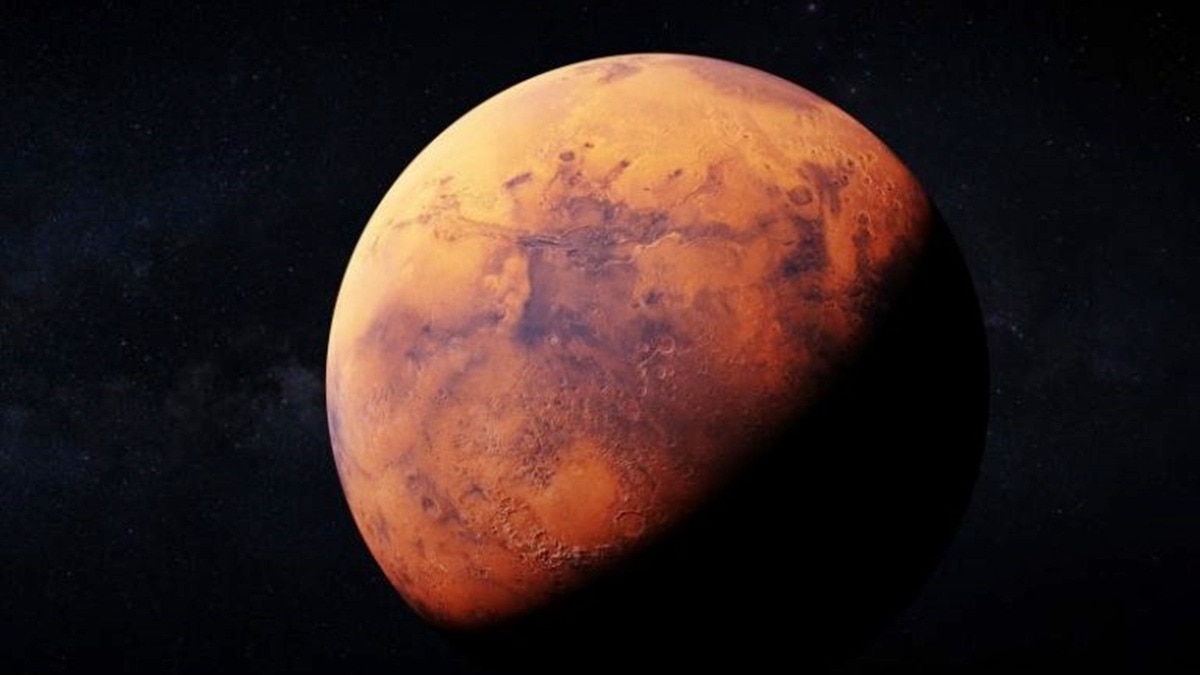
Mars may not be the geologically dead world scientists once thought it was. A new study has uncovered evidence of gases seeping through volcanic fissures on the Red Planet, suggesting that magma beneath its surface may still be active.
The discovery, based on observations from the European Space Agency’s (ESA) ExoMars Trace Gas Orbiter (TGO), points to the possibility that Mars has retained enough internal heat to support volcanic activity, even if it is currently dormant.
An international research team led by Alexander Trokhimovskiy found unusual concentrations of hydrogen chloride gas above fissures on the flanks of Alba Mons, one of Mars’ major volcanoes. The findings were published in the journal Science Advances on November 4, 2026.
Hydrogen chloride was first detected in the Martian atmosphere by the Trace Gas Orbiter in 2021. On Earth, the gas is commonly released from volcanic vents, raising the possibility that it could have a similar origin on Mars. Photo: ESA
The researchers noticed that hydrogen chloride concentrations usually follow seasonal patterns, peaking during the northern hemisphere winter before largely disappearing in summer. However, one recurring exception stood out: spikes of the gas above volcanic fissures near Alba Mons during early summer.
The team then examined the region using TGO's Colour and Stereo Surface Imaging System (CaSSIS). Images revealed narrow, apparently fresh fissures, some stretching hundreds of metres, accompanied by changes in surface colour.
Scientists believe these cracks could be channels through which gases from a dormant magma chamber are escaping. During the freezing Martian winter, when temperatures can fall to around minus 120 degrees Celsius, ice may block the fissures. As temperatures rise, the ice sublimates, allowing trapped gases to seep out.
"This suggests that Mars has retained enough internal heat to support volcanic activity until recently, and possibly still does," said Daniel Mege, co-lead author of the study and a professor at the Space Research Centre of the Polish Academy of Sciences.
Mars hosts the largest volcanoes in the Solar System, and orbital images have previously suggested that some were active within the last few million years. Seismic observations have also detected marsquakes. However, scientists have not directly observed a new eruption or lava flow.
The discovery could also have implications for the search for life. If rising magma interacts with underground water, it could create warm, hydrothermal environments where microorganisms might survive, protected from the planet's harsh surface conditions.
Researchers say the fissures around Alba Mons could therefore be promising locations to investigate for signs of past or present microbial life.- Ends