
Mark McQueen: Olivia Chow’s real problem isn’t a lacklustre election campaign - Toronto Star
By putting energy into renaming things instead of fixing the city, the mayor gave voters a glimpse of her priorities.
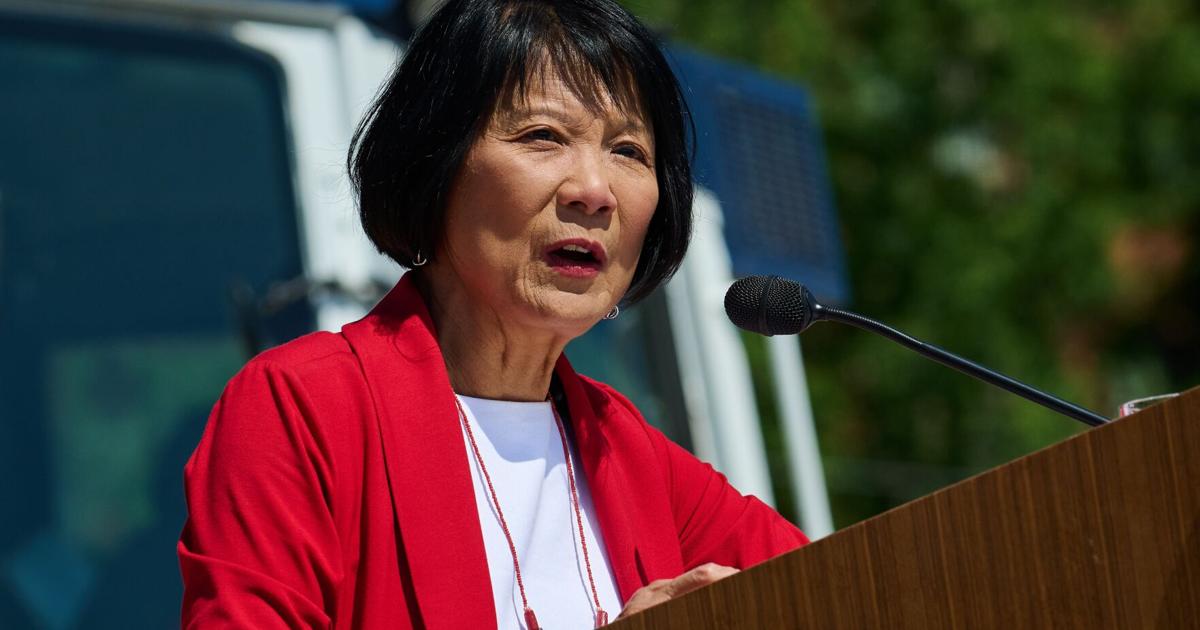
Mayor Olivia Chow makes a housing announcement at a press conference in Toronto on Aug. 5, 2026.
Mark McQueen is a Toronto-based entrepreneur, a former board chair of two federal agencies and adviser in Brian Mulroney’s PMO and a columnist for the Star. Follow him on X: @markrmcqueen
If Mayor Olivia Chow loses on Oct. 26, she can’t blame her campaign team.
I see plenty of Chow lawn signs on high-profile city plots, which speaks to a well-organized volunteer crew. Equally helpful, the left-wing activist group Progress Toronto has done the arms-length dirty work of attacking her main opponent, Brad Bradford.
The mayor has received endorsements from the usual suspects, even if it’s unclear who would be swayed by former NDP premier Bob Rae declaring his support for former NDP MP Chow. A 40-year career politician, Chow is riding both name recognition and incumbency — traditionally silver bullets in municipal elections.
Despite these luxuries, Chow and Bradford are now polling within the margin of error.
Having started her political career in 1985 as a Toronto school board trustee, the mayor must know that voters care about deliverables. Unfortunately for Chow, she has little to show for her first term.
According to her campaign, Chow’s three hallmark achievements have been freezing TTC fares, expanding a school lunch program and increasing library hours. If you want to assess Chow’s record, that’s a great place to start.
TTC ridership fell more than 6 million last year, and that trend continued through the first half of 2026. A fare freeze — combined with a push by employers for staff to spend more time at the office — should have provided a boost. It didn’t. Meanwhile, GO Transit ridership grew consistently over the same 18-month period.
Councillor Josh Matlow, a TTC board member and Chow ally, connects lower ridership to the fact that “some riders do not feel safe on the TTC.”
As someone who has taken the subway regularly since 1976, I don’t think Chow appreciates just how bad things have become. When she revealed during the recent CityTV debate that she hadn’t taken the TTC regularly for some time, instead using a driver paid by the city, it all made sense.
On the school lunch front, it’s hard to assess Chow’s record. Toronto’s Daily Bread Food Bank reported more than 4 million client visits during a 12-month period — up 18 per cent over the previous year. Would that figure have been even higher if not for the mayor’s efforts? Quite possibly.
Longer library hours are certainly a good idea, but the fact that my own local library requires a security guard during the moms-and-tots morning story-time session speaks volumes. Another example of the stark disconnect between Chow’s priorities and our own lived experiences.
Toronto police Chief Myron Demkiw claims “the data is showing some real improvements” on crime, yet the TPS crime portal reports that “major crimes” are up 30 per cent over the past 10 years. During Chow’s tenure from 2022 to 2025, home invasions are up 83 per cent, assault causing bodily harm 23 per cent and robbery with a weapon 21 per cent.
The recent decrease in car thefts is welcome, but they’re still 112 per cent higher than a decade ago. As Chow doesn’t own a car, she didn’t experience the pain of thousands of her constituents who came to find that the only way to avoid a $1,000 increase in annual insurance premiums was to reach into our own pocket and buy a TAG GPS tracking device.
“Toronto has a public-safety reputation problem,” according to David Valentin of Liaison Strategies. Perhaps that explains why so many entrepreneurs are starting businesses elsewhere. According to the Canadian Venture Capital and Private Equity Association, eight of Canada’s 10 most active seed-investor groups are based outside Toronto. Fewer new startups means fewer job opportunities for our youth.
Breaking news, interactive polls, video, and voice notes. Star stories you’ll want to share, delivered where you’re already chatting. Follow the Star on WhatsApp.
My colleague Richard Warnica believes Chow has struggled “to read and respond to the public mood,” but I think her problem is more fundamental.
By putting energy into renaming Yonge-Dundas Square, for example, instead of fixing the fraying fabric of this once-great city, Chow gave the public a glimpse of her priorities. Many didn’t like what they saw.
According to a new survey for Build Canada, 61 per cent of “long-term residents say Toronto is a worse place to live than four years ago.” That’s usually the death knell for a sitting politician.
Error! Sorry, there was an error processing your request.
There was a problem with the recaptcha. Please try again.
You may unsubscribe at any time. By signing up, you agree to our terms of use and privacy policy. This site is protected by reCAPTCHA and the Google privacy policy and terms of service apply.
Opinion articles are based on the author’s interpretations and judgments of facts, data and events. More details
Mark McQueen is a Toronto-based entrepreneur, a former board chair of two federal agencies and an adviser in Brian Mulroney’s PMO and a columnist for the Star. Follow him on X: @markrmcqueen
