Margaret Atwood has thousands of microplastics in her blood and she’s not happy about it - Toronto Star
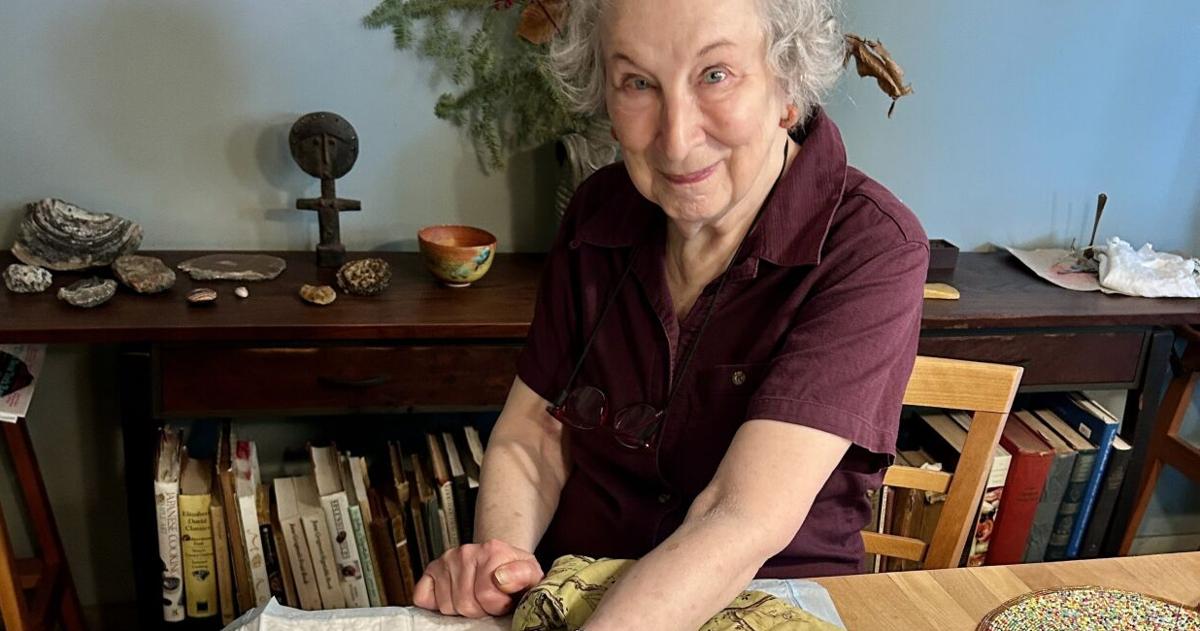
Familiar faces across North America, from Rona Ambrose to Fran Drescher, were tested for microplastic particles. Here's what the findings mean.
Margaret Atwood, author of “The Handmaid’s Tale” and other iconic literary works, gets her blood drawn for a project investigating microplastic contamination in the bodies of high-profile individuals in Canada and the U.S.
Margaret Atwood was shocked by the results of her blood test.
The 86-year-old literary icon told the Star that, growing up in the backwoods of northern Quebec and rural Ontario, “there were no plastics in my childhood and we never ate much plasticized food.” Yet scientists have found thousands of microscopic plastic shards flowing through her veins — mostly common polymers found in plastic bottles, food packaging, footwear and tires.
Atwood is one of 28 high-profile participants across Canada and the U.S. featured in a new report that measured microplastics in the bodies of publicly identified individuals — the first to do so, according to the authors. The analysis detected plastic contaminants in the blood of all participants but one.
“There’s a very good chance that (microplastics) are in all of us,” said Rick Smith, the Toronto-based documentarian and author who spearheaded the report. The project was co-led by the Canadian Association of Physicians for the Environment (CAPE) and the non-profit Plastic Pollution Coalition.
“This report is an attempt to bring the issue home, make it real to people and further the public discussion of solutions,” Smith told the Star.
Within a single microlitre of Atwood’s blood — the size of a small droplet of water — researchers counted an average 12,126 microplastic particles. Asked how she felt about the results, Atwood responded with one word: “Bad.”
She wants to see more research in this area, “because we don’t really know what (microplastics) are doing to us, animals, fish, plants,” Atwood said over email. “And is there a remedy that would work?”
We know that researchers have detected microplastics in nearly every human organ and everywhere from the deepest depths of the ocean to the far stretches of the Arctic.
It remains unclear exactly what these particles are doing to our health and the environment, although recent studies have linked them to neurodegenerative illness, heart disease and reproductive dysfunction.
And some researchers have raised concerns about the accuracy of microplastics testing, as the particles are so small that many fall below the detection threshold for current analytical techniques.
Published in late October, the report features the blood-test results of influential figures in music, art, politics and media, from U.S. actor Fran Drescher to former Canadian cabinet minister and interim Conservative Leader Rona Ambrose.
Of the 28 participants, the only one without detectable microplastics was outgoing Los Angeles mayor Karen Bass. A wide range of microplastics was identified in the rest, from 1,890 to nearly 200,000 particles per microlitre of blood.
The American researchers believe they’re the first to find shards of plastic in the human brain, after similar findings in animal models.