March and March says Kubayi has ‘lost moral authority’ after warning movement over court order - IOL
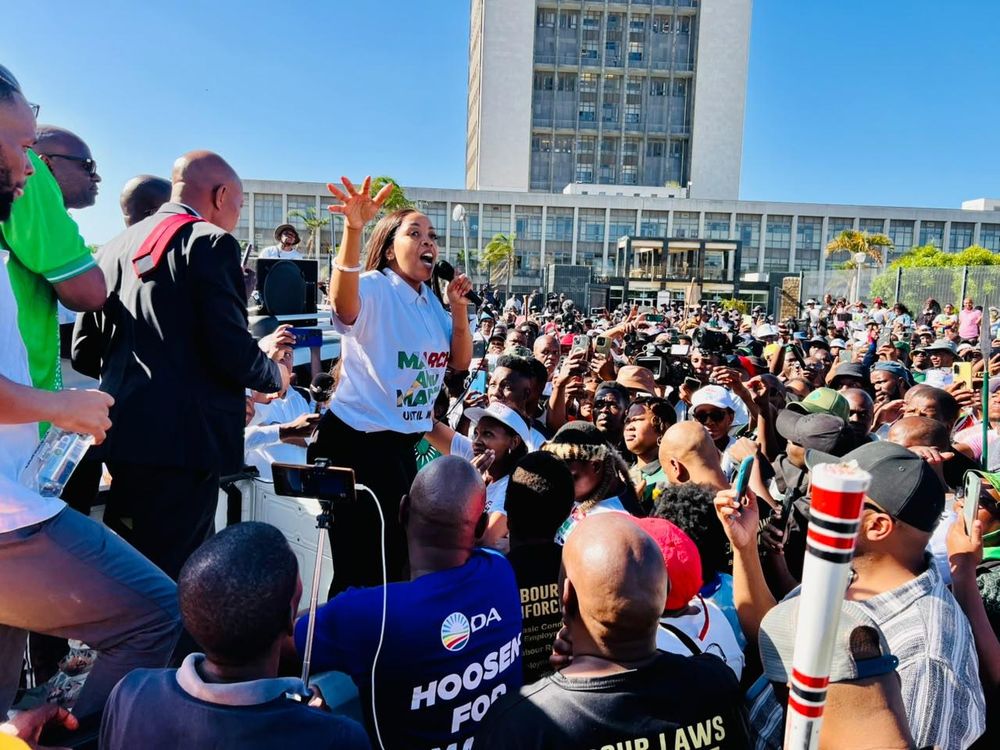
The March and March Movement has accused Justice Minister Mmamoloko Kubayi of losing her moral authority to lead South Africans after she warned the group against defying a court order restricting its demonstrations.
March and March has fired back at Justice Minister Mmamoloko Kubayi, declaring that she has lost the moral authority to lead South Africans after warning the group over its protests.
Kubayi said the government would not allow individuals or organisations to place themselves above the law, warning that there would be consequences for anyone who disregarded the court's restrictions.
She said she would address the movement and outline the government's next steps at a media briefing after Wednesday's local government elections.
“The issue is that we've got to set the record straight. We can't allow anarchy in this country.
“The court has set out. We've been observing. We see that even despite a court order, they want to defy. We can't have that,” she said.
Her comments come as the movement faces legal restrictions following weeks of anti-illegal immigration demonstrations in Durban, which have been accompanied by violence, property damage and growing tensions between protesters, foreign nationals and police.
In response, the March and March Movement said it had noted Kubayi's remarks, accusing her of making threats against South African citizens who were exercising their democratic rights.
The movement's spokesperson, Sandile Dube, said the minister had failed to address illegal immigration and the alleged involvement of foreign nationals in criminal activities and the informal economy.
“The minister has failed dismally to squeeze illegal immigrants out of South Africa.”
“The minister could not squeeze the zama zamas who are running a secondary economy. Already, the foreign nationals from Somalia, Pakistan and Bangladesh have squeezed South Africans out of the township economy, so there is nothing left to squeeze except to kill the citizens because you have already stripped them of their dignity,” Dube said.
The movement pointed to unemployment, particularly among young people, and worsening poverty as some of the reasons behind its demonstrations.
It argued that the unemployment rate stood at 32%, while 47% of young people remained unemployed.
“The poverty line deepens every day. We believe that the citizens have suffered enough and they must liberate themselves,” it said.
Dube also accused Kubayi of failing to address incidents in Gqeberha in which foreign nationals allegedly threatened South Africans and brandished weapons.
“The March and March Movement is baffled by the fact that the minister does not have the courage to call out foreign nationals who are terrorising citizens in Gqeberha, brandishing weapons and threatening to kill South Africans that voted for the minister,” he said.
Dube said the movement believed Kubayi had lost the moral authority to lead South Africans and accused her of wanting to deal harshly with citizens.
“The March and March Movement believes the minister as lost the moral authority to lead South Africans, and she has demonstrated her desire to squeeze and deal with South Africans harshly. We call upon our people to respond through the democratic process,” he said.
He added that the movement would continue opposing what it described as the weaponisation of the courts to settle political scores.
Dube rejected suggestions that the movement was anarchist or uncivilised, saying it comprised people from different backgrounds, including professionals, religious leaders, businesspeople, unemployed people and members of poor communities.
“The Movement is not a bunch of uncivilised people; it is not a bunch of anarchists.
“It is an organisation led by educated people, the unemployed, the poor members of society, religious leaders, professionals and businesspeople,” he said.
He maintained that the movement respected the courts, the rule of law and the authority of a legitimate government.
“However, to the extent that the government is reneging on its social contract, the Movement has a duty to ensure that the government is held accountable without fear or favour,” Dube said.
Acting Police Minister Firoz Cachalia and KwaZulu-Natal police commissioner Lieutenant-General Nhlanhla Mkhwanazi approached the Durban High Court for an urgent interdict against the movement and several of its leaders.
The application followed a series of demonstrations in Durban's central business district and around the Department of Home Affairs Refugee Reception Centre in Berea.
IOL previously reported that the unrest included the torching of 14 vehicles and damage to about a dozen shops.
Police raised concerns about escalating tensions and intelligence warnings of an alleged plan to set fire to the refugee reception centre.
The court subsequently imposed restrictions on the movement and its members, including a prohibition on demonstrations during the election period.
When protests resume, they may only take place between 10am and 3pm along designated routes.
The order also prohibits protesters from carrying weapons, disguising their faces or engaging in violent conduct. It further prohibits intimidation, attacks on people and damage to property.
The restrictions do not amount to a blanket ban on peaceful protest.
The movement's attorney, Xolani Zuma, told supporters outside court that demonstrations would resume after November 6 and urged them to comply with the order.