Lula’s fourth term: a victory for the oppressed and a challenge to imperialism - IOL
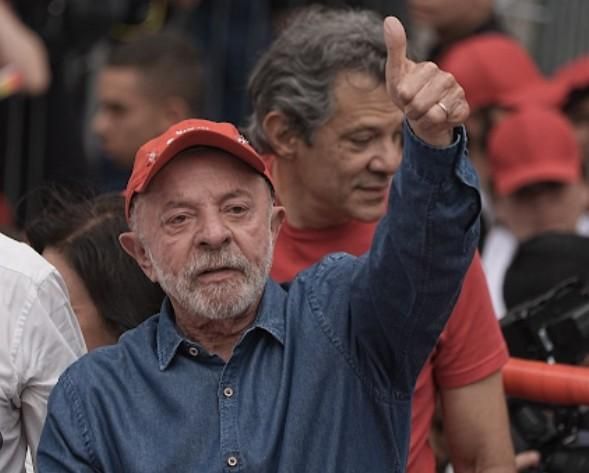
I write these words in a spirit of pure jubilation. When the Superior Electoral Court of Brazil confirmed that President Luiz Inácio Lula da Silva had secured a fourth term, defeating Flávio Bolsonaro in the runoff of 25 October 2026, I felt the kind of elation that comes only when history bends, however briefly, toward justice.
This was not merely another election result. It was a decisive statement by the Brazilian people that they would not be bullied, bought, or dictated to by external powers. Despite the enormous financial resources poured into the opposing campaign and the open interference of the United States and Israeli Zionist forces, Lula prevailed. For me, as someone who has long regarded Lula as one of my political heroes, this victory feels personal.
I have admired Lula for decades. Long before the current term, his journey from metalworker and union leader to president embodied the possibility that the poor and the working class could seize political power and use it to transform society. What has always impressed me most is his consistency. He has never wavered in his opposition to American imperialism, even when it was politically costly. In recent years that consistency has been most visible in his unflinching stance against the genocide in Gaza.
While many leaders around the world chose silence or equivocation, Lula named the crime for what it is and stood with the Palestinian people. That moral clarity deserves applause. It is rare in an age when geopolitical calculation so often trumps principle. His victory is therefore not only a Brazilian triumph but a vindication of the idea that progressive leadership can survive, and even thrive, when it refuses to genuflect before empire.
The scale of the obstacles he faced makes the achievement even more remarkable. Flávio Bolsonaro entered the runoff with the momentum of a first-round lead and the explicit or tacit support of powerful external actors determined to reverse the progressive direction of Latin America’s largest country. The United States has a long and ugly history of meddling in Latin American elections, from the coups of the twentieth century to more recent efforts to destabilise governments that refuse to subordinate their sovereignty. Israel, through its close strategic alignment with Washington and its own networks of influence, has increasingly inserted itself into these contests, seeking to punish any leader who challenges its actions in Palestine.
In the Brazilian case, these forces threw their weight behind Bolsonaro in the hope of installing a government more pliant to their interests. Lula’s campaign had to contend with this asymmetry of resources and the relentless propaganda that accompanies such interventions. That he closed the gap and emerged victorious is a testament to his resolve, the organisational strength of the Workers’ Party and, above all, the political maturity of the Brazilian electorate.
This outcome matters far beyond Brazil’s borders. Brazil is not a minor player. It is one of the world’s largest economies, a continental giant and a founding member of BRICS. Its political orientation shapes the balance of forces in the Global South. When a country of Brazil’s weight reaffirms a progressive path, it strengthens the project of a multilateral world order in which the nations of the South are no longer mere appendages of the North.
Lula’s re-election for a fourth term signals that the project of the South’s ascent remains alive. It is a rejection of the notion that Latin America must remain a sphere of influence for Washington, and an affirmation that countries of the Global South can chart their own course in alliance with one another. It is also a clear rejection by the Latin American people of US meddling and intimidation of Cuba, a long-standing campaign of economic warfare and political pressure that has sought to crush the Cuban people’s right to determine their own future.
For progressive forces everywhere, the Brazilian result is a much-needed source of inspiration. We live in a period when right-wing reaction has scored victories in several countries and when imperial powers have shown renewed willingness to use force, sanctions, and covert interference to maintain dominance. The unprovoked American attack on Iran, the ongoing support for the devastation in Gaza, the abduction of President Nicolás Maduro in Venezuela, and the sustained intimidation of Cuba are all part of the same pattern: an attempt to punish independence and to intimidate those who seek alternatives.
Lula’s victory punctures the narrative that such efforts are irresistible. It demonstrates that when people organise, when they defend their sovereignty, and when they refuse to accept that their future must be written in foreign capitals, they can prevail.
From the perspective of the Economic Freedom Fighters (EFF), this moment carries direct lessons for South Africa. We face our own local government elections on 4 November. The same global forces that sought to derail Lula’s re-election are active in our own politics, promoting neoliberal orthodoxy, protecting entrenched interests, and opposing any serious programme of radical economic transformation. The Brazilian people have shown that it is possible to defeat these forces at the ballot box. We must learn from their example: organise relentlessly, speak the truth about imperialism without fear, and offer the people a clear alternative rooted in land, jobs, and dignity.
I do not romanticise the challenges that lie ahead for President Lula. He will govern a polarised country and will face a hostile Congress. External pressure will not disappear. Yet the fact that he has won this battle against such odds gives me confidence that the progressive project retains its vitality. His determination in the face of superior financial resources and coordinated intervention is something I have always admired, and this election has only deepened that admiration. Lula has once again proven that a leader who remains faithful to the working class and to the principle of national sovereignty can still command the support of millions.
In the end, this is a victory for all who believe that another world is possible: a world organised around solidarity rather than domination, around the interests of the many rather than the privileges of the few. The Brazilian people have delivered a powerful message: American imperialist meddling and the politics of right-wing reaction can be defeated. For those of us in the Global South who continue to fight for economic freedom and true multilateralism, Lula’s fourth term is both a celebration and a call to action. We must stand together, learn from one another, and press forward until the ascent of the South is no longer an aspiration but a lived reality.
Ambassador Carl Niehaus is an EFF member of parliament.