
Lula team to keep emphasizing defense of Brazilian sovereignty - Valor International
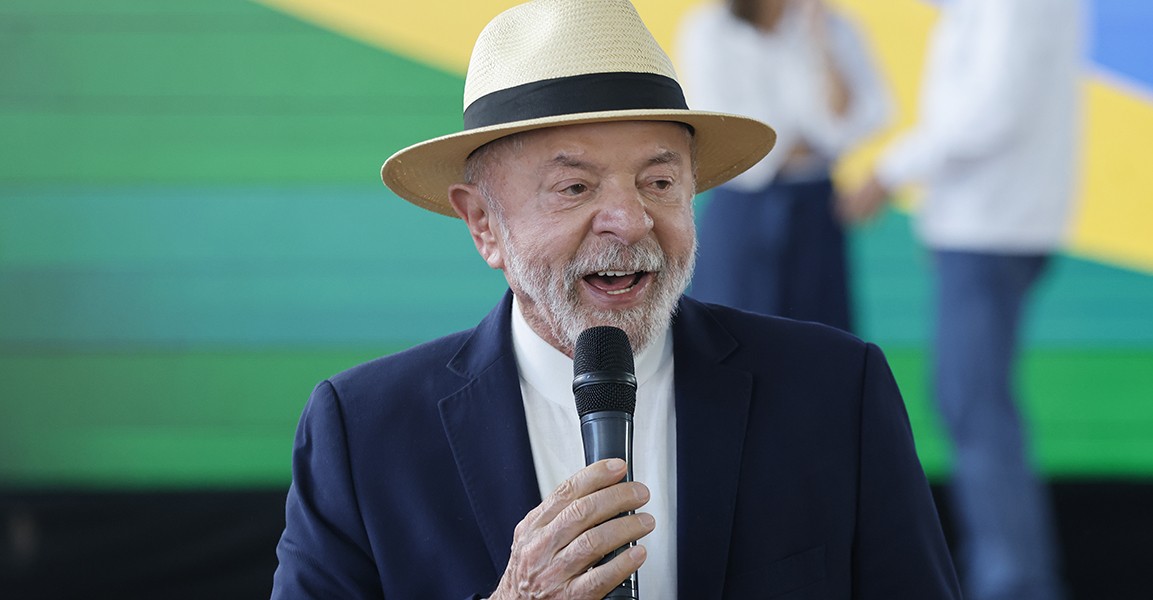
Less than three months before the first round of voting, the new round of tariffs announced by U.S. President Donald Trump has prompted President Lula’s reelection campaign to recalibrate its strategy. Within the Workers’ Party (PT), the view is that the measure reinforces a narrative that had already been taking shape for the 2026 election. It also cements the central theme of Lula’s campaign: the defense of national sovereignty as a concept capable of tying together both domestic and international issues.
According to members of the pre-campaign, the latest U.S. move expands the potential of that message by linking domestic debates to external pressures.
The campaign’s strategy is to make sovereignty its overarching political theme. The idea under discussion is to present Lula as the standard-bearer of a “Brazil of well-being,” connecting improvements in people’s quality of life to the proposals being developed for the government platform. From that foundation, the campaign intends to fold issues such as public security, economic growth, and expanded social protection into a broader message of national autonomy and structural reform.
The internal assessment is that the new international environment strengthens this narrative. Lula’s allies argue that Trump’s tariff increase creates favorable conditions to highlight the contrast between a government seeking to defend Brazil’s national interests and opponents portrayed as aligned with outside pressure.
The expectation is that this message will take center stage at the PT’s national convention, scheduled for Aug. 2 in São Paulo, where Lula’s candidacy is expected to be formally confirmed and sovereignty presented as the campaign’s defining political theme.
The episode has also accelerated the campaign’s communications strategy, which until now had focused mainly on domestic issues, such as the debate over ending the 6x1 work schedule, capitalizing on the final days before Congress started the recess. Within hours of the announcement imposing 25% tariffs on Brazilian products, campaign officials began encouraging party activists to link the U.S. decision to the family of former president Jair Bolsonaro.
Under the slogan “TariFlávio,” tariff+Flávio, the campaign intends to push the narrative that Senator Flávio Bolsonaro (Liberal Party, PL) and his allies acted against Brazil’s economy and national sovereignty. The PT has begun using its social media channels to mobilize supporters and counter the conservative opposition’s messaging. Campaign materials describe the mission as “spreading the truth” about the origin of the tariffs and label members of the Bolsonaro family “traitors to the nation.”
The strategy has also been reinforced by Guilherme Boulos, Minister of the General Secretariat of the Presidency and one of the political coordinators of Lula’s pre-campaign. In an audio message sent to party activists, Boulos said the public must be told the tariffs have “two fathers”: Trump and Flávio Bolsonaro, who, according to the minister, acted out of electoral self-interest.
Beyond its social media push, Lula’s team is monitoring the reactions of other presidential hopefuls. The goal is to adjust its messaging as the battle over public narratives evolves and to capitalize on any divisions within the opposition over the trade dispute between Brazil and the U.S. Internally, the PT believes there’s room to expand this line of argument, since recent polls suggest voters have become more receptive to Lula.
A Genial/Quaest poll released Thursday (16) found that 51% of respondents agreed with Lula’s claim that Flávio Bolsonaro asked Trump to impose tariffs on Brazil. In June, that figure stood at 47%. Lula’s campaign views these results as evidence of a more favorable environment for the government’s narrative.
Although sovereignty is being treated as the campaign’s central theme, no decision has yet been made on what its main economic platform will be. The prevailing view in internal discussions is to avoid a platform built around entirely new promises and instead focus on continuing policies implemented during Lula’s third term, while reviving proposals that have stalled or need more time to complete.
Within that framework, one of the key discussions is whether a single flagship proposal will be needed to encapsulate the economic agenda of a potential fourth Lula administration. In 2022, expanding the income tax exemption threshold for individuals earning up to R$5,000 a month played that role. This time, the campaign is weighing a range of measures aimed at voters without necessarily relying on a single headline proposal.
Among the options under consideration are introducing fare-free urban public transportation—covering buses, subways, and commuter trains—and continuing the policy of updating income tax brackets.
Some initiatives that could have been part of that agenda, however, have already been implemented this year, including raising the revenue ceiling for Individual Microentrepreneurs (MEIs). The campaign believes that leaving such measures as election promises could invite questions about why they weren’t implemented while the administration was still in office.
Within the PT, the assessment is that a potential fourth Lula administration would take a more structural focus, emphasizing less the rollout of new campaign promises and more the consolidation of reforms and public policies capable of producing lasting results. Under this approach, the defense of national sovereignty would serve as the unifying concept tying together the campaign’s various policy agendas, with the goal of leaving a lasting legacy for the current president.
This article was translated from Valor Econômico using an artificial intelligence tool under the supervision of the Valor International editorial team to ensure accuracy, clarity, and adherence to our editorial standards. Read our Editorial Principles.

