
Indian football's broken system needs fixing, not foreign-player restrictions.
There is a question lurking beneath Indian football's long-running debate over foreign players. If clubs need to be told how many Indians they must field, what does that say about the system responsible for developing those players?
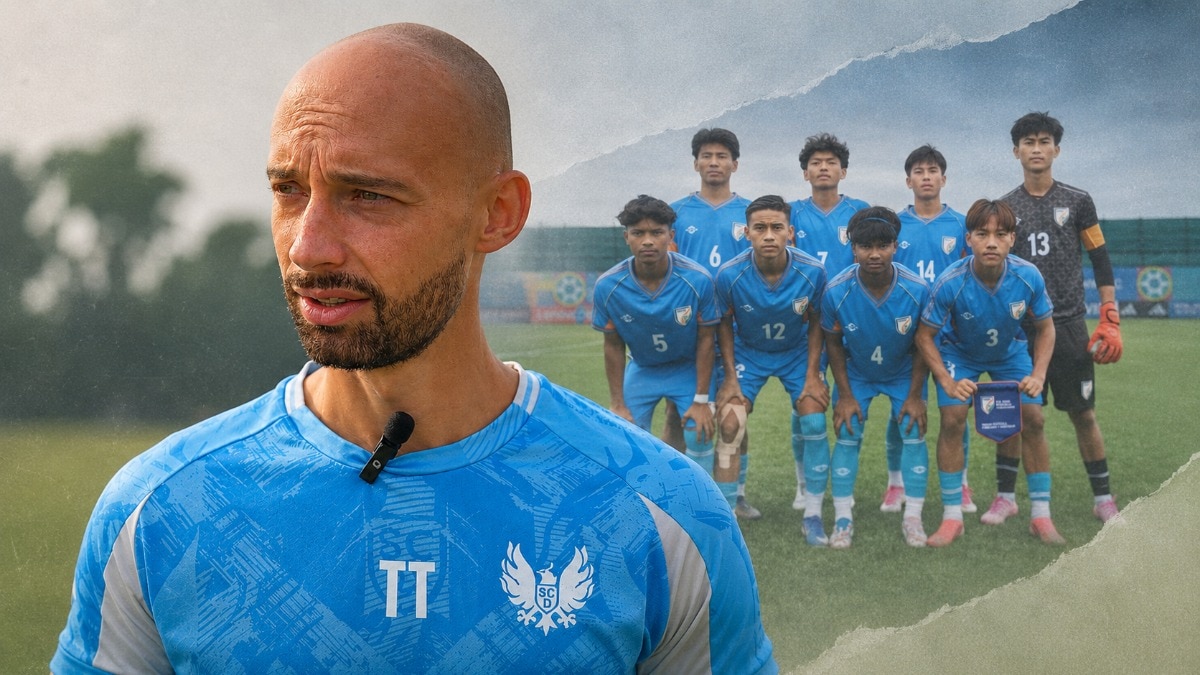
One club making a clear commitment to young Indian footballers is SC Delhi. The squad has a strong Under-21 presence, with youngsters such as Kharon Subba, Mohammed Azhar and Aimen being given meaningful opportunities rather than simply filling spots. Leading that approach is head coach Tomasz Tchorz, who believes India has no shortage of talent. The bigger problem, he argues, is a system that does not do enough to nurture it.
Tchorz has an interesting, if rather blunt, diagnosis. He compares restrictions on foreign players to medicine given to someone who is unwell. It might make the patient feel better for a while, but it does not get to the root of the problem.
“A restriction is like medicine. You are sick, and you want to recover immediately, so you take medicine. The restriction is the medicine, which means the system itself is sick,” Tchorz told India Today. SC Delhi head coach Tomasz Tchorz believes Indian football needs a stronger player development system. (Photo: Debodinna Chakraborty)
He is not campaigning to keep foreign players out. In fact, he would be perfectly happy to see a team field 11 of them, provided they were the best players available. The same freedom, he argues, should apply to Indian footballers.
“If you have the best player and he is a foreigner, play him. If you have 11 Indian players who are better than the foreigners, play them. There should be no restrictions,” he said. “I'm not saying foreign players specifically. I'm saying the 11 best players.”
It is a straightforward argument, but it leads to a rather uncomfortable question. Why does Indian football need a rule to make clubs trust Indian players in the first place? Tchorz believes the answer has little to do with the league's team sheets and a lot to do with what happens years before a player gets there.TOO FEW GAMES, TOO MUCH TO CATCH UP
The October friendlies against Brazil and Uruguay were a tough watch for Indian football fans. A 4-0 defeat to Brazil was followed by a 6-1 hammering at the hands of Uruguay in Kolkata. Anirudh Thapa's goal against Uruguay offered a brief lift, but India spent much of the evening trying to keep up.
Two matches cannot explain everything that is wrong with Indian football. Brazil and Uruguay have footballing systems India can only aspire to build. But the difference in speed, technique and decision-making was plain to see. India's players struggled to cope when the pressure came on, often looking short of the time and options their opponents seemed to have. India's heavy defeats to Brazil and Uruguay exposed the gap at the top level. (PTI Photo)
That gap is not created in a national-team camp. It takes shape much earlier, through the coaching a player receives, the matches he plays and the opportunities he gets to test himself. Tchorz does not believe India is short of talent. He believes too much of it goes unused.
“For me, the most important thing is obviously the quality of the player. I'm not necessarily going for a player just because he is young, but I see that, especially in India, there are a lot of young players with quality. I think talent needs a platform if you want it to grow, and we understand that we have to provide that platform,” he said. Tchorz wants Indian clubs to invest in potential, not just results. (Photo: Debodinna Chakraborty)
He says people who have worked in India often tell him the same thing. Young Indian players can hold their own against peers elsewhere, but that promise can quickly run into a wall when they move towards senior football.
“When they compare players of the same age in India and elsewhere, they sometimes feel that Indian players are even better. However, these players eventually lose opportunities because nobody gives them a chance in a senior-team setup,” he said.
The shortage of competitive football at youth level makes that even harder. According to a Reuters report in July 2026, AIFF executive committee member Lalnghinglova Hmar said Indian Under-15 players typically play 12 to 15 competitive matches a year. In Japan and South Korea, the figure is more than 40. The report also highlighted a shortage of qualified coaches and youth leagues in several states.
That is a lot of football to miss out on at an age when players should be learning their trade. Training can sharpen technique, but matches teach youngsters to make decisions under pressure, read opponents and recover when things go wrong. There is only so much a player can learn without getting out on the pitch.
India's campaign at the inaugural FIFA U-15 World Cup and Festival in Azerbaijan offered a glimpse of what these youngsters can do when given an international stage, even if the results were a mixed bag. The Blue Colts won five of their 10 matches, drew once and lost four, finishing 87th among the 189 participating nations. They picked up wins against Laos, Cameroon, Bahrain, Trinidad and Tobago and Cuba, but a 1-6 defeat to Senegal in the group stage sent them into Tier C. There was promise in the campaign, but it yet again gave us an example of how competing consistently at this level is another challenge altogether. India's U-15 campaign offered promise, but exposed the long road ahead in youth football development. (Photo: AIFF)
Tchorz also sees a problem with the way clubs measure success. Winning and visibility are immediate rewards. Developing a youngster who might make a difference five years down the line is a much harder sell.
“Everyone wants to achieve something here and now. For Indian clubs, the most important things are visibility and winning. They want their names to be recognised. They want to shine in the media and in public,” he said.
“But nobody thinks about what will happen after five or ten years. Nobody even thinks about the fact that, even if these children don't achieve anything in football, you might have changed their lives through the opportunities you provided.”THE WORK HAS TO START EARLIER
The numbers suggest Indian football is beginning to look more closely at what happens before a player reaches the senior level. The AIFF's Academy Accreditation Programme for 2026-27 received 164 applications, with 142 academies earning accreditation. Four- and five-star academies have also increased from seven to 16. The federation has been casting its net wider too, assessing more than 12,000 boys born in 2011 and 2012, with 60 scouts keeping tabs on over 20 competitions and leagues.
But spotting a talented youngster is only the first part of the job. What happens to him after that matters just as much. Does he get the coaching he needs? Is he playing enough competitive football? And, perhaps most importantly, is there a route for him to make the jump into senior football? Without those pieces falling into place, a scouting network can identify all the talent in the world and still leave much of it going nowhere.
At SC Delhi, Tchorz's work with young players goes beyond picking them for the team and hoping they figure things out. He uses team and individual video analysis to break down performances, explain his expectations and make sure players understand what their roles demand.
“We have specific requirements for every player. If you want to play in this team, with this particular philosophy, these are the rules and principles you need to follow,” he said. “We present these requirements to the players through animations, discussions and explanations on the board. Later, we allow them to play, record their performances, analyse them and then come back to the players with our observations.”
There is, however, one part of developing young footballers that no amount of video analysis can replace. They have to be allowed to make mistakes. A youngster who has a difficult game cannot be written off after one poor outing. Sometimes, he needs another chance to find his feet, face the same situation and work out what went wrong.
“Even when you know they are not at their highest level and are likely to make mistakes, you still have to let them play again so that they can confront those situations and learn from them,” he said.
It sounds like common sense, but patience can be in short supply when results are on the line. As Tchorz highlighted, Indian clubs have an obsession with players who can deliver now, while the ones who need time to get there are often the first to lose their place.
"Unfortunately, the Indian environment does not care much about that at the moment. Everyone wants to achieve something here and now. For Indian clubs, the most important things are visibility and winning. They want their names to be recognised and to shine in the media and in public."
"But nobody thinks about what will happen after five or ten years. Even if these children don't make it as footballers, the opportunities they receive could still change their lives. It is a little sad that the system does not really take care of these things at the moment."
That is the catch in Indian football's development debate. Everyone wants better homegrown players, but developing them means accepting that they will not always get everything right along the way.INDIA NEEDS A PATHWAY ABROAD
Tchorz would also like to see more Indian clubs send young players abroad, though he is quick to distinguish genuine opportunities from overseas programmes that simply sell families a dream.
“It depends because the most important thing is to play. If a player goes abroad, gets incorporated into the system of that team and actually gets to play, then it is good,” he said.
A foreign address, in other words, is not enough. The value lies in playing regularly and experiencing a different pace, level of professionalism and competitive environment. Tchorz is wary of commercial projects that charge parents for trials without offering any real guarantee of development.
He also believes Indian football needs to give overseas clubs a reason to look its way. European sides searching for affordable talent tend to turn to Brazil and Africa, where established pathways have already produced players. India, he says, has yet to make that case.
“Why? Because there is no example that proves India is a good market. If you are an institution, a club or an academy with the power to make a difference, you have to do something within your means to establish that example,” he said.
That could mean taking a hit in the short term. Tchorz believes clubs should be willing to let promising players leave, even if it weakens their squads and affects results.
“Maybe I send three or four players abroad, and because of that, I don't get the results I want in the ISL. But I would be doing something bigger,” he said. “I would be willing to release these players for free and even invest in them by paying for their stay and training so that they can develop and make something out of the opportunity.”
It is an ambitious idea, and one that needs clubs to think beyond what happens over the next few months. During his time at Kerala Blasters, players including Azhar and Aimen went to Poland, while Vibin Mohanan moved to OFI Crete in Greece. Tchorz wants more clubs to build pathways that give young Indians a genuine chance to play abroad. Tomasz Tchorz helped Aimen and Azhar take their footballing journey to Poland. (Photo: Debodinna Chakraborty)
"If we want to develop players in India, it is crucial to send them abroad. The pace of the game is different, the level of professionalism is different, and the competitive environment is different. Players also need to understand that they are not in a bubble here. They need to see how things are done elsewhere.”THE MEDICINE IS NOT THE CURE
The national team is where Indian football's progress is most easily judged, and it is usually where the frustration boils over. A heavy defeat brings back the familiar questions. Are the players good enough? Are clubs giving Indians enough chances? Should the rules be changed again?
But the players who took the field in Kolkata did not suddenly arrive at that level before facing Brazil and Uruguay. They brought years of coaching, match experience and development with them. The gaps that showed up on those evenings cannot be fixed by a rule introduced at senior level.
The AIFF's revised proposal for the ISL and IFL, approved in October 2026, seeks to create more opportunities for domestic players, including a requirement for an Indian striker to remain on the pitch for the full 90 minutes. Such measures may open doors. What happens after a player walks through them depends on the coaching, competition and support he has received along the way.
Tchorz wants those with the money and influence to shape Indian football to look beyond the next season.
“Those who have the most money in India need to understand that they must invest in children, grassroots football and youth development. They need to create a large pool of talent,” he said.
Indian football has spent years debating who should get a place in the team. Perhaps it is time to spend just as much energy asking how to make more players good enough to earn one.- Ends
An all-in-all geek for football who channels his inner Real Madrid supporter to keep his Manchester United hopes alive. A preferred blind smasher of the ball when it comes to cricket, courtesy to the singing lessons by Virender Sehwag.

