
In French wine country, this cruise is a sommelier’s dream - Toronto Star
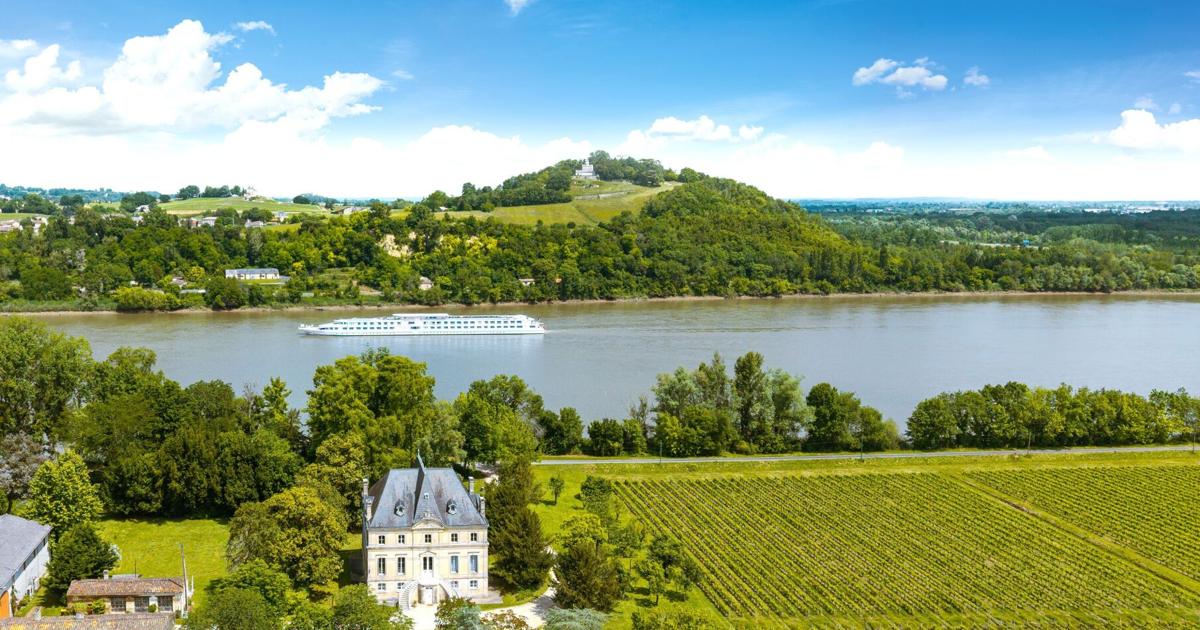
In a region steeped in tradition, many producers are turning to wine tourism and opening their cellars to share their craft.
CroisiEurope’s MS Cyrano de Bergerac sails the waterways of southwestern France.
In late June, a punishing heat wave grips much of Europe. Along Bordeaux’s Quai des Chartrons, the air hangs thick and still. It’s a stark reminder of the climate pressure weighing on this French region, whose identity is built on its terroir, the pulse of the seasons and centuries of winemaking.
From these quays, where 18th-century merchants once dispatched oak casks around the world, I board CroisiEurope’s 86-cabin MS Cyrano de Bergerac for a wine-focused river cruise. Sailing the Garonne and Gironde will take me across the viticultural landscape, bridging prestigious chateaux and small family estates.
CroisiEurope’s wine-themed river cruise features guided visits to the Médoc, Blaye Coast and Saint-Émilion.
The itinerary reads like a sommelier’s dream, tracing a path through the gravelly soils of the Médoc, the fruit-forward hillsides of the Blaye Coast and the sweet-wine estates of Sauternes. Also on the menu is the Route des Châteaux, a scenic stretch of Grand Cru country where monumental facades emerge from the vines, including the striking Eastern-inspired pagodas of Château Cos d’Estournel.
Historically, fortunes have been poured into the majestic estates along this winemaking artery. But the reality facing today’s French grape growers is far more complex. Beyond a warming climate, there’s market uncertainty. As the French newspaper Le Monde reported earlier this year, global wine consumption has dropped nearly 17 per cent over the past two decades, partly because younger generations are drinking less.
Sailing in this region, I can witness how a centuries-old winemaking tradition is reinventing itself. For one, many producers are turning to wine tourism, opening their cellars not just for sales transactions, but also to share their craft through guided tastings, estate walks and authentic conversations. “Visitors genuinely cherish meeting producers, observing our craft and tasting side by side with us,” says Brigitte Bourgade, a CroisiEurope guide.
The river cruise itinerary includes historic estates such as Château Maucaillou in Moulis-en-Médoc.
Born into a winemaking family on the limestone plateau of Barsac, which is renowned for its sweet golden dessert wines, Bourgade brings an insider’s perspective to her role. The modern traveller is often less driven by the prestige of collecting rare bottles than by the search for a genuine narrative behind every pour, she adds.
A few visionary estates had already anticipated the demand for these experiences. In the small commune of Moulis-en-Médoc, for example, Château Maucaillou has been stewarded by the Dourthe family since 1929.
The long-standing domaine opened Bordeaux’s first dedicated wine museum in 1987. Exhibits showcasing heavy oak presses, silver tastevins (traditional sommelier’s tasting cups), century-old copper tools and vintage lithographed labels offer a fascinating look at the historic craftsmanship.
Château Maucaillou is home to Bordeaux’s first dedicated wine museum, which opened in 1987.
The museum leads into the dim, cool calm of the barrel room, where the current moment is on Yvan Bureau’s mind. “Times are changing,” says the head of wine tourism at Maucaillou, noting how microbreweries are gaining ground even in Bordeaux wine country, as younger generations opt for lighter, lower-alcohol beverages. “Craft brewers are moving into our territory to compete with our reds.”
But inside my glass, tradition holds its ground. With its deep cassis notes and tannic backbone, Maucaillou’s flagship Grand Vin stands firm as a classic expression of Moulis terroir.
As we cruise from one appellation to the next, the MS Cyrano turns every port call into private cellar tours and candid exchanges with winemaking families.
In Saint-Émilion, set upon the mineral-rich heights of the Dordogne east of Bordeaux, we find another region that was ahead of the times. With UNESCO-listed vineyards surrounding the medieval town’s cobblestone streets, this historic appellation championed organized wine tourism as early as the 1980s to diversify its economy.
Château Angélus in Saint-Émilion. The illustrious winery now accepts public visits, a privilege previously reserved for a few VIPs.
What has changed now, however, is that even top-tier chateaux, long thought to be sheltered by their fame, have joined in. Decades-old, once-exclusive sanctuaries have been turned into immersive destinations. A prime example is Château Angélus, whose vintages have graced James Bond films like “No Time to Die” (2021).
The illustrious winery now accepts public visits, a privilege previously reserved for a few VIPs. Our group of Canadian vacationers is personally greeted by estate co-owner Hubert de Boüard, as the chateau’s 20-bell carillon unexpectedly rings out with the opening bars of “O Canada.”
The gesture reflects both heritage and heartfelt hospitality. The winery derived its name from the ringing of nearby churches — a sound signalling it was time for the Angelus prayer. Today, the de Boüard family programs the estate’s bells to play personalized anthems for visitors from around the globe.
Left: Château Angélus in Saint-Émilion. Right: Co-owner Hubert de Boüard, shares his passion for wine with his daughter and grandson.
“We welcome guests strictly by appointment. Otherwise we’d be completely overrun every week,” says de Boüard, a renowned oenologist, after we tour the new, cathedral-inspired underground vault. In the cavernous space, designed by architect Olivier Chadebost, vats are suspended from the ceiling. It’s a breathtaking setting for the winemaking process and for our tasting.
On the palate, the Angélus vintage reflects Saint-Émilion’s elegance, driven by its distinctive blend of Cabernet Franc and Merlot, with velvety tannins, vibrant plum notes and a lingering, earthy complexity. It’s as unforgettable as the musical welcome we received.
As the landscapes roll by us on this cruise, these genuine human connections become the true heart of the journey. Above all, one meeting particularly resonates with me.
Left: Château Simon in Barsac. Right: A portrait of Anne-Laure Dufour-Bonnard, winemaker and co-owner.
I first encounter Château Simon’s exquisite pours aboard our vessel, where they effortlessly elevate the gastronomy of the French Southwest. The estate’s crisp, mineral-driven Graves whites pair well with regional cheeses, while the luxurious, honeyed Sauternes balance the rich duck confit.
Later, we step off the boat to wander the family’s vineyards in Barsac and taste the vintages right at the source. There is always something deeply special about putting a face to a label.
Anne-Laure Dufour-Bonnard guides Château Simon alongside sister Pauline, pairing rigorous winemaking science with the character of the porous limestone soils and river-misted vineyards. No matter what economic or climatic tides lie ahead, abandoning the ship is simply not an option for her.
“My family has been here for six generations,” says Anne-Laure, “and my 15-year-old son wants to follow in our footsteps. That’s what keeps us going.”
At the estates throughout this voyage, I’ve felt the same kind of deeply rooted devotion. As I disembark, it is this passion, weathering all the waves, that stays with me most, even more than the sweeping landscapes and Grand Crus along the way.
Malik Cocherel travelled as a guest of CroisiEurope, which did not review or approve this article.
Error! Sorry, there was an error processing your request.
There was a problem with the recaptcha. Please try again.
You may unsubscribe at any time. By signing up, you agree to our terms of use and privacy policy. This site is protected by reCAPTCHA and the Google privacy policy and terms of service apply.

