How to survive a nuclear attack: Iran issues detailed video guide amid US threat
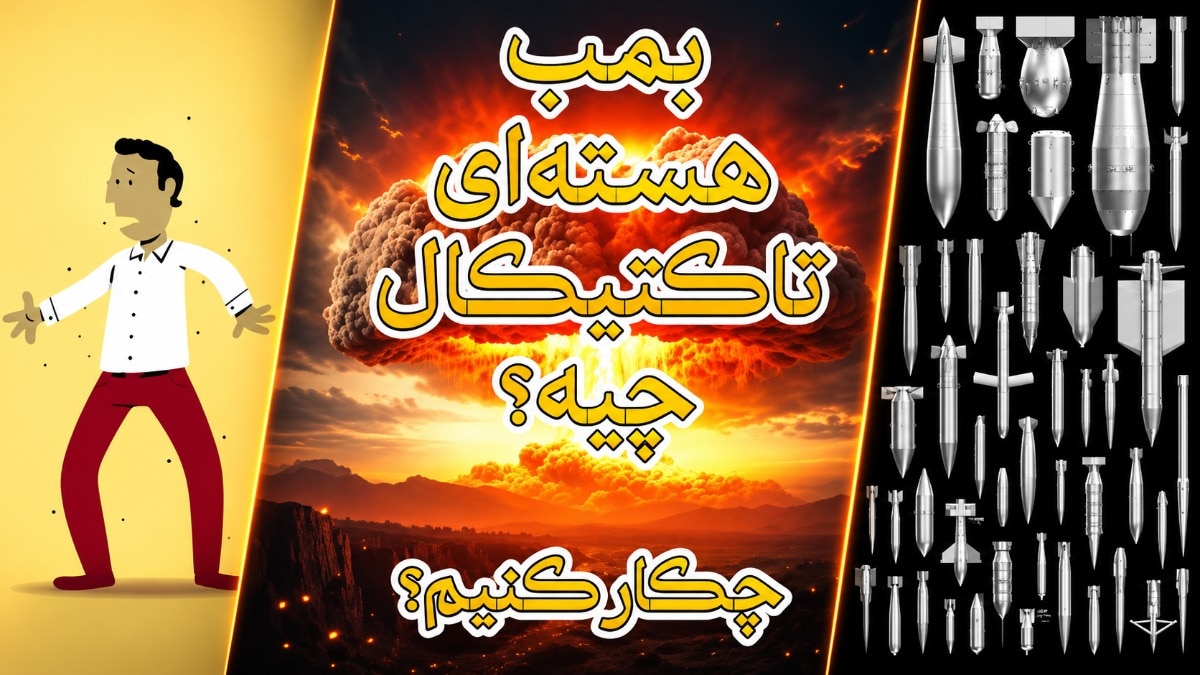
Iranian authorities have issued a rare public advisory on surviving a nuclear explosion. The eight-minute video contains instructions on taking shelter, avoiding radioactive contamination and protecting against fallout. Iran's official news agency IRNA carried the guidelines along with the video, advising citizens to look for basements, stay away from windows and switch off the air conditioners that draw in outside air. They also suggest what needs to be done if someone is caught in the open.
Egyptian and Saudi Arabian outlets also reported on the instructions, which advise Iranians to remain sheltered for at least 24 hours after a potential attack, use packaged food and bottled water, and avoid sheltering inside vehicles. Iranian emergency officials warned that radioactive particles could travel through the air, which posed risks even to people far from the initial explosion site.
The detailed advisory, accompanied by an eight-minute educational video, was published by IRNA on October 29. Its explicit instructions on surviving a nuclear blast mark a notable departure from Tehran's public messaging during the June 2025 Israel-US airstrikes on Iran's nuclear facilities, when officials reassured people that radiation had not spread beyond the targeted sites.
The recent advisory is part of Iran's Passive Defence Week. Though Iran has been marking Passive Defence Week for at least more than a decade, reports do not suggest that it issued a nuclear attack survival guide earlier.
The video, issued by emergency services in Isfahan, the Iranian province that houses the Natanz nuclear facility, comes amid speculation over a possible American strike on Iran's Pickaxe Mountain, a deep buried nuclear-related site near Natanz. On October 16, US President Donald Trump said Washington might target the mountain, although he explicitly ruled out using nuclear weapons.
On Monday, US journalist and commentator Tucker Carlson alleged that Israeli PM Benjamin Netanyahu was pressuring Donald Trump to launch a nuclear strike on Pickaxe Mountain within days. STAY INDOORS, SHUT AC, AVOID WINDOWS: IRAN TO CITIZENS
The Iranian advisory described intense light, blast waves, extreme heat and the possible release of radioactive materials as the four principal dangers of a nuclear explosion.
Ebrahim Adelzadeh, deputy director of education and research at the Isfahan Red Crescent Society, advised residents to take shelter in sturdy buildings and avoid windows.
"A basement or a room in the central part of a building, away from windows, can be a suitable shelter if it can be accessed safely," Adelzadeh told Iranian state-run broadcaster IRNA.
People have been instructed to close doors and windows and switch off air-conditioners and shut ventilation systems that draw outside air into buildings.
Egyptian outlet Veto reported on Tuesday that the instructions also included preparing to remain inside shelters for 24 hours. Riyadh-based Saudi News 50 reported a more detailed account advising people not to assume their surroundings would be safe after that 24-hour period.WHAT IF A NUCLEAR BLAST CATCHES SOMEONE OUTSIDE?
The instructions from Iranian authorities also warned people against looking directly at the intense flash of a nuclear explosion. Those caught outdoors and unable to enter a building immediately were advised to lie close to the ground, take cover behind a barrier and protect their heads and faces.
After the initial blast wave passed, they should enter the nearest sturdy building, the residents have been advised.
Egyptian outlet Sada El Balad reported that people were also instructed not to remain outdoors watching or photographing the explosion and not to use vehicles as shelters.
The guidance reported by Saudi News 50 recommended moving to another safe shelter if the building caught fire or faced the risk of collapse.RADIOACTIVE FALLOUT COULD TRAVEL FAR BEYOND BLAST SITE
One of the most significant warnings that is part of the Iranian warnings concerned airborne radioactive particles. Isfahan Red Crescent Society's Adelzadeh cautioned that radioactive materials could travel through the atmosphere and affect people beyond the immediate explosion site.
"Even people far from the initial site of the explosion should take official warnings seriously and make decisions about the safety of their homes or workplaces based on information provided by the responsible authorities," he told IRNA.
If the winds carry radioactive particles eastward, fallout could potentially reach Pakistan and even parts of India.
People potentially exposed to radioactive dust were advised to remove their outer clothing carefully, place it in sealed bags and wash exposed skin and hair with lukewarm water and soap.
The Saudi News 50 report also contained advice for people to use regular shampoo without conditioner, clean exposed skin with wet wipes if bathing was not possible, and rely on packaged food and bottled water.IRAN WARNS AGAINST SELF-MEDICATION FOR RADIATION
The video also discussed medicines used in certain radiation emergencies. Abbas Abedi, a spokesperson for Isfahan's pre-hospital emergency services, warned against taking iodine tablets without medical advice.
"Stable iodine can, under certain conditions, reduce the absorption of radioactive iodine by the thyroid gland, but it does not provide protection against other radioactive materials or radiation resulting from an explosion," he told IRNA.
The video also mentioned Prussian Blue, a medicine prescribed in certain cases of internal contamination involving radioactive caesium-137.
Officials further warned that electromagnetic pulses could disrupt electronic equipment and communication systems. They recommended the use of battery-powered radios for official updates.
The timing of the Iranian advisory is significant as it comes amid renewed concerns over a possible US strike on Iran's deeply buried nuclear facilities. During the June 2025 Israel-Iran war, Tehran largely sought to reassure people that radioactive contamination had not spread beyond the targeted facilities. The latest advisory focusses on preparing citizens for the consequences of a nuclear explosion, including radioactive fallout and prolonged sheltering. While Iran has linked the exercise to its Passive Defence Week, the unusually detailed instructions have drawn attention amid speculation over Washington's next move.- Ends(Written by: Sushim Mukul)