
How Berlin's Arab queers are building their community
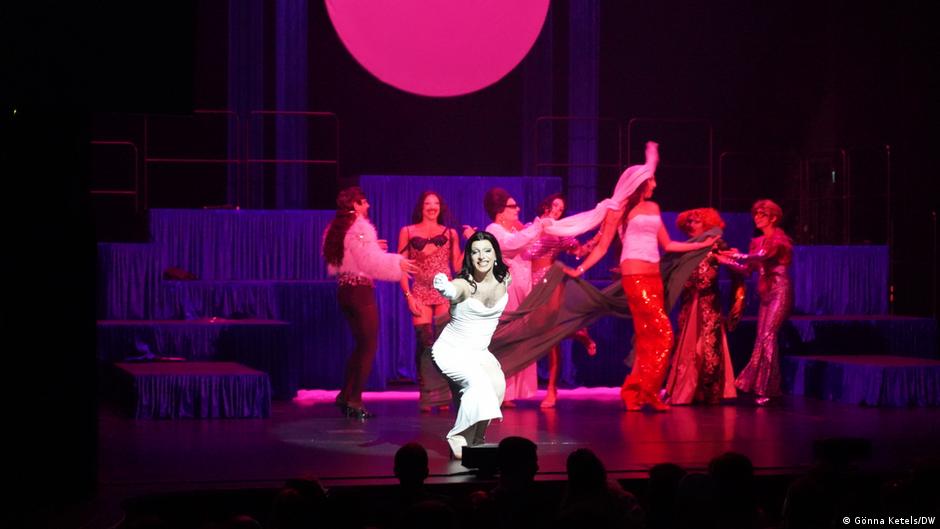
Hassandra performing at the ADIRA Drag FestivalImage: Gönna Ketels/DWAdvertisement"Adira" is an Arabic slang term used in Levantine queer culture to describe someone with a strong presence — someone powerful and accomplished.
It is also the name of a Berlin-based collective that curates events and club nights celebrating the diversity of queer Arab* culture. The asterisk signals the inclusion of non-Arab ethnic minorities and people with diverse identities and roots in Southwest Asia and North Africa.
Among the collective's events is the ADIRA Drag Festival, which celebrated its third edition in Berlin in late October.
This year's theme, "Who's Your Diva?!," brought together drag performers paying tribute to legendary figures from across the Eastern Mediterranean who have become queer icons — from Egyptian music legend Umm Kulthum to Turkish star Bülent Ersoy and Lebanese pop icon Haifa Wehbe.
Hassandra, co-founder of ADIRA and the ADIRA Drag Festival, was among the performers, taking on the persona of Lebanese pop star Elissa.
"It is very important for me to bring my Lebanese Arab identity and culture into what I do, because I think it's a very beautiful culture. And there's a lot of campy, glamorous, beautiful divas," Hassandra said.
Elissa's "whole discography is very romantic, raw, soft, kind of like very Adele vibes," Hassandra told DW ahead of the October 30 show. "However, her personality is known to be the extreme opposite. She's very feisty. Very blunt, very unfiltered. Not soft at all as a person." The star is also known for speaking out on political issues in Lebanon. She has publicly voiced support for LGBTQ+ communities in the Middle East, while also frequently sparking controversy across the Arab world with her outspoken positions on other political issues.
Hassandra's ADIRA Drag Festival performance addresses this complexity, ultimately "tapping into her sort of controversial political opinions," the drag artist explained.
This reflects one of the ideas Hassandra hopes to promote with the theme of this year's festival. "As queer people, we tend to idealize a lot of pop divas. But these pop divas are very imperfect in their nature," Hassandra said. The show provides an opportunity to critically revisit these divas' legacy through a more critical lens. "And this sort of critical lens can be taken into the outside world, as in: never follow anyone in life blindly. No one should follow any politician, any political party, any pop diva, any activist blindly."
Born in Beirut in 1994, Hassandra studied theater and stage acting at the Lebanese University before moving to Berlin in 2017. "I would say it was it was just a very sort of impulsive decision at the age of 22. I mean, there's no doubt that the economic situation was really bad in Lebanon and continued to become even worse," the artist said.
In Berlin, Hassandra became increasingly involved in the city's independent art scene and queer nightlife. Drag emerged as another form of self-expression for the actor.
Through performances that combine theatrical intensity, political humor, grotesque aesthetics and moments of tenderness, Hassandra challenges conventional understandings of gender and identity.
Their work explores themes of home, nostalgia, displacement and queer Arab culture. These ideas are also central to ADIRA, which Hassandra founded in 2023 with Syrian-German DJ and cultural producer Zuher Jazmati, also known as xanax_attax.
Through panel discussions, performances and music events, ADIRA fosters collective participation and community-building.
As Islamophobia and homophobia rise alongside the far right, spaces like ADIRA offer a sense of belonging and support for Arab queer communities.
That sense of community has become even more important following the deadly Islamist terrorist attack during Berlin's Christopher Street Day pride parade in July.
In the aftermath, Hassandra felt caught between their different identities. As an Arab queer person, "you fall in this position where then you start receiving a lot of racism," they said.
"And I think this is why it's important, for us queer Arabs, to say we are sad over what happened, but that we also reject any of the racism that comes from that," Hassandra said. "I think we [the Arab community] are being used in a lot of ways as a punching bag for a lot of things that are happening."
Rather than allowing the attack to fuel hatred and racism, Hassandra said, "we should make Germany a safer place for everyone to live in." "There's place for everyone. It's a huge country," they added.
The interview with Hassandra was conducted by Gönna Ketels.

