Healthy nation must for Developed India 2047: JP Nadda at HealthWealth Summit
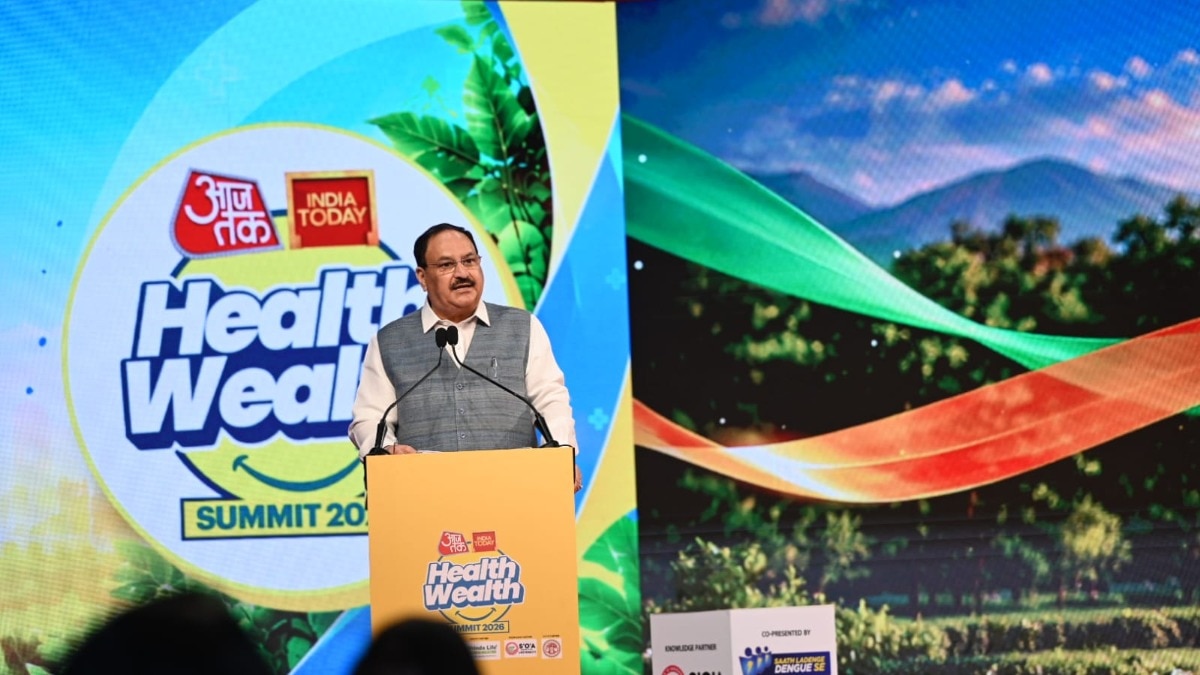
Union Health Minister JP Nadda on Thursday said India can achieve its goal of becoming a developed nation by 2047 only if it ensures a healthy population.
Inaugurating India Today’s maiden HealthWealth Summit, Nadda outlined the government’s efforts to expand healthcare access, strengthen medical infrastructure, improve affordability and integrate technology into healthcare delivery.
Nadda said India’s healthcare approach had earlier focused primarily on treatment, with less emphasis on holistic healthcare. However, the National Health Policy 2017 marked a shift towards a more holistic and inclusive approach.
He stressed the need to strengthen the healthcare workforce, improve health technology and focus on health financing to build a robust healthcare system and achieve the vision of Viksit Bharat by 2047.
Highlighting the expansion of primary healthcare, Nadda said 1.86 crore Ayushman Arogya Mandirs had been established across the country. These centres provide a range of services, including preventive care and screening for various diseases.
He said the centres offer 12 packages of services, with reproductive and child healthcare among the key components. The focus, he added, was to ensure that healthcare reaches people at the community level instead of requiring them to travel to major hospitals for routine services.
Nadda also highlighted Mission Indradhanush, the government’s initiative to expand immunisation coverage among children and pregnant women.
He said the government had worked to strengthen institutions such as the All India Institute of Medical Sciences (AIIMS), as many patients bypass local healthcare facilities to seek treatment at these premier hospitals.CRORES SCREENED FOR NON-COMMUNICABLE DISEASES
The minister highlighted the scale of screening programmes for non-communicable diseases, including hypertension, diabetes and different types of cancer.
According to the figures shared by Nadda, around 44 crore people had been screened for hypertension and an equal number for diabetes, with approximately five crore people identified as diabetic.
He said 37.7 crore people had been screened for oral cancer, with around 3.5 lakh cases detected. Screening for breast cancer had identified 91,000 cases, while 9.8 crore people had been screened for cervical cancer, with approximately one lakh cases diagnosed.
Nadda said the screening process had been digitised and would continue to expand, adding that the number of people covered was expected to cross 100 crore.AMRIT STORES, JAN AUSHADHI SCHEMES TO IMPROVE AFFORDABILITY
Emphasising the importance of making treatment affordable, Nadda highlighted the role of AMRIT stores and the Pradhan Mantri Bhartiya Janaushadhi Pariyojana.
He said AMRIT – Affordable Medicines and Reliable Implants for Treatment – stores offered around 6,500 medicines at discounts of up to 50%. According to the figures he shared, 8.2 crore people had benefited from the initiative.
Nadda also referred to Jan Aushadhi stores, which provide quality generic medicines at lower prices than many branded alternatives. He said the network had expanded to around 2,100 stores and had helped patients save approximately INR 45 crore.
The minister said affordability remained a key component of the government’s healthcare strategy, particularly for patients who require long-term treatment and medicines.AYUSHMAN BHARAT PROVIDES FINANCIAL PROTECTION TO CANCER PATIENTS
Nadda highlighted the role of Ayushman Bharat in reducing the financial burden of treatment, particularly for patients diagnosed with serious illnesses such as cancer.
He referred to findings attributed to The Lancet on the time taken for cancer patients to receive treatment after diagnosis, saying that patients were getting treatment within a month of detection due to Ayushman Bharat.
He also spoke about the financial distress families face when a member is diagnosed with cancer. Nadda said some patients had previously asked their families not to spend their savings on treatment, but under Ayushman Bharat, eligible beneficiaries could receive health coverage of up to INR 5 lakh per family per year.
The scheme, he said, was intended to ensure that financial constraints did not prevent people from accessing necessary medical care.advertisementASHA WORKERS, DIGITAL SYSTEMS TO TRACK HEALTHCARENadda said digitisation had become an integral part of the country’s healthcare delivery system. He highlighted the role of Accredited Social Health Activists (ASHA workers), who track pregnancies and monitor the health of mothers and babies.
He said ASHA workers track a child from the time of conception and are required to update information regularly on digital platforms. The system is intended to help healthcare workers monitor pregnancies, child health and the delivery of essential services.
The minister also referred to the Ayushman Bharat Digital Mission (ABDM), which aims to create a comprehensive digital health information system.
Under the mission, the Ayushman Bharat Health Account (ABHA) system enables individuals to create digital health accounts that can be linked to their medical records. Nadda said 98 crore ABHA accounts had been generated.
The system is intended to allow patients to access and share their health records with healthcare providers, subject to applicable consent and privacy safeguards.
Digitised health information could also support medical research while maintaining the confidentiality of individuals, he said.INDIA ADMINISTERED 220 CRORE COVID-19 VACCINE DOSES
Nadda also highlighted India’s response to the COVID-19 pandemic, saying the country had administered around 220 crore vaccine doses, including booster doses.
He said India had developed two vaccines within nine months and distributed vaccines to 100 countries.
The minister cited the vaccine programme as an example of the country’s ability to mobilise resources, strengthen domestic research and expand healthcare delivery during a public health emergency.MEDICAL INFRASTRUCTURE EXPANDED ACROSS INDIA
Nadda highlighted the expansion of medical education and healthcare infrastructure. According to the figures he shared, India now has 23 AIIMS institutions and 863 government medical colleges.
The number of undergraduate medical seats has increased to around 1.43 lakh, while postgraduate medical seats have reached approximately 86,000.
He said expanding medical education capacity and strengthening healthcare institutions were important to meeting the country’s growing demand for doctors and other medical professionals.
Responding to questions about delays in treatment at newly established AIIMS, Union Health Minister JP Nadda said it takes around nine to 10 years for a medical institution to develop its faculty and specialised expertise.
The question raised concerns over the availability of specialist facilities comparable to AIIMS Delhi at newer institutions and long waiting periods for procedures such as cochlear implant surgeries for children.
Nadda said several AIIMS institutions had been established around the same time, making faculty recruitment an ongoing challenge. He also pointed to doctors moving from one institution to another as an additional difficulty.
However, no specific timeline was provided for reducing waiting periods for surgeries.NADDA CALLS FOR COOPERATION WITH STATES, HEALTHIER LIFESTYLES
Nadda said health was a state subject and improving healthcare delivery required coordination between the Centre and state governments.
He said the government followed the principle of cooperative federalism, providing financial and infrastructural support to states.
While some states performed well in healthcare delivery, others required additional attention and support, he said.
Nadda urged people to adopt healthier lifestyles by reducing their intake of carbohydrates, sugar and white rice.
He stressed that building healthy habits takes time and requires consistent effort, adding that individuals must recognise their bodies’ needs and prioritise preventive healthcare.
Concluding his address, Nadda stressed that government initiatives alone could not ensure a healthy population without individual efforts to maintain good health.
“Describing health in 15 minutes is tough, but I have tried touching the broad contour of the health sector,” he said.
Nadda urged people to understand their bodies and exercise regularly without pushing themselves beyond their limits.
“Have tasty food, but make sure it is healthy. Avoid heavy meals after sunset,” he said, stressing that building healthy habits takes time and requires consistent effort.- Ends