
Health officials track risks from suspected waste leak - Bangkok Post
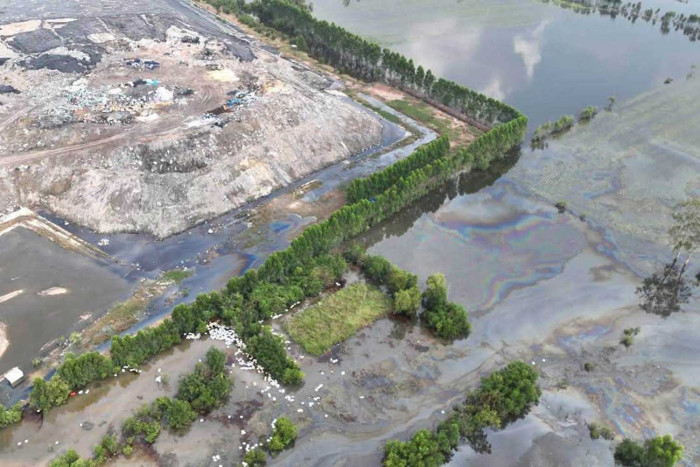
Contaminated water near an industrial waste land fill in Prachin Buri earlier this month. (Photo: Pollution Control Department) The Public Health Ministry's Department of Disease Control opened an emergency operations centre to monitor health risks after the floods caused a probable leakage from an industrial waste landfill in Prachin Buri province.
Dr Montien Kanasawat, director-general of the Department of Disease Control, said the centre was launched to strengthen public health surveillance following flooding and water seepage from an industrial waste landfill in the province.
The department will work with primary healthcare units and three local hospitals -- Si Mahosot Hospital, Si Maha Phot Hospital and Chao Phraya Abhaibhubejhr Hospital -- to monitor at-risk groups for at least two years.
It is also preparing medical teams, diagnostic services, and referral systems to ensure people with unusual symptoms can receive prompt assessment and treatment.
Dr Anek Mungaomklang, deputy director-general of the department, said health assessments were conducted from Oct 6–16, alongside the collection of blood and urine samples to test for chemical contaminants in the body among residents living within a 2–7-kilometre radius of the suspected contamination source.
So far, 613 people have been screened. Of these, 497 reported no symptoms, while 116 had symptoms.
Most people with symptoms reported skin conditions, including itching, rashes, and small fluid-filled blisters, which may be linked to prolonged contact with floodwater.
Officials said those who need to wade through floodwater should wear rubber boots and appropriate protective equipment, and ensure wounds are fully covered. After exposure, they should wash their bodies promptly with clean water and change their clothes immediately.
Residents have also been told to avoid consuming aquatic animals and agricultural produce from potentially contaminated areas until the relevant authorities confirm they are safe. They have also been told not to use water suspected of contamination for bathing or cooking.
Dr Weerawut Imsamran, director-general of the Department of Medical Services, said aluminium occurs naturally in soil and rocks and can enter water sources through industrial activities or wastewater. Health risks depend on the amount absorbed, the route and duration of exposure, and an individual's health. He said boiling water does not remove dissolved aluminium or other heavy metals, and residents should use only water confirmed safe.


