Guy Sorman: “Trump’s Next Move? Look to Psychology, Not Geopolitics” - 경향신문

Guy Sorman, Chairman of the French College and Professor at New York University, said that “psychology, not geopolitics” should be used to forecast the Trump administration’s next move, saying that President Donald Trump “wants to be admired and flattered” and has “an admiration for strong men.”
Amid the political and economic uncertainty created by the Trump administration’s tariff policies, Sorman said South Korea and Japan could form the core of an “Asian alliance” comparable to the European Union. He also urged South Korea to build strong economic ties around the world, including with Africa and Latin America.
On the AI revolution, Sorman said he was opposed to directly taxing artificial intelligence but supported income redistribution. He advocated a “negative income tax,” under which people whose income falls below a certain threshold would receive subsidies from the state, ensuring a minimum standard of living.
Sorman has long been a strong advocate of globalization. How does he view a world in which protectionism is gaining ground under President Trump’s “America First” agenda?
We spoke with Sorman in a series of email interviews conducted from August 19 through September 1, discussing the shifting global economic order, Trump’s foreign policy, South Korea’s strategic choices and the future of artificial intelligence.
-The Trump administration’s tariff policies are reshaping the global economic order. Do you see this as a temporary retreat from globalization and free trade, or as the end of an era?
“I will go on advocating free market and globalization not for ideological motives but as a practical matter. Globalization and free market have proven to be the most efficient tools able to increase the wealth of nations , benefiting mostly to the poorest. Economics is not an abstract science: It needs to be evaluated by its results and not by its intentions. Consequently the erratic decisions made by the Trump administration go against what we learned from facts. It does not propose any alternative to globalization but only disrupt what the world has gained from globalization . It‘s not too early to assess the consequences of the erratic Tariff changes from the United States. Most of the exporting countries have been able to open new markets to replace the US market. Or they have proven able to circumvent the tariffs through creative accounting and creative trade methods. These tariffs were supposed to revive the US industry. So far the results are nonexistent because economics doesn’t obey the whims of the US government: Economics obeys economic laws. Trump is proving it is easy to disrupt an economy but very difficult to incentivize growth. It has to be proven so far that constantly changing tariffs is curbing Chinese influence? It does not. In a nutshell , to retreat from globalization without offering any substantial alternative is pure politics. Who will be the beneficiaries and the victims of these nationalistic Economics? The main victims are the American consumers who have to pay higher prices. And some American producers whose chain of production is being disrupted. Eventually, I do not consider we are entering in a new era. The United States are looking backward and going nowhere. Globalization is not a choice, It‘s a fact of life. However, I admit that sometime in history , some nations commit suicide : the American policy is kind of suicidal but it will go away when Trump goes away.”
-As a result of globalization, many countries have distributed their production and supply chains across multiple nations. However, with the recent intensification of isolationism and protectionism spearheaded by the Trump administration, this globalization strategy is becoming a vulnerability. What are your thoughts on the criticism that excessive globalization is acting as a weakness for national security?
“Globalization has been the major innovation of our time. It has brought millions of people out of poverty by appliying a basic law of Économics: do what you do best, then exchange. South Korea without globalization would not have become a major economic player benifiting all its citizens. Poverty in our world coincides with the absence of globalization .Even North Korea is making progress through exchanges. Now, every innovation is a trade off : you win some, you lose some. Some industries will die, new one will prosper. It is not a zéro sum game: you win more than you lose if you know how to work the system. This means, you have to cheat a little via tariffs or currency manipulation. You also need to protect your vital interests in national safety , military and health for exemple: build reserves! In a nutshell, globalization is best if you know how to manage it. To be for or against globalization as such means nothing: globalization management is key.”
The United States has lost much of its soft power over the past two years, undermining both its credibility and its appeal.
-Some argue that Trump’s policies are isolating the United States while strengthening China’s position. Does this signal a major shift in global leadership?
“The Trump administration is a paradox never seen before , be it with tariffs , absurd wars and threats against American best friends. As a consequence , the influence of the United States is weakening. The United States since 2 years have lost a lot of their soft power. They have become less attractive for students , tourists , investors , TB buyers . All American allies discover that the United states maybe not fully reliable in a time of war as it has ceased to be reliable in a time of peace. Most probably , this situation will change after Trump. But we never know; the America First ideology was already active in the 1930s. As we rediscover that the United States can be unreliable , by contrast China seems predictable. But it cannot become a global leader. The Chinese currency will not replace the US dollar. Chinese universities will not in the coming years , rise to the top of academic excellence . The absence of freedom in China will always repel the best researchers who need total freedom.. And China is relatively successful but is not yet a wealthy country. It has not resolved totally its poverty problem. Its regime obeys mysterious rules which nobody really understands. To summarize on this complicated matter, I would say that there is no Chinese model which could be universally attractive. The Chinese government does not pretend to offer to the world a Chinese model. A Chinese experiment is a more appropriate definition model. Similarly, the Chinese so-called values may be good for China but do not mean much for the rest of the world. In spite of its disruption , the United States remain attractive as we can measure by the flux of students from all over the world who still go and study in the United States. When they can.
Amid U.S.-China Competition, a Stronger Korea-Japan Partnership and Broader Global Networks with Africa and Latin America
-The lines between allies and non-allies are becoming increasingly blurred. Are we witnessing a fundamental reshaping of the world order that has prevailed since World War II?
“Since Donald Trump has been re-elected president , his behavior has been extremely erratic. The whole world is trying to guess what his real intentions are. What is his strategy? Nobody has been able to answer these queries because there is no strategy . The American president is impulsive , he doesn‘t make long term decisions framed in a global strategy. We have to. Accommodate to this weird and unpredictable situation. Is this a temporary backlash before returning to a normal alliance between democracies. As mentioned before , you never know and it happened before . Therefore , It seems cautious to act now as if the United States would return to isolationism for good. I strongly support the efforts of the members of the European Union to build their own military , their own artificial intelligence resources and so on. As far South Korea is concerned, I’ve been for many years an advocate for a reconciliation with Japan. Japan and South Korea could become the core of an Asian Alliance , comparable with the European Union , including Taiwan, the Philippines, Vietnam, India. Such an union which could be compared with the European Union would guarantees the stability of the region and deter any aggression from China or the NK/ Russian axis . Within this new framework , should South Korea and Japan build a nuclear weapon? The war in Ukraine and Iran have demonstrated that drones are more useful than nuclear weapons.”
-Following Venezuela, the United States is now at war with Iran. There are concerns that America’s aggressive strategy could threaten liberalism and even pose a broader threat to civilization. What is your view?
“The confrontations between the US, Venezuela and Iran do not obey a long term clear strategy. These countries were not threatening the United States and the United States so far has gained nothing. It‘s aims are not clear because there is no aim. The conflict with Iran has reinforced the Iranian dictatorship and disrupted the global economy. We don’t see the rationale because there is no rationale. These erratic conflicts remain, luckily., marginal. I don‘t foresee any global conflict in the near future like the Muslim world versus the West. I don’t see China being ready for a global conflict. The Chinese leaders know that in a major confrontation they would lose more than they would gain everything. Therefore, I don‘t see the current regional conflicts , regional and not global , as a threat to civilization. But they certainly threaten democratic values and human rights which the United States do not defend anymore. This does not mean that democracy and human rights belong to the past : they still belong to the future with no clear alternative. But Democracies in Asia and in Europe , need to be more vocal in defense of the economic and political value they represent.”
-Populism and right-wing politics are gaining ground not only in the United States, but also in democracies across Europe and East Asia. Does this represent a crisis of democracy, or merely a temporary period of turbulence?
“In all democracies where people are able to express their opinion and vote , right wing extremism and left wing extremism have always been there , part of human nature . But , since WWII , they have been contained everywhere by strong Democratic and Liberal centers. These days it seems the MAGA type right wing ideology seems stronger than ever. I see that more as a reaction against the excess of the welfare state , cultural Wokism , the MeToo movement . Since many years , governments , cultural leaders , conservative and liberals , have despised some popular values like the sense of identity. In the United States, like in Europe and to a certain extent , in South Korea , political leaders from all parties have not taken into consideration the concept of national identity. People are very attached to their identity : they react strongly when they feel their identity is threatened by immigration , wealth redistribution by the state. Social redistribution Is ethically. Justified in order to protect the poorest in the nation ; it also generates a lot of frustration because of fraud and resented inequality. Eventually , populism. It‘s not an alternative to liberalism because there is no real populist programs. But it’s a challenge which should lead democrats , liberals and free marketers to think twice about their own policies and lack of imagination.”
-You have argued that China cannot become a true global leader. Do you still stand by that view?
“Since many, many years , writing about. China, visiting China, I did consider and I still hold the position that as long China will remain a dictatorship , the current regime being more authoritarian than ever, China cannot become a model neither for the Chinese people in the long run , nor for the rest of the world. To reinforce controls over the population by using modern techniques like face recognition can only harm the legitimacy of the Communist Party, making it less and less attractive for the Chinese people and the rest of the world.”
-Countries caught between the United States and China, including South Korea, are facing a momentous choice between security and economic interests.
“South Korea right now is not in a comfortable position because of the erratic strategy of the United States and the mystery surrounding long term Chinese intentions. My suggestions , if I may , . would be first not to overreact and 2nd : build a long term strategy and stay the course . This strategy should rely on strong alliances with South Korean democratic neighbors , a modern military taking into consideration what we learned from the Iran war and the Ukrainian war. 3rd , Reinforce the innovative dimension of South Korean economy. 4th , build strong economic connections all over the world including Africa and Latin America where South Korea is not that much represented.”
-For decades, you have emphasized that technological innovation and the market economy have broadened human freedom. Today, however, the AI revolution is calling into question not only human intelligence, but also humanity’s capacity to maintain control over its own creations.
“Artificial intelligence is not that new. It does use techniques which were available. It is not a revolution comparable to the discovery of the nuclear energy. However. Every time a major disruption takes place , the questions we ask ourselves are the same. Will the jobs which will certainly be destroyed by artificial intelligence be replaced or not? So far, this so-called process of destructive creation always worked. I don‘t see why it would not work in the future . For example, artificial intelligence could open new opportunities in the health sector which everywhere is relatively underfunded and underdeveloped. The second question surging with every new technology : will the human workforce become useless.? In the past , technical innovation pushed the human workforce toward more sophisticated activities. I don’t see why it would not be the same this time. Therefore, I am on the optimistic side , considering that Artificial intelligence will expend human freedom and capacity for innovation. I know that optimism is not a well regarded position : however , if we look at history , it is legitimate.”
-Many people are concerned that AI may accelerate the concentration of wealth in the hands of a small number of individuals and corporations.
“I don‘t favor an artificial intelligence tax. I don’t see the rationale for it. And it would be extremely unfair. But I am in favor of redistribution. Some of my critics say that since I am in favor of redistribution, I‘ve become sort of a socialist. On the contrary. It seems to me that redistribution make the market more legitimate and protects Liberalism against alternative communist utopia? The key challenge is not to be for or against redistribution but to organize this redistribution in a way which would not be controversial. On this, I follow a Milton Friedman’s proposal from the 1940s , called the universal minimum income or negative income tax. With a negative income tax everyone would pay taxes until a certain level of income or wealth . In case you fall. under this level , instead of paying a tax , you receive a subsidy from the State which will guarantee that you will always lead a decent life , able to take care of yourself and your family. This negative income tax has been tested in countries like Finland. Successfully. I do think it is the way for the future , a mix between the Free market and a moral society where nobody falls in the poverty trap. The disruption which artificial intelligence could bring seems to me one more incentive to accelerate the transition towards the universal minimum income system.”
-As the race for AI dominance accelerates, are you concerned that control of this technology could become concentrated in the hands of a few powerful corporations or nations?
“Regarding artificial intelligence , some countries and some companies , are already ahead of the curve. This is the case with all new innovations , mostly when they require a significant concentration of fundings . However , the market for artificial intelligence will be huge , including a lot of niches. These niches will open opportunities for new companies all around the world. Of course, Artificial intelligence needs to be regulated to be sure there will be no illegal monopolies and abuse of power from existing companies. The hype around artificial intelligence seems to me a bit excessive so far. If you look at the history of economics , we successfully went through many disruptive innovations ; remember electricity. Artificial intelligence threatens democracy only when the people themselves do not support democracy anymore. Actually , the people will rapidly learn how artificial intelligence works and how to resist any central government attempt to manipulate information and control the society. Consequently , It is seminal that everybody from his youngest age learn how to use social media and understand how artificial intelligence will work. AI opens not a technical debate but an ethical debate which require the highest level of education.”
-Recent movements in the U.S. Treasury market suggest growing anxiety about the outlook for the American economy.
“The US Federal government cumulated debt is the equivalent of one year of national production. This sounds impressive but it is sustainable because no lenders fear the USA will become bankrupt. Moreover the debt is in US dollars . Therefore , one cannot compare the US debt with the debt of weaker economies which cannot borrow with their own currency . Based on these premises , we have no reason to fear a meltdown of the US dollar nor a global financial crisis. Apocalyptic predictions would be easy but with no serious basis : the global economic situation, as a direct consequence of wrong US choices , is bad but not tragic , not yet ... This been said , the US budget deficit is increasing rapidly since Trump took office , reaching approximately 6% of the National product , versus 3,5% on average in the past years. The origins of this deficit are purely and simply the consequences of Trump’s choices and absence of choices. First , a massive tax reduction has increased the deficit without incentivizing growth . This shows Supply economics does not always work. In the current circumstances , the failure of the Supply side economics can be explained by the incoherence of the Trump global strategy: increasing tariffs , reducing the work force by stopping immigration make new investments unattractive for domestic investors and foreign investors as well. Foreign entrepreneurs are afraid of the ICE , the immigration policy and do not feel welcome. Consequently, growth is on the decline which increases the national debt. Inflation remaining above 2% , the usual target , the Federal Reserve will need to raise interest rates before the end of the year . This is unavoidable in order to contain inflation and , above all, to keep US bonds attractive. Consequently the global financial market will buy US Dollars , reducing investment and borrowing capacity in all other countries . Finally , the huge investments needed for AI infrastructure will also attract capital from over the world , increasing rates even more and slowing down economic growth out of the AI sector . In a nutshell , we are confronted to 1/exuberance in the stock exchange and 2/ stagflation everywhere . The perspective for growth and trade are negative and will remain so , as long the US chose not to control its deficit and its monetary policy. Will Trump take a U turn ? Maybe when the US consumers are fed up with rising prices and rising unemployment.
‘Trump is a cult leader’... Affinity for Kim Jong Un driven by attraction to strongmen
-The Trump administration is making overtures to North Korea.
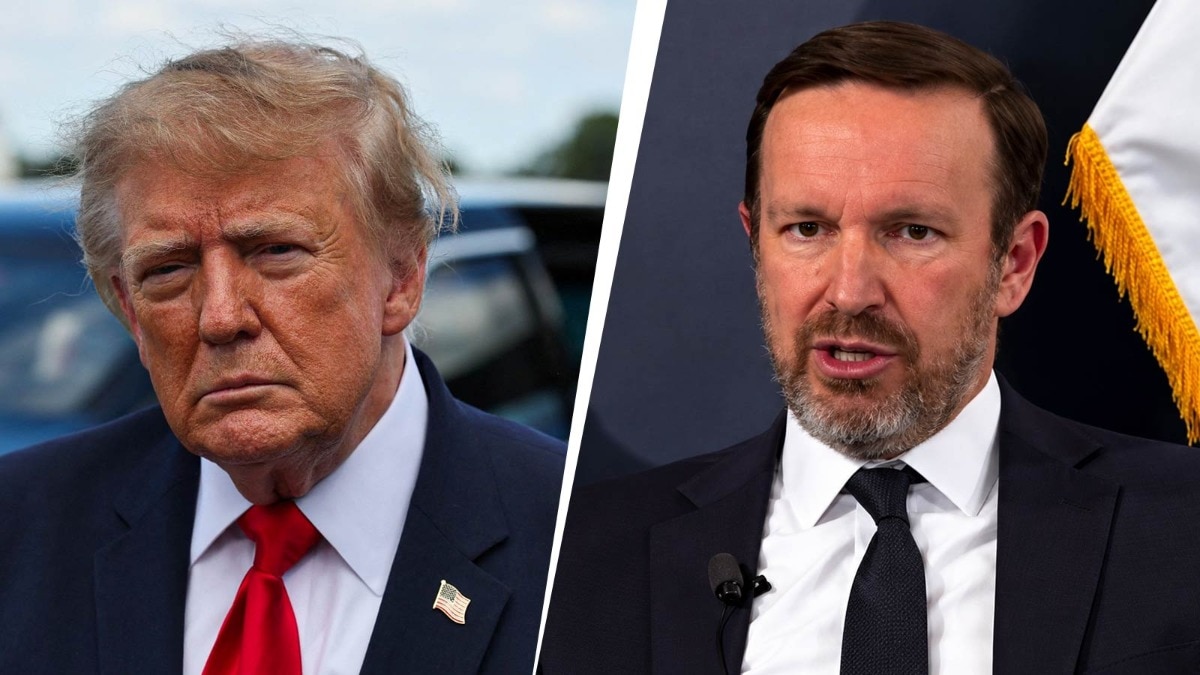
“Trump’s foreign policy is difficult to understand . Therefore , we should not try to guess any long term strategy when there is none. We can only describe what we see and use psychology not geopolitics to forecast Trump’s next move. For Trump, there is no distinction between friends , allies and enemies : he wants to be admired and flattered , whoever the admirers are. He does not believe in alliances nor in shared values or common history. He does not care about democracy or human rights as shown in Venezuela . Another psychological trait is his admiration for strong men : he prefers Putin towards Zelensky and Kim Jong Un versus Lee Jae myung . He is fascinated by Xi Jinping and thinks he can seduce him which proves his ignorance of Chinses civilization and ambitions . Will he ever admit his failures to bring peace in Gaza or Ukraine , his total failure in Iran ? Most probably not. Trump is not an ordinary politician , he is more of a cult leader with followers . As such , he will never admit he could be wrong : a cult leader is never wrong . Those are facts : we have to live with those facts for the two years to come. Are the US still our allies ? The US military remain faithful to its history of supporting democracies against autocracies ; the military do not talk but I know enough of their leaders to believe in the US military more than in the Trump administration.”