Free electricity allocation could rise to 300kWh under proposed policy - IOL
Millions of low-income South African households could receive substantially more free electricity each month under a proposed government policy that would increase the allocation from 50kWh to between 200kWh and 300kWh.
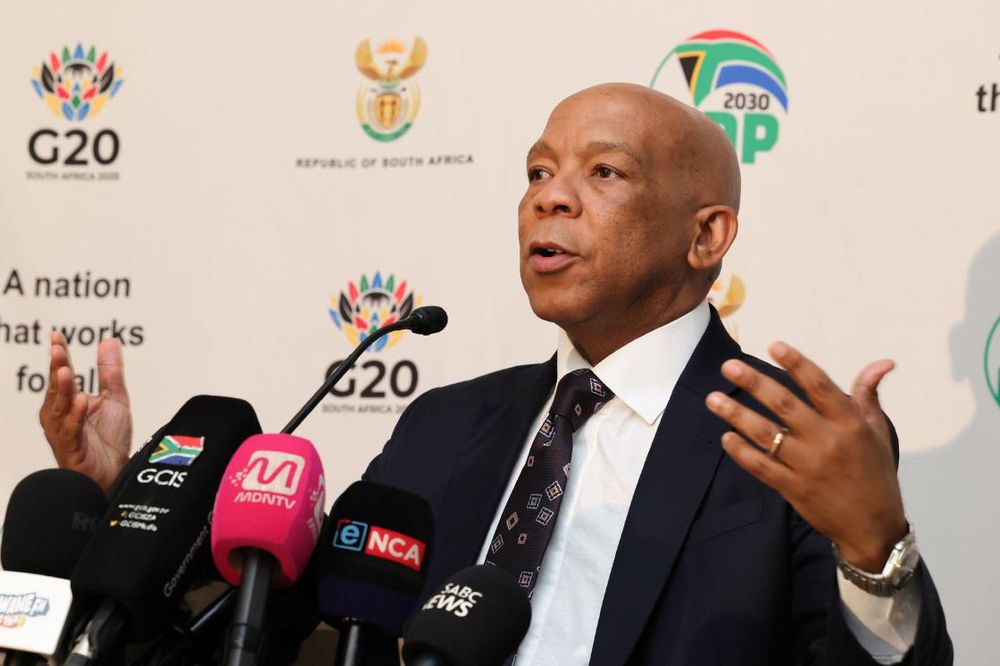
Electricity and Energy Minister Kgosientsho Ramokgopa says the government is considering the increase as part of a review of the Free Basic Electricity (FBE) programme, but stressed that no decision has been made and the proposed allocation is not yet an entitlement.
The proposal emerged in Ramokgopa’s written responses to parliamentary questions about the revised electricity pricing policy, which aims to strengthen protection for vulnerable and low-income consumers.
The existing FBE allocation provides 50kWh per qualifying household per month.
Ramokgopa said the government was considering increasing this to between 200kWh and 300kWh.
“The minister has indicated that the government is considering increasing the existing FBE allocation of 50 kWh per qualifying household per month to between 200 kWh and 300 kWh. This is a proposal for consideration and is not yet an implemented entitlement,” he said.
The number of households that could benefit has not yet been established.
Ramokgopa said this would depend on the final identification and registration of eligible households, as well as the arrangements adopted for implementation and funding.
“The department will therefore be able to confirm the number of beneficiaries once these matters have been finalised.”
Data shows that only 1.7 million of about 2.8 million identified indigent households benefited from free basic electricity.
Ramokgopa said several factors contributed to qualifying households not receiving the full benefit.
These included gaps in identifying and registering eligible households, limited municipal capacity and inconsistencies in the administration and maintenance of indigent registers.
He also said municipalities had diverted allocations from National Treasury to address other pressing financial and service-delivery priorities.
The revised electricity pricing policy is intended to promote transparent tariff structures, appropriate allocation of electricity costs and regulatory oversight by the National Electricity Regulator of South Africa.
However, Ramokgopa said the impact on individual household electricity bills would depend on the final tariff determinations, household consumption, the electricity supplier and how support measures are implemented.
A quantified estimate of the net impact on household electricity costs has not been confirmed.
“It would be premature to state that the revised framework will result in a specific percentage reduction or increase in household electricity costs. The impact must be assessed against the final policy provisions and the applicable tariffs and social support arrangements,” he said.
Responding to separate questions from ANC MP Zama Khanyase, Ramokgopa said implementation would require coordination between the Department of Electricity and Energy, National Treasury, the National Energy Regulator of South Africa and municipalities.
This would cover the identification of eligible households, delivery of free basic electricity, the design of lifeline tariffs and monitoring affordability.
“These mechanisms are intended to ensure that the financial sustainability of the electricity supply industry is pursued alongside the protection of households that are least able to absorb rising electricity costs.”
Ramokgopa said a definitive date for final approval of the revised electricity pricing policy could not yet be confirmed.
The timeline depends on consideration of public comments and completion of the required approval processes.
Cabinet approved the publication of the revised policy for public consultation on July 29, 2026. It was published for public comment a day earlier.
Ramokgopa subsequently extended the deadline for submissions to October 28, 2026.
“Following the consultation period, the department will consider the submissions received, undertake any necessary amendments and complete the applicable consultation and approval processes, including National Education Development and Labour Council and the submission of the final policy to Cabinet for consideration.”