
Environmental activist Dr Desmond D’Sa dies - IOL
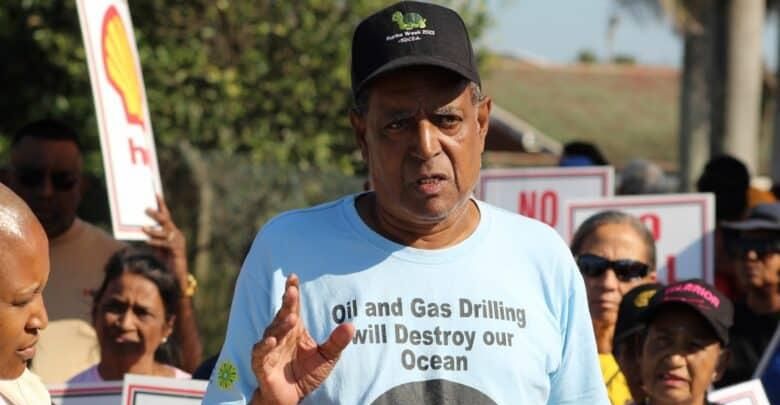
Community activist Desmond D'Sa has died.
Environmental activist Desmond D'Sa, the internationally acclaimed campaigner who spent more than three decades confronting industrial pollution and fighting for the rights of communities in Durban's heavily industrialised south, has died. He was 70.
It is understood D'Sa died in a car accident on the KZN South Coast. Two other relatives lost their lives in the accident.
A familiar face at community protests, public hearings and environmental campaigns, D'Sa became one of South Africa's most recognisable voices in the struggle for environmental justice.
He was a founding member of the South Durban Community Environmental Alliance (SDCEA), an organisation that challenged some of the country's largest industrial operators over pollution, public health and the environmental consequences of development.
His activism took him from the streets of Wentworth and Merebank to international platforms, where he spoke about the impact of industrial pollution on working-class communities.
In 2014, his work earned him the prestigious Goldman Environmental Prize, one of the world's leading awards for grassroots environmental activism.
But behind the international recognition was a man whose activism grew from personal experiences of apartheid, forced removals and the daily realities of living alongside factories and refineries.
Born on June 13, 1956, D'Sa was the 11th of 13 children born to Constance D'Sa and Mathew Hardy.
He grew up in Cato Manor, Durban, where his family lived in a community surrounded by gardens, fruit trees and vegetable patches.
That childhood was disrupted when apartheid's Group Areas Act forced his family from their home.
In a December 2025 interview with IOL, D'Sa recalled the destruction of the neighbourhood where he had grown up.
He described watching homes, trees and crops being destroyed as families were uprooted.
The family initially moved to Chatsworth in 1968, before D'Sa settled in Wentworth in 1974.
The contrast between the green surroundings of his childhood and the industrial landscape of south Durban would shape his life's work.
Wentworth and surrounding communities were located near oil refineries, chemical plants and other industrial operations, exposing residents to concerns about air pollution and industrial accidents.
D'Sa came to believe that the environmental burden imposed on these communities was inseparable from the racial and economic inequalities created by apartheid.
D'Sa's environmental activism intensified during the early 1990s, when his experience working in the chemical industry brought him into direct contact with hazardous substances and workplace safety concerns.
He became increasingly outspoken about the risks facing workers and families living near industrial facilities.
One incident in 1994 proved particularly significant.
In a July 2026 interview with The Post, D'Sa recalled how a chemical spill near a playground in Hime Street had left several young children seriously ill.
He said approximately 10 children, aged between five and seven, suffered convulsions and required hospital treatment.
The incident strengthened his determination to challenge companies over the consequences of industrial pollution.
In the mid-1990s, he helped establish the SDCEA, bringing together communities affected by pollution across the South Durban Basin.
The alliance became a prominent environmental watchdog, demanding stronger regulation, greater transparency and accountability from companies operating in residential areas.
D'Sa was equally willing to confront government authorities when he believed they had failed to protect communities.
His activism extended beyond pollution to workers' rights, public health, housing, fishing livelihoods and access to environmental information.
One of D'Sa's most significant achievements was his role in the campaign against the hazardous waste landfill at Bulbul Drive in Chatsworth.
Residents had raised concerns about pollution, waste transportation and the impact of the facility on nearby communities.
D'Sa helped mobilise residents, organise protests and equip communities with information to challenge the landfill's continued operation.
The campaign also introduced community-based air monitoring techniques that allowed residents to gather evidence about pollution.
According to the Goldman Environmental Prize organisation, the landfill operator withdrew its application to extend the facility's operations in August 2010.
The landfill officially closed in November 2011.
The campaign became an example of how organised communities could successfully challenge powerful industrial interests.
In 2014, D'Sa received the Goldman Environmental Prize for Africa in recognition of his leadership in the campaign and his wider environmental justice work.
The award brought international attention to the pollution challenges facing south Durban.
It also recognised his efforts to challenge plans for the expansion of Durban's port, which activists feared would displace communities and worsen environmental pressures.
D'Sa's activism came at considerable personal cost.
Over the years, he faced threats, intimidation and hostility from those opposed to his campaigns.
His home was petrol-bombed during a period of intense labour and environmental activism, leaving him injured and his family traumatised.
He described the lasting physical and emotional consequences of the attack.
He also spoke about losing his employment after refusing to abandon his environmental campaigning.
Despite these experiences, D'Sa continued to organise demonstrations, challenge industrial developments and support communities seeking protection from pollution.
His approach combined public protest with legal challenges, environmental monitoring and community education.
He believed ordinary residents needed access to scientific information and legal support to confront powerful corporations.
Under D'Sa's leadership, the SDCEA expanded its campaigns beyond industrial air pollution.
The organisation challenged offshore oil and gas exploration, campaigned against environmentally damaging developments and defended the rights of subsistence fishers.
It also responded to major environmental incidents, including the 2020 Engen refinery explosion and the 2021 fire at the UPL chemical warehouse during the July unrest in KwaZulu-Natal.
As IOL reported in its account of the alliance's 30-year history, the organisation developed community air-monitoring initiatives, challenged industrial expansion and participated in legal and public campaigns against offshore exploration.
D'Sa also championed a transition towards cleaner energy, arguing that communities already suffering from pollution should not bear further environmental and economic costs.
His campaigns repeatedly returned to one principle: people living near industrial operations deserved the same environmental protections as those in wealthier communities.
In addition to the Goldman Environmental Prize, D'Sa received an honorary doctorate from the Durban University of Technology in 2015 for his contribution to environmental justice and human rights.
In July 2026, he received a Lifetime Achievement Award at the KwaZulu-Natal Premier's Excellence Awards at the Durban International Convention Centre.
The award, presented by Premier Thami Ntuli, recognised his contribution to environmental protection and social justice.
In an interview with The Post following the ceremony, D'Sa admitted that he had been surprised by the recognition after years of confronting government over environmental failures.
"Government did not recognise me in all the years that I fought for our people, so I was really shocked that they did, and happy that they finally did," he said.
He also reflected on the younger activists he had mentored and his hope that they would continue challenging environmental injustice.
For D'Sa, the recognition was as much about the communities and activists who had stood alongside him as it was about his own achievements.
Even in the final months of his life, D'Sa remained engaged in the issues affecting ordinary South Africans.
His concerns extended to the rising cost of electricity, energy poverty and the impact of government and corporate decisions on struggling households.
In an IOL report published on October 29, 2026, D'Sa was quoted opposing proposed electricity tariff increases that he warned would place additional pressure on vulnerable households.
His activism had evolved over the decades, but his commitment to social and environmental justice remained consistent.
For the communities of south Durban, D'Sa leaves behind an organisation that has spent three decades demanding accountability from government and industry.
He also leaves a generation of activists who learnt that ordinary residents could challenge powerful interests through collective action, scientific evidence and persistence.
Perhaps his own words, spoken when he received his provincial lifetime achievement award just months before his death, best capture the purpose of his life's work.
"I loaned my voice to the people, and I will always be a voice for the voiceless," D'Sa said.
"I wanted to see change for the ordinary people so they can live more than ordinary lives."
His death marks the loss of one of South Africa's most prominent environmental justice campaigners, but the movement he helped build continues.

