Elon Musk is about to learn how much America hates him - The Independent
Want to bookmark your favourite articles and stories to read or reference later? Start your Independent Membership today.
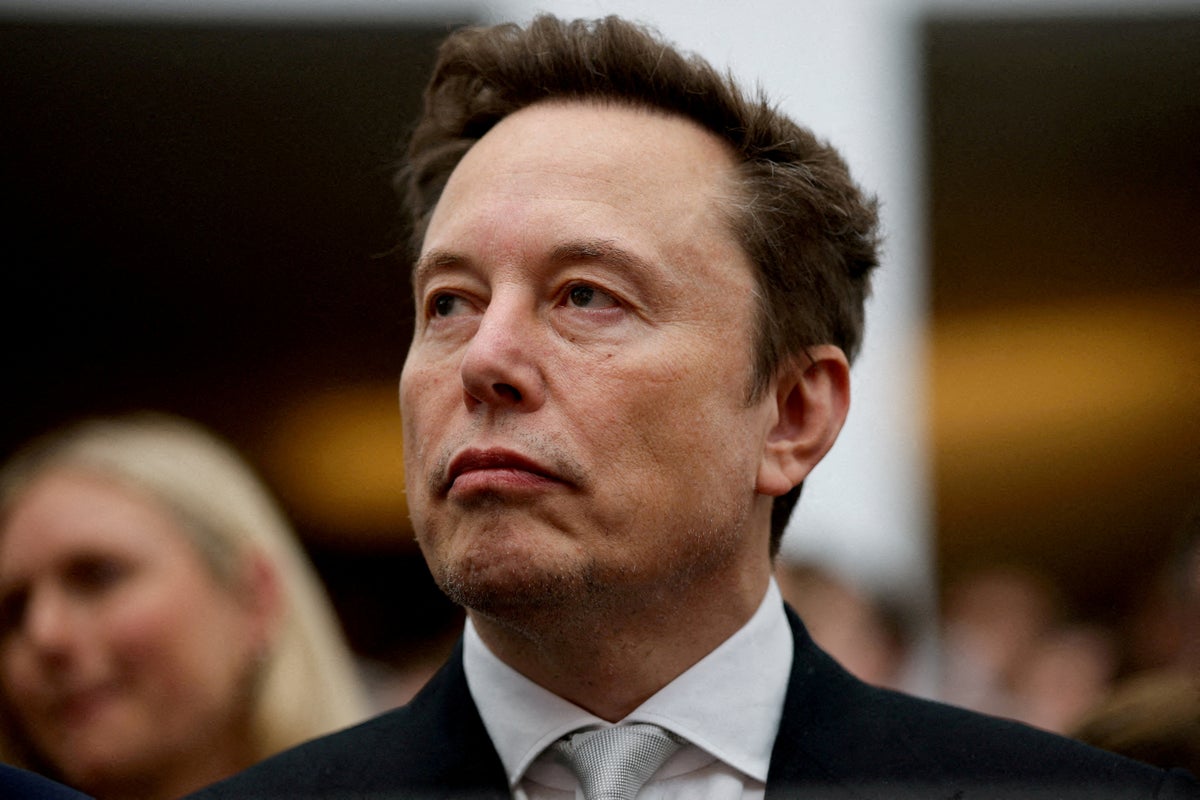
Elon Musk, the “First Tech Bro”, has just found out the hard way that a spend of nearly half a billion dollars and control of a major social media platform cannot always change the political weather. The grand iconoclast tried to make light of the Republican’s midterms catastrophe, posting early on Wednesday that his “election-interfering space lasers didn’t work”. A post telling followers to “Vote red (Republican) today” also, rather sheepishly, disappeared.
Musk is not a man who relishes failure. His spending went to a slew of candidates who failed to get elected in Texas, now the epicentre of his companies’ operations.
For a man whose wealth is estimated at more than $800bn, spending nearly half a billion dollars in campaign donations is surely loose change. But the money was spent for a purpose beyond ideological alignment – Musk has an on-off relationship with Donald Trump, but one which has advanced his interests strategically. And how. Musk’s Tesla and SpaceX slumped following the US midterm elections, wiping out more than $100bn in combined market value.
Elon Musk is now in trouble. In essence, two sides of the Musk sphere of interest have taken a battering. The first is his position as America’s most powerful “tech bro” power broker, a man who could shape the direction of politics and policy towards companies like his Starlink and SpaceX entities. He was outdone by the more raw democratic force of voters disillusioned by Trump over the economy and the Iran war – and in many parts of the electoral map, also anxious about the impact of massive data centres to power the next stages of frontier technology.
The second is that it has laid bare how closely entwined his businesses are with the American state – businesses that rely on a steady flow of regulatory permissions, subsidies and support at the state and federal level to continue their extraordinary growth trajectory and power the next stages of artificial intelligence.
While Democrats need to be wary of leaning too hard into their technophobic wing, there will be a correction from the “anything goes” era when tech titans were largely able to slice their way through opposition or controls.
Government business has always accounted for a large amount of Musk’s revenue, and his empire is entangled with modern US military power. That will not change. But it will face closer inspection as to the consequences. The recent controversy over slowing his Starlink satellite network in Ukraine reminded us that Musk enables a large amount of data flow to support the battlefields of Ukraine. This will surely interest lawmakers. Last month, Senator Alex Padilla, a Democrat from California, called for an investigation into Musk after reports of Starlink blinking out in Ukraine emerged.
Even the “trad” end of the Musk empire – Tesla manufacturing and “robotaxis” – needs huge access to energy infrastructure and computational power. That is why Musk wants to build out his own supporting web of semiconductor companies and data centres, which have also become the focus of protests in the midterms over impacts on electricity and water usage. That has blended classically progressive opinion, which has grown more AI-sceptical in reaction as the unaccountable might of major tech entrepreneurs has increased, and more grassroots concerns about the impact of galloping AI innovations on jobs.
But it is his period as “efficiency tsar” at the Department of Government Efficiency (Doge) that could come back to haunt him most. His actual work produced a mixed record at best – and his awkwardly competitive relationship with Trump (and short attention span) meant that it concluded relatively quickly after four months. But that stint did give him a vast amount of information and data, which competitors and critics reckon has given him and his companies a lopsided advantage.
The question of what happened to the information and access acquired during his time in government is now open to a lot more scrutiny in Congress – which can hold hearings, subpoena company bosses and explore the relations between key companies and government contracts and departments. Trump, just before the midterms, said he would be willing to issue pre-emptive pardons to aides and allies, including Musk, if Democrats won enough seats to take control of the House and Senate and carry out widespread investigations and potential prosecutions. That Musk might need protecting from a man who has famously turned on him before may give him pause for thought.
The richest man in the world is too wayward a character to adjust quietly to these pressures. But the outcome of this check-in with an electorate disillusioned by Trump – and, indeed, with Musk – and uneasy about the untrammelled power of technology means that he will have to choose more decisively between his role as figure in the ideological debate and his role at the helm of some of America’s most strategic businesses.
Musk is a man who has used his acquisition of the X platform to create Maga-aligned blend of anti-Woke crusades and hot-button broadsides on everything from immigration to the evils of “Woke” progressivism dial that down – the better to focus on forging cross-party support for space exploration, autonomous transport and his role as the key innovator of his generation. The lure of political influence was seductive for a man whose currency is progress and power.
But America’s democracy, however strained, is still a formidable machine when it comes to channelling the moods and aversions of voters. Musk’s money has funded advertising heft, campaign organisation, access and sway over the Republican movement. But the results that poured in this week showed that it has limits – and that even his force of personality and finance could not outrun a critical national mood. Polls show that just over half of US adults say they have an unfavourable view of Musk – the surest indication yet that even half a billion dollars can’t buy you the love of the American electroate. For the First Tech Bro, coming second is an unappetising outcome.
At The Independent, our mission is to deliver unbiased, fact-based journalism. Journalism that's free from political allegiances and the influences of shareholders and commercial interests.
But we need your help. Your support enables us to uncover crucial stories that would otherwise have gone untold, hold power to account, and amplify voices often unheard.
Whether $5 or $50, every contribution counts. It fuels our reporting, invests in investigations, and maintains our independence.
It’s a reminder that our trusted, fact-based, free-thinking journalism remains available to everyone thanks to the generosity of our readers. To show your support and help us tell more of the stories that matter, please make a donation today.
Not ready to donate? Choose 'Maybe later' to start reading.