Durban court orders limits on March and March marches and conduct - IOL

Jacinta Ngobese-Zuma South Africa – 30 October 2026 – March and March movement leader Jacinta Ngobese-Zuma appeared before the Durban High Court to oppose an urgent state application seeking to suspend the anti-immigration group’s weekly protests in Durban’s CBD for at least two weeks. Police Minister Firoz Cachalia and KwaZulu-Natal Provincial Commissioner Lieutenant-General Nhlanhla Mkhwanazi brought the application following a wave of violent protests, looting, arson and property damage in the city. Picture: Leon Lestrade / ANA Studio.
The Durban High Court has granted an interim order restricting the March and March movement and its leaders from using violence to force businesses to close or obstructing roads through violent conduct.
The order follows an urgent application by the Minister of Police and the KwaZulu-Natal provincial commissioner, who raised concerns about intelligence warning of an alleged plan to burn down the Refugee Reception Centre on Che Guevara Road.
The applicants brought the case in their official capacities, relying on section 38(d) of the Constitution to act in the public interest and protect the rights to life, dignity, and freedom and security of the person.
In granting the order, Judge Peter Olsen cautioned the movement's advocate, Sandile Kuboni, against relying on section 17 of the Constitution, which guarantees everyone the right to assemble, demonstrate, picket and present petitions peacefully and unarmed.
Kuboni had told the court that the movement relied on this constitutional provision to conduct its marches.
The court issued a rule nisi calling on the movement, its leader Jacinta Ngobese-Zuma, her husband Xolani Zuma and other senior members to show cause on January 18, 2027, why a final order should not be granted interdicting them from instigating or encouraging assaults, intimidation and threats against residents, traders, business owners, delivery drivers and other road users.
They must also show cause why they should not be permanently interdicted from looting, attacking Home Affairs premises, inciting violence or intimidating groups of people, as well as performing acts or making statements likely to encourage violence against any person.
The interim order also places restrictions on what participants may carry or wear during marches and demonstrations.
“In connection with any march or gathering or demonstration the respondents are interdicted and restrained from possessing any airgun, imitation firearm, wearing disguises, masks or other items that obscure facial features and prevent identification,” the order reads.
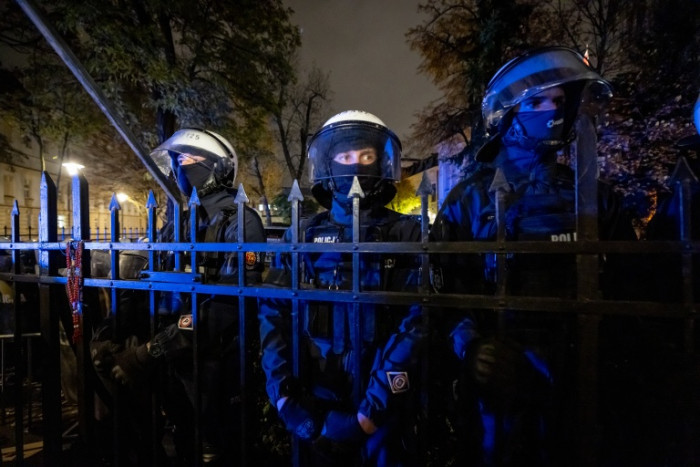
Police presence was heavy as the March and March movement was at Durban court which is housing the Durban Magistrates court and the high court.
The respondents are also prohibited from wearing clothing resembling the uniforms of security forces, including those of the police and the South African National Defence Force.
The order takes immediate effect and will remain in force pending the return date in November.
The respondents have been directed to file their answering affidavits by November 27, while the applicants must deliver their replying affidavits by January 11, 2027.
In the meantime, the court ordered that the movement's marches may take place between 9am and 3pm, with the period between 3pm and 4pm set aside for participants to disperse.
Advocate Nalini Govender, representing the applicants, had argued that the demonstrators should not be on the streets during peak traffic hours.
During submissions on the relief sought, Kuboni objected to what he said was the applicants' portrayal of the movement and its leadership as violent.
“The impression created is that the respondents have broken the law and are violent. If the applicants were concerned about the elections they should have said so and said they want the protection of the court,” he argued.
He further submitted that the police had not produced evidence demonstrating that the respondents were violent.
“They must establish beyond reasonable apprehension,” he said.
Outside court, Xolani Zuma told members of the movement that they would no longer be allowed to carry sticks during marches. The announcement was met with audible complaints from some members.