
Durban Chamber of Commerce at 170: Confidence is built in rooms like this one - IOL
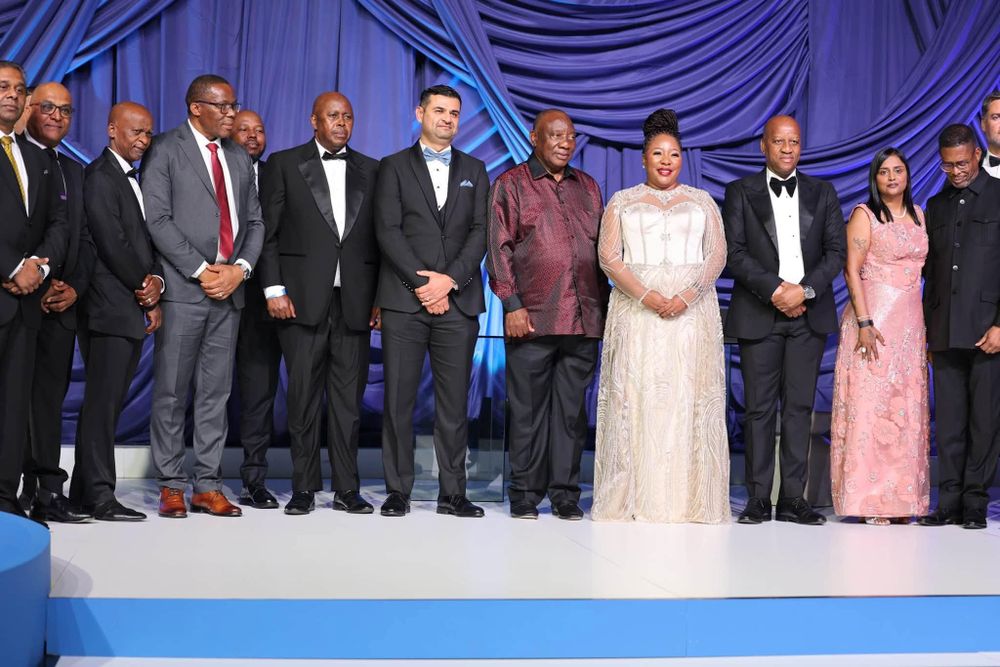
At the Durban Chamber of Commerce and Industry’s 170th anniversary event, President Cyril Ramaphosa, KwaZulu-Natal Premier Thami Ntuli and eThekwini Mayor Cyril Xaba heard calls for safer streets, reliable water and a more efficient port.
The President, the Premier, the Mayor and corporate South Africa shared the room. The Premier vowed Durban will not burn again, and the Chamber’s chief executive redefined confidence.
ON Wednesday night, the playTSOGO Globe at Suncoast held what Durban rarely sees in one room. The President of the Republic. The Premier. The Executive Mayor. Chief executives of corporates that have built their balance sheets on this city’s trade.
Owners of SMMEs and informal traders who make their living in it. Seated among them were the leaders of the other chambers in KwaZulu-Natal, organisations with their own members and priorities.
They came because Palesa Phili asked them to.
Convening power cannot be bought or inherited. It is earned by being useful to people who owe you nothing. One invitation, three spheres of government
Phili’s aim was easy to state and hard to deliver: bring business and government together, with the President present. President Cyril Ramaphosa spoke of Durban with affection and made a point every executive understood.
When Durban does not work, the country does not work.
He credited the Chamber, the oldest and largest metropolitan chamber on the continent, with leading the business response to the July 2021 unrest and the April 2022 floods.
Premier Thami Ntuli then spoke to the room’s deepest anxiety. On 8 October, an anti-immigration protest turned violent in the Durban CBD. Fourteen vehicles were torched, businesses stopped trading, and shops were vandalised and looted over nearly two days.
For many in the room, it reopened the memory of July 2021, which left more than 350 people dead.
“Durban will never burn on my watch. Not again,” he said.
He vowed to protect every factory, shop, port and livelihood, because burning Durban means taking food from the tables of millions.
He then repeated the pledge in isiZulu: it will not happen. Those responsible for crime and for destabilising the economy, he said, will not be spared.
He asked the President to deploy the army, and 510 soldiers under Operation Prosper will now work alongside police in the province until 30 November.
Businesspeople showed him that investor confidence rests on safety, predictability and a responsive government. The Chamber and the province, he said, entered a partnership to restore it. It was tested on October 8, and he thanked business for stepping up.
Ramaphosa, for his part, offered evidence of momentum. eThekwini accounts for the bulk of the record R124.5 billion in investment commitments secured at the KwaZulu-Natal Investment Conference.
Employment in the metro stands at 1.29 million, and eThekwini has the lowest unemployment rate of the eight metros.
These are commitments, not completed projects.
The Port of Durban recorded the biggest gain in the World Bank and S&P Global Container Port Performance Index yet still sits near the bottom of the global table. The progress is real. So is the distance still to travel.
Phili did not read from a good-news script. The Durban Business Confidence Index fell from a record 63.38 in the fourth quarter of 2025 to 48.82 in the second quarter of 2026, its first reading below the neutral 50-point mark since 2024.
She attributed the fall largely to national and international pressures, and Durban still sits above the national index of 39. Confidence does not replace investment, but it tends to precede it.
Economists will tell you that business confidence is a precondition for foreign investment. On Wednesday night, Phili redefined it.
Confidence is not only a quarterly index. It is a leader telling a President she believes in her city and then spreading that belief into one business at a time. That is the confidence she gave us in the room.
On services, 31.5% of respondents in the latest survey named roads as the worst performer, with environmental management and water close behind. Water interruptions have forced some businesses to buy their own supply.
Capital spending, the money that replaces ageing pipes and roads, is about R6.3 billion of the municipality’s R75.3 billion budget, roughly 8.4%. She asked government to raise that share and said Durban needs “decisive action, not just continued discussion”.
Her remarks on the port landed hardest. She described ships waiting at anchor outside the harbour, the days lost on each vessel, and the manufacturers and retailers waiting on stock.
Every delay is paid for by someone who never saw the ship. Business, she said, is complaining bitterly.
She was equally clear about what is working.
The Presidential eThekwini Working Group has public companies, private companies and small businesses engaging with one another.
The President’s response was candid. Ramaphosa acknowledged that water and the infrastructure backlog still hold back recovery. Processing water licences once took around three years and now takes 75 days, and he wants it shorter.
He told business to knock on his door if government does not deliver. Mayor Cyril Xaba said investment is substantial and the outlook, including tourism, is bright.
Phili also said something rare for a host. Network, she told the guests. Build your business.
Do business with one another. You will not easily find these people in one place again, so use the time. It is the instinct of someone who puts the city ahead of her own organisation.
Corporate South Africa answered in kind. Toyota and Unilever spoke with pride of what they are investing in KwaZulu-Natal, of their plans to grow here and of their wish to remain faithful to the province and South Africa.
Then there was something I had not seen before: Momentum, Sanlam, FNB and Old Mutual in the same room, celebrating Durban and the Chamber’s achievement. They compete every day. That night they stood together.
The financial services sector earns income from KwaZulu-Natal’s customers, and that brings a responsibility to give back. Partnering with the Chamber is a practical way to do it, to the benefit of the sector and the small businesses behind the province’s jobs. To the institutions that were not in the room: the door is open. No one will ask why you stayed away.
You will be welcomed with open hands. That is who we are in Durban.
The working group’s results came from a structure in which the Chamber holds a seat, and the President called it central to the progress. A company that wants steadier water, a faster port, safer streets or quicker approvals has a better chance of being heard through an organised body than alone.
The cost of staying outside the room is paid in water tankers, delayed containers and closed shops.
The Chamber is 170 years young. Its chief executive has shown she can bring a President, a Premier, a Mayor and the province’s other chambers to one dinner, and then tell them what is not working. That room will not be assembled again tomorrow. The invitation to join it is open now.
Sanjith Hannuman is a director at AVIB and an employee benefits consultant. He holds an MBA from UKZN and is a Fellow of the Financial Planning Institute of South Africa.


