Doctors are right about Temple, but we should let Deepinder Goyal cook
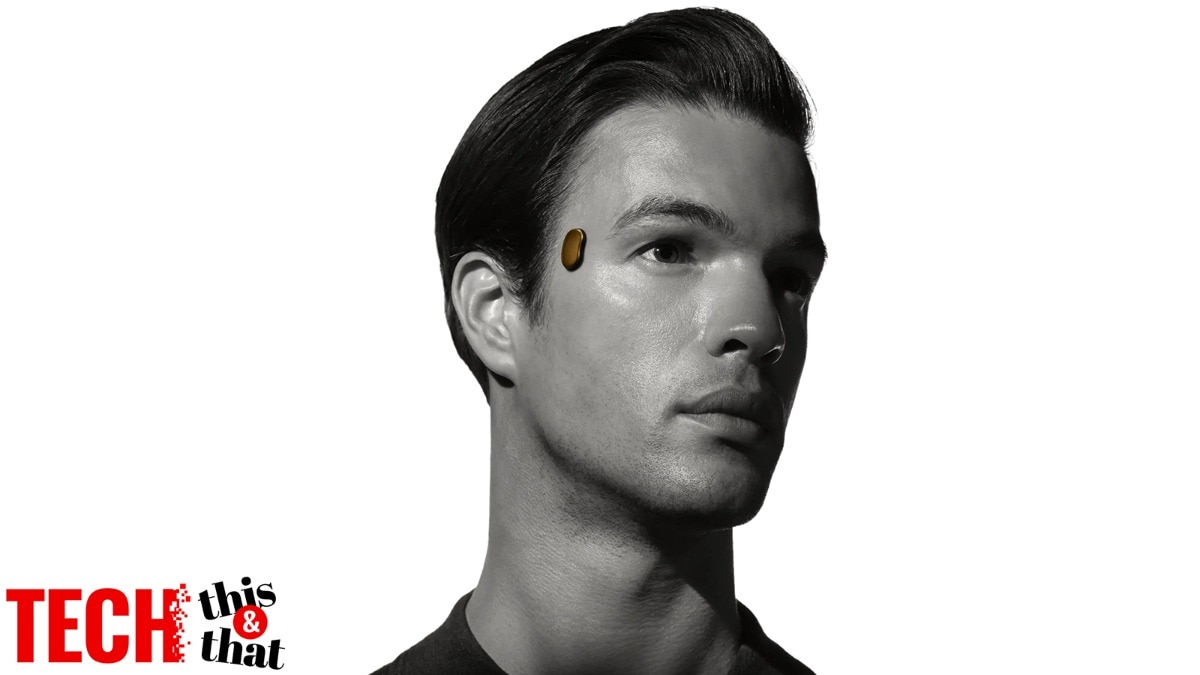
Around a week ago on November 1, Temple opened for pre-orders. Hyped with a number of celebrity endorsements and some unique health tracking claims, Temple has divided the tech-savvy and vocal social media crowd. When something new hits the market promising unique experience, the way Temple has done, it is bound to attract limelight and scrutiny. And Temple, pushed by Zomato founder Deepinder Goyal, has clearly promised — or rather implied — a lot. In ways that seem almost magical, and for which its creator Goyal currently does not offer any iron-clad proof.
The celebrity endorsements, out-of-this-world sales pitch, and some unique claims mean Temple has come quickly on the radar of doctors. They, or at least the most vocal of them including LiverDoc aka Cyriac Abby Philips, are up in arms against what they say are tall health claims made by the device. Goyal, never the one to back down from a fight, is hitting back. If you open X aka Twitter today, chances are that you will find yourself in the middle of salvos the two camps are firing at each other.
But before all that, a few words about the device itself — the Rs 85,000 hero of all the brouhaha.
Temple has been pitched by Deepinder Goyal as a new kind of tech-health product that you can stick to your temple, a little above the jawbone. Hence the name. This part is simple. The more contentious is the issue related to what it supposedly does. We are not quite clear on it yet. Ahead of the pre-orders, the chatter was around Temple’s supposed ability to measure blood flowing into the brain of the user. It has a feature called “BrainFlow” and the idea is that by measuring blood flow into the brain, the device can identify and look at a number of health markers.
The interesting part is that the Temple website itself doesn’t put “BrainFlow” at the centre of the conversation. Instead, on the pre-order page what you get to see is another concept — and feature — called Entropy. “Entropy measures how hard your body is working to shed heat, read from your temple,” notes the website. “Your Resting Entropy and your Entropy Max combine into Span: the one number that shows you how well your body is doing across a wide range of systems.”
Lots of buzz words but little science. Temple does not go into fine details. Entropy sounds similar to “Readiness” scores that devices like Oura Ring and Apple Watch give to users. And just like them it possibly uses a number of health markers, like heart rate, to calculate it.
These scores are mostly art rather than science. They do use some data that health sensors in devices like Oura Ring collect. But how this data is used to calculate a “score” is more of algorithmic art, a guesswork finely tuned to not just a score but also to show it in a way that pleases the user and gamifies the health. It may or may not have any diagnostic value.
The problem, however, for Temple is that its loud sales pitch and vocal fitness claims have attracted the attention of a number of Indian doctors on X. And almost all of them — quite rightly — slam it. The device, with its unique design that seems straight out of Star Trek universe, gives the impression that it is doing something novel in terms of health and fitness tracking. After all, blood flow to the brain is central to many health conditions. If there is a consumer device that can measure it accurately — and currently there is none — surely that would be a major breakthrough. Even bigger than the devices measuring ECG or blood flow through the wrist, because those are older technologies built on top of settled science.
It is the BrainFlow that has caught the attention of doctors and they are finding that the arguments and possibilities Temple implies are just that — arguments. So far, the Temple team has not shared any concrete proof of concept on measuring blood flow to the brain, beyond a couple of pre-prints. Pre-prints, as we know in 2026 where there are thousands of pre-print papers everyday, hold little value in the scientific community.
LiverDoc, who has never shied away from a boxing match on X, has been characteristically blunt. “There is no our science and your science. But there is bad science, fringe science and science fraud and Team Temple, embraced all of these,” the Doc wrote on Thursday. “Temple device is a scam. There is no doubt about it.”
His main problem is that Deepinder has “provided no real evidence or proof that his device can measure and interpret brain flow from a superficial artery — superficial temporal artery, which is entirely outside the skull, supplying blood to the side of the face, temple, and scalp regions.”
His other problem, I suspect, is that he has been blocked by Deepinder on X.
The Zomato founder has been similarly combative, although the major takeaway from his argument so far seems to be his assertion that corresponds to — let me cook.
Yesterday, the Zomato founder responded to doctors with a few points. It’s a long post, but the summary seems to be this: I am a builder and not a doctor. And I am building a fitness and lifestyle product and not a medical device aimed at diagnosing health conditions. I have a pitch to users, and they can bite it or leave it. If they bite it, they also have another 14 days to fully commit. In other words, if consumers are not happy they can return Temple back within 14 days.
And then to this pitch he has added another aspect: That I do not have the peer-reviewed research to back up Temple, but I do have faith in it. The proof of that is over Rs 180 crore of my own money that I have spent on building Temple, and all the money that other employees and other investors have pledged.
It is a strong rejoinder from Deepinder, although doctors are understandably not buying it. They are still demanding proof, just the way they should.
Both camps are right. Deepinder is approaching Temple like a tech entrepreneur building a solution in search of a problem. It is a product that he wants to sell. And he says that explicitly when he writes on X: “Just to be clear because I am seeing a lot of give me clinical evidence. Temple is a fitness tracker, and wellness device. We are not a medical device. If at some point, we clinically validate any of our metrics, we will let you know.”
But doctors are right as well because they believe users don’t see the distinction between a lifestyle product and a medical device as clearly as Deepinder sees it. Their argument is that if it walks like a duck, if it quacks like a duck, and if it looks like a duck, then evidence must be supplied to support that it is a duck.
Given that both camps are right, ultimately I think we should let the consumers decide. They are the best judge of a wellness product and they vote with their wallets. Temple is an expensive gadget and if it doesn’t offer some tangible benefits, not necessarily health benefits by the way, then it will face rejection from consumers.
It is worth noting that Temple is not the only health-tech product that has faced scepticism from doctors. Even global products like Oura Ring, Whoop, and Apple Watch, routinely face scrutiny. They also come with similar more-art-than-science features like Readiness and stress score.
But eventually people buy – or not buy – them because they bring something to the table. Not always it is medically-proven data. Sometimes it is just a number that provides a goody feeling to the user, or a number that calms them, or a feature that can act as a placebo — for example, a Deep Breaths feature to calm nerves.
Sometimes it is not even about heath tracking or this feature or that. For many people a wearable device is just a fashion accessory, a statement of intent, or an object of emotional support like an emotional support dog. Have you seen how many obese and unfit people wear the Apple Watch Ultra, arguably the most advanced consumer wearable ever made? They definitely do not wear it because it lets them track their steep mountain trails.
Will Temple offer similar lifestyles? Maybe it will, maybe it won’t. We will not know until Deepinder and the team dip their toes in the market. And they have every right to dip their toes in the market. Unless anyone is outrightly scamming or lying to users, we should let people try to sell whatever it is that they are trying to sell. Even if it is snakeoil. I may not see the value in it. But someone else may. Doctors are right but we should still let Deepinder cook whatever it is that he is cooking with Temple.- Ends
Javed is the Technology Editor at India Today Group Digital. He has over two decades of experience covering consumer tech, gadgets, Big Tech, and AI. In 2014, he started India Today Tech and built it into one of India’s biggest technology news sites. Apart from keeping an eye on the intersection where tech, society, politics and economics meet, Javed writes a weekly newsletter -- This Week In AI. Good fiction, Wes Anderson, and a day in the wild photographing birds with his trusty Nikon Z8 are his preferred ways of digital detox.