Cury proposes taxing big techs, denies telemedicine conflict of interest - Valor International
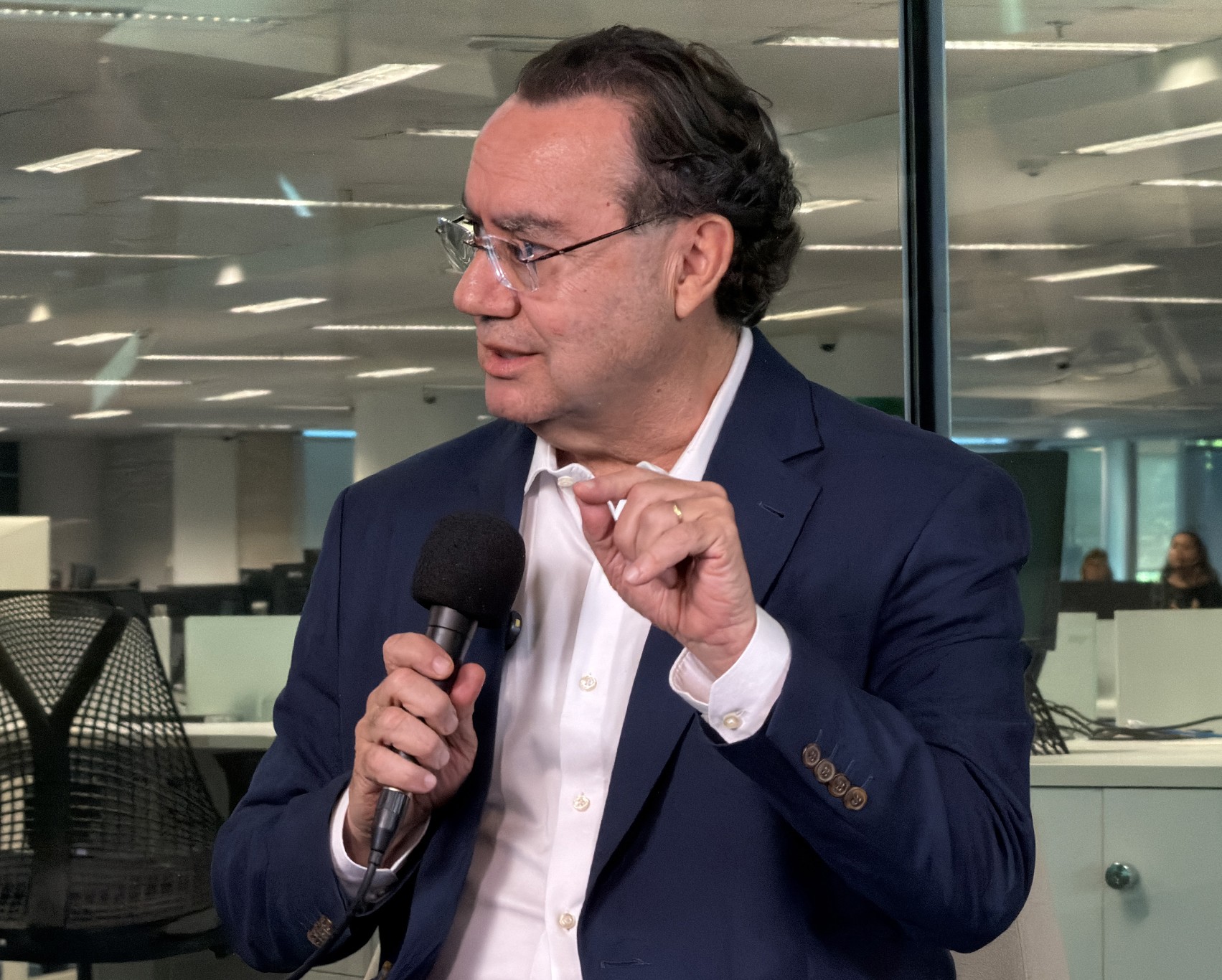
Avante presidential candidate Augusto Cury presented controversial proposals without providing details on their costs in interviews with TV Globo on Saturday (29) and with Valor, O Globo, and CBN radio on Friday (28). Among the measures he advocated were turning ambassadors into digital influencers to “better sell” Brazil’s image abroad, using drones to combat femicide, and replacing public employees with artificial intelligence. Cury also proposed taxing big techs and increasing taxes on betting platforms. A former partner in a telemedicine company, the candidate also advocated using telemedicine for 80% of basic consultations through the Unified Health System (SUS) but denied a conflict of interest.
“We need to revamp Brazilian embassies, and digital influencers can be important,” the candidate said on TV Globo. “We should train ambassadors and also employees to be influencers to better sell Brazil abroad, because Brazil is not sold well abroad,” he said in the interview.
Speaking about the rise in femicide in Brazil and what he intends to do to combat the crime, Cury advocated the use of technology and drones activated by police stations. The candidate said the equipment could reach the scene of an attack against a woman before police officers and issue an audible warning. Asked about the effectiveness of the measure, given that many municipalities do not have internet access and 70% of femicide cases occur in women’s homes, he said: “Forget the drone,” he told Globo’s presenters, evading the question.
The presidential candidate said that, if elected, he would eliminate eight to 10 ministries but did not say which ones. At the same time, he advocated creating a Ministry of Public Security and a ministry or executive secretariat for Artificial Intelligence and Robotics. Cury said he intends to reduce public-sector personnel costs through the use of artificial intelligence but did not detail spending-cut proposals either on TV or during the Valor, O Globo and CBN interview. “If we are responsible for managing the entire public administration appropriately and intelligently and do not hire more employees, introduce artificial intelligence and digitize the entire public administration, we would certainly be able to save enough,” he told Globo.
In the TV interview, broadcast after Jornal Nacional, Cury also advocated having the SUS use telemedicine for 80% of basic consultations. The candidate denied that the proposal involved a conflict of interest given that he is an ambassador—and until 2023 was a shareholder—of a telemedicine company. “Under no circumstances [would there be a conflict].” Cury said, “I am no longer an ambassador for this program; I am someone who has experience.” The candidate’s name, however, appeared on the company’s website. When confronted about it, he said the reference to his name should be removed. “Remove it immediately.” On Sunday (30), the reference was removed.
The presidential candidate also advocated taxing betting platforms at 50% and suggested a 1% real increase in the minimum wage but did not detail how he intends to balance the public accounts. He suggested, for example, that increasing companies’ productivity using artificial intelligence and robotics would be enough to address the Social Security deficit.
The TV interview began with a question about public debt, which is now above 80% of gross domestic product (GDP) and on an upward trajectory. Asked how he would address the issue, Cury did not detail his proposals and spoke about the need for measures such as cutting ministries and fighting corruption. These initiatives, however, are more closely associated with gains in government efficiency and have a limited impact on public finances.
The candidate said public debt is “at stratospheric levels” and that spending adjustments are needed through measures such as cutting about 50,000 commissioned positions, reviewing contracts, fighting corruption and adjusting Bolsa Família. He nevertheless defended maintaining the fiscal framework.
On the revenue side, Cury said on TV on Saturday that the adjustment should include raising taxes on betting platforms to above 50%—they are currently taxed at 12%. He also expressed concern about the impact of the creation of the CBS tax on micro and small businesses. In Friday’s interview, he had already criticized online betting.
In his interview with Globo, Cury advocated a 1% annual real increase in the minimum wage. The goal is for the country to develop a “strong middle class.”
There is already a rule providing for a real increase in the minimum wage. Under the formula, the increase must equal inflation plus the change in GDP recorded two years earlier. The candidate’s proposal, therefore, could result in a smaller increase than would be possible under the current model, depending on these parameters.
On Friday, during the Valor, O Globo, and CBN interview, Cury avoided defining himself as either right-wing or left-wing, saying only that he has “a capitalist mind, but a social heart.” The candidate criticized polarization and said that politics “in Brazil and worldwide is schizophrenic.”
The Avante candidate was the last participant in a series of interviews conducted by the three outlets with the presidential candidates best positioned in the polls. Before him, Romeu Zema (Novo), Ronaldo Caiado (Social Democracy Party, PSD) and Renan Santos (Mission Party) took part. Luiz Inácio Lula da Silva (Workers’ Party, PT) and Flávio Bolsonaro (Liberal Party, PL) were invited but declined.
In Friday’s interview, Cury said he would “heavily tax” big techs, equating them with products harmful to health, such as cigarettes. “We are going to tax social media, not influencers, but the networks,” he said. He said the measure would also apply to online betting platforms, known as “bets.”
The writer also said he supports impeaching Supreme Court (STF) justices and said that, if elected, he would invite a group of “notable” legal scholars to assess whether there had been “irregularities” in the proceedings involving those implicated in the January 8, 2023, coup attempts.
Regarding the possibility of impeaching Supreme Court justices, he said during Friday’s interview that judges who make mistakes should be held accountable. “If they made a mistake, they must be impeached, but the problem is more serious,” he said. The candidate also defended his proposal to end the justices’ life tenure and reduce the number of Supreme Court members from 11 to nine. Currently, justices remain in office until mandatory retirement at age 75. Under Cury’s proposal, justices would serve eight-year terms. The candidate also said that, if elected, he intends to appoint two women to vacancies that open up on the STF.
The presidential candidate said he would write a letter to the leaders in the polls, President Lula and Flávio Bolsonaro, to “end polarization” and call for “pacification.” “What is this neurotic need for power? Life is beautiful and brief like drops of dew, which appear for a moment and soon dissipate,” he said Friday. “Doesn’t Lula realize that soon he will be alone in a grave, in five, 10, 15 or 20 years? If life is so brief, the legacy we have to leave is not to be above others, but to serve society.”
Running on a “pure-blood” ticket with running mate Julio Delgado (Avante), the candidate was unable to expand his alliance for the first round. Cury described the Centrão, a powerful bloc of center-right parties in Congress, as a “balancing factor” in Brazilian politics. “You can condemn the Centrão in many respects, but the Centrão is a balancing factor, which is why we have never radicalized this country to become a Venezuela,” he said during the interview, when asked how he intends to deal with the political composition of a potential government.
According to Cury, there are “a lot of good people” in the National Congress. To build a coalition with centrist parties, the politician said he intends to talk with the parties and propose a national pact to govern the country in an “intelligent way, without ego, without partisanship.”
In his first run for elected office, Cury said he does not intend to pursue a “political career” and does not consider himself a “threat” to either the left or the right.
With 2% of voting intentions, according to the latest Datafolha poll, dated August 21, Cury said that, if elected, he would invite former National Treasury secretary Mansueto Almeida, Insper economist Marcos Lisboa, and economist and Federal Deputy Mauro Benevides (Brazili Union of Ceará) to join a potential government.
Cury also said he would like to speak with Inter-American Development Bank (IDB) president Ilan Goldfajn and economists Pérsio Arida and Edmar Bacha.
According to the candidate, the composition of his team should prioritize experts regardless of party affiliation. He also said he has been talking with Senator Tereza Cristina (Progressives Party, Mato Grosso do Sul) about taking over the Ministry of Agriculture. The lawmaker was among those considered to be Flávio Bolsonaro’s (Liberal Party, PL, Rio de Janeiro) running mate for the presidency.
Cury denied during Friday’s interview that he had considered inviting influencer Pablo Marçal (Brazilian Party of Labor Reconstruction, PRTB), who is seeking to run for president, to join his potential government. “I never thought about that,” he said. “One thing is the friendship I have built with him,” he added.
Marçal is known for expressing admiration for Cury. The Avante candidate confirmed that he has known the PRTB politician for only a short time but confirmed that they have a friendship.
Despite defending fiscal responsibility and federal government spending cuts, Cury believes that “zero deficit” in 2027 “may be very difficult.” According to him, the country faces “an enormous fiscal bomb.” As in Saturday’s interview, he also said during the interview that he would carry out a fiscal adjustment but did not detail where else he intends to make cuts. He said only that “you have to cut into the flesh.”
During the interview, he also said the country needs to reduce congressional earmarks. “They cannot be random; there have to be efficiency indicators, where it went, how it went and what the result was,” he said. “If you do that, you optimize processes,” he said, again without explaining further.
Speaking about public security during Friday’s interview, Cury said violence is fought with a “national pact” and an “end to polarization” between the left and right. “We have to make a national pact, show that the war of polarization that has divided the country must end,” he said. “If you have an integrated, responsible, intelligent country, with a single ecosystem, you will not need to make weapons available to the population.”
The presidential candidate proposed creating a municipal police force that would be integrated with the other military, civil, and federal police forces. According to the candidate, the new police force would increase the security forces’ personnel by “almost 400,000 police officers.” However, he did not say how much it would cost or who would pay for it.
“Worse than organized crime is a disorganized state,” he said. “If there is an adequate security ecosystem, integrating the police forces and equipping them with artificial intelligence, you consequently have integrated police forces. We need to integrate them. It is not possible to have adequate security without proper integration,” he reiterated. “We have to integrate all the police forces, have facial recognition, genetic material, an information system so that everyone in all the police forces can actually be integrated, to have a faster response,” the candidate added.
Cury also said he supports the proposed constitutional amendment (PEC) on public security, submitted by Lula to Congress, but said the federal government should negotiate the proposal with states and municipalities. “I support the Security PEC. The federal government must have a major influence, but the government cannot do this from the top down. It has to be done intelligently and democratically,” he said.
Cury advocated changing Brazil’s political system from presidentialism to parliamentarism. During the interview, he said there needs to be a “prime minister endorsed by Congress.” He added: “Of the 20 countries that have developed the most, 19 were parliamentary or semi-presidential systems. Only one was presidential, the United States. We need to change the system,” he said.
Cury also said Congress currently has “a lot of weight” in the country’s political decisions and needs to bear both the benefits and the costs of this. “We effectively live under parliamentarism, but not legally. If they have the benefits, let’s give them the costs. If the prime minister is corrupt or inefficient, he falls. And then another prime minister is chosen by the president and endorsed by Congress,” he said.
In 1993, Brazilians went to the polls in a nationwide plebiscite, as required by the Constitution, to choose between a republic or monarchy as the form of government and between presidentialism or parliamentarism as the system of government to be adopted in Brazil. The plebiscite was held on April 21, 1993, and voters retained the republic and presidential system of government.
Cury also criticized Lula and the Bolsonaro family: “A president who has never planted a vegetable garden cannot define the future of agriculture. A president who has never put his own venture capital into a business—neither Bolsonaro nor Lula has ever put their own venture capital into starting a company — cannot define the future of commerce or industry. That is wrong,” he said during the Valor, O Globo, and CBN interview, referring to former president Jair Bolsonaro (PL) and President Lula.
Cury defended a Palestinian state and said Brazil should have the “best relations” with Israel, the U.S., China, and the “Arab world.” He called for global pacification but did not indicate what actions he would take, if elected, in foreign relations. “I defend a Palestinian state, but I also defend pacification, because it is not possible for humanity to be in a state of collapse,” the candidate said, without providing details of his proposals.
“To me, humanity is on the verge of becoming unviable because we do not work on socioemotional tools such as putting ourselves in another person’s shoes, thinking before reacting, and realizing that each human being is not a number in the crowd, is not a credit card number, but is unique, unrepeatable, and irreplaceable,” the candidate and writer said.
This article was translated from Valor Econômico using an artificial intelligence tool under the supervision of the Valor International editorial team to ensure accuracy, clarity, and adherence to our editorial standards. Read our Editorial Principles.