Curling great Brad Gushue on the sport’s party culture, the Broomgate scandal and why he’ll never throw a rock again - Toronto Star
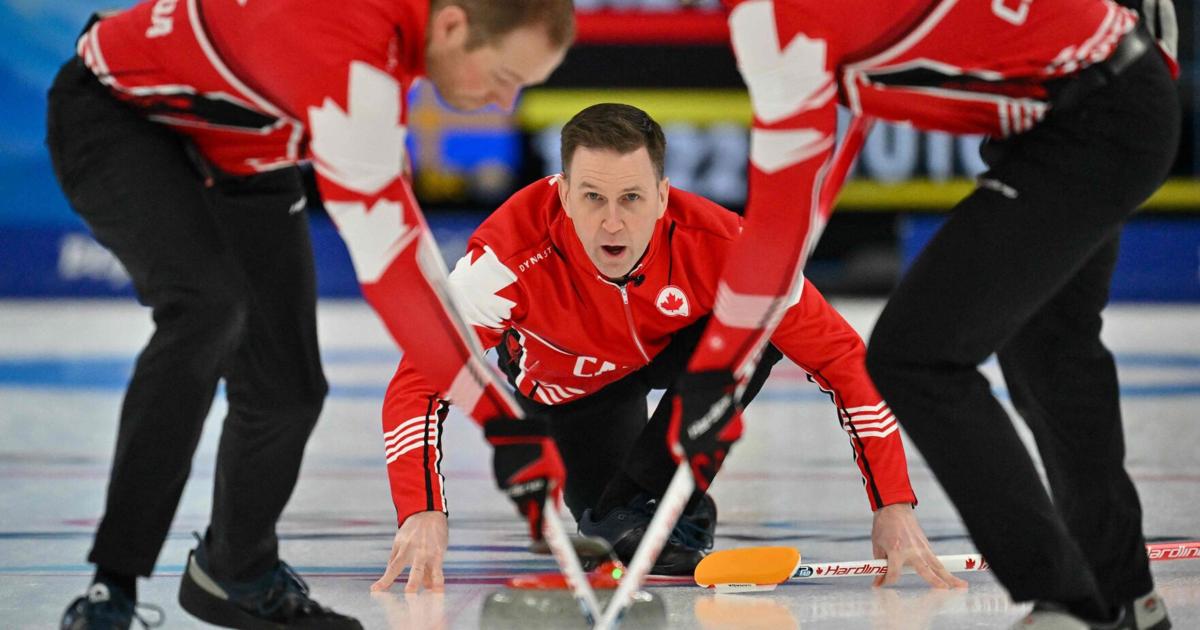
Now retired, the six-time Brier champion and Olympic gold medallist shares his thoughts on Broomgate.
Brad Gushue smiles when it is suggested that he’s the guy who ruined curling, at least at the elite level.
It was Gushue’s foursome that learned that spending more time in the gym, and less at the Brier Patch, was a recipe for success. He turned the “nightclub sporting circuit” of men’s curling into more of a business.
“There’s some validity to that statement,” Canada’s most decorated curler tells the Star. “When I first started curling, curling was in a different era. It was very much a social game. You know, let’s go play the game, be serious, try to win, but after the game you’re going to drink and party with all the curlers.
“It was a lot of parties, a lot of late nights, a lot of alcohol, a lot of dancing, a lot of stuff that goes with it.”
Curling still has that reputation at the club level. But it has changed at the elite level, no doubt thanks to Gushue’s influence.
A look at the cover of Brad Gushue’s memoir titled “Gushue: The making of a champion.”
The St. John’s native didn’t love being away from home, and he wasn’t curling to party. He was curling to win.
“We took a different approach,” he says. “I didn’t love being away from my family and not feeling like I was giving it 110 per cent. The partying for me was easy to step away from. You want to eat right, exercise. And we did that, and we got mocked for a couple of years.
“And then all of a sudden you have success and people are saying, ‘What are they doing different?’”
Other teams took up the fitness and nutrition mantle.
“Now we’re at the point where every team out there that’s in the top 20 is doing what we were doing 20 years ago. People have caught up. It showcases how good the curling is. But it’s definitely changed the atmosphere around curling. Curlers don’t partake in the partying as much as they used to.”
Newfoundland and Labrador’s Brad Gushue pictured competing at the 2007 Brier in Hamilton.
That cultural shift in the elite curling world is one of many themes and stories Gushue explores, with the help of sportswriter Stephen Brunt, in his memoir: “Gushue: The making of a champion,” published by Penguin Random House. The two wrote the book over the course of the 2025-26 season, Gushue’s final year curling.
“It was somewhat therapeutic for me, to be quite honest, because I really struggled over the last couple of years with this retirement thing,” he says. “I knew it was time. Curling has been so central in my life, my north star, that I was like: How do I get rid of this thing in my life, how do I walk away from it?
“So for me to have the opportunity to talk about some of the great moments, also talk about some of the s—-tier moments, and some of the things that affected me and changed me as a person, just getting those things off my chest felt really good.”
Gushue, now 46, arrived at the senior national level in 2003, turning Newfoundland into a Brier powerhouse for more than two decades. He won the national title six times, the most by a skip. The only Brier he missed was in 2006, when the timing conflicted with the Turin Winter Olympics, where he won gold for Canada. It was a harrowing year for him; his mother was battling cancer and he had to be convinced by others to keep curling instead of staying home.
“It was very hard,” he says. “The way my mind worked, I don’t deal with that stuff very well. So I dug deeper into curling and got hyper focused. I put on blinders.”
Brad Gushue holds up six fingers to represent his sixth championship after winning the Brier in 2024.
Gushue also introduced the idea of directional sweeping, a technique where sweepers use the broom to guide the path of the stone rather than just melt the ice to control the distance.
It’s a development he’s not a fan of.
“I wish it went away. I feel guilty having brought it to the game,” he says. “But somebody else would have. I’m not claiming we’re smart enough, but we were just aware enough to figure it out. I think it’s terrible for the game and made the game too easy at the elite level.”
It started with the Broomgate scandal, when Gushue’s team was among those that used a broom, now banned, with fibres that interacted with the ice surface in such a way to affect the curl of the rock. Sometimes it was curling more than would be typically anticipated, sometimes less.
“We would see athletes miss the broom by six or eight inches (aim wide, in other words). At our level, that’s huge. But the directional sweeping could make up for it and they would make shots.”
Curlers with less talent, in other words, would make better shots. Gushue didn’t think that was right and had his team use the now-banned brooms to point out how these particular brooms were changing the game. He took heat for using the brooms, but made his point.
“We just felt the game should be about throwing, with a little bit of sweeping, as opposed to a lot of sweeping and a little bit of throwing.”
Though a particular broom and its fibres are banned, directional sweeping remains part of the game.
“People learned the techniques that get the rock to curl,” he says. “Now teams aren’t looking so much at what you can do shooting wise, but who’s the biggest, strongest most fit guys that we can get playing lead and second.”
There’s a debate at the club level, though, on whether directional curling makes any impact at all.
“When I watch club curling, and see them do it, I think they’re probably hurting (the shot) more than they’re helping,” Gushue says. “There is a feel to it, and you can figure it out, and practise it, but if you’re just out there once a week, you’re probably going to mess up as many as you’re going to take.”
An emotional Brad Gushue, pictured following a loss to Brad Jacobs and Team Canada at the Montana’s Brier Canadian men’s curling championship in March.
Gushue retired last year, losing in the Brier semifinal in his home of St. John’s. He hasn’t thrown a rock since.
“I don’t intend to throw another rock,” he says.
The reason: He’ll end up frustrated.
“If I try to curl now once a week, I’m going to have the expectations of prime Brad Gushue, it’s not going to be that. And the competitive switch is going to flick and I’m not going to have anything to back it up. Then I’ll get pissed and go home unhappy.”
These days, Gushue finds himself looking for what’s next. Coaching, he says, is not really for him, outside of coaching his daughters. In May, he accepted a high-performance director position with USA Curling, where he can still work from home while offering guidance and strategy to American athletes and coaches. And he’s giving broadcasting a chance this season.
“I love talking curling,” he says. “I feel like I can help people understand the game better. I felt like it was a good fit. I just want to try different things and see what sticks.
“Curling, like I said earlier, was my north star. Every decision I made was how was it going to impact me when I got on the ice. That’s gone now. I want to find that next north star, something to guide me. I have felt a little lost in what that passion and purpose is going to be. I haven’t found it yet.”
Error! Sorry, there was an error processing your request.
There was a problem with the recaptcha. Please try again.
You may unsubscribe at any time. By signing up, you agree to our terms of use and privacy policy. This site is protected by reCAPTCHA and the Google privacy policy and terms of service apply.
Kevin McGran is a Star sports reporter based in Toronto. Follow him on Bluesky @kevinmcgran