Carney government holds immigration targets steady, allows 200,000 temporary residents to apply for permanent status - Toronto Star
The Carney government will hold immigration levels steady in the coming year, while also allowing as many as 200,000 temporary residents to make Canada their permanent homes.
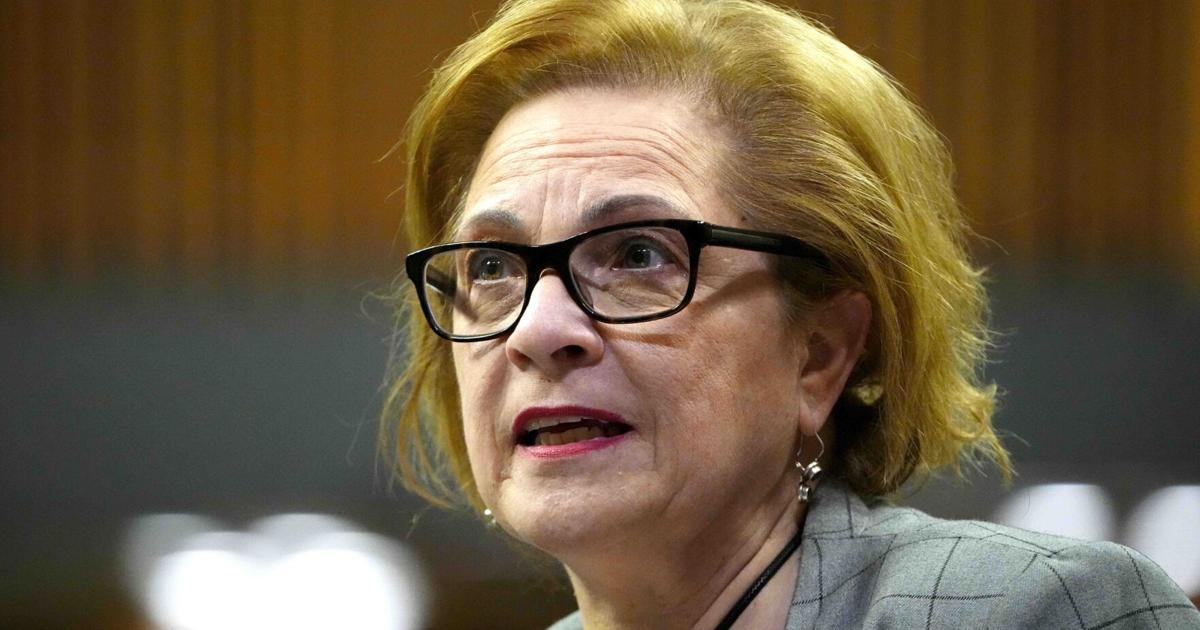
Immigration, Refugees and Citizenship Minister Lena Diab speaks in the House of Commons on Nov. 3, 2026.
OTTAWA — The Carney government will hold immigration levels steady in the coming year, while also allowing as many as 200,000 temporary residents to make Canada their permanent homes.Despite speculation that the government was ready to reverse course after two years of steep immigration cuts, its budget released Thursday said 380,000 people would be admitted as permanent residents in this fiscal year, the same number as last year.The budget said that level would be maintained through 2029, and that the number of temporary residents, including students and workers, will be held at 370,000 for the next three years.The government will also allow up to 200,000 temporary residents — people in Canada on work or study permits already, for example — to transition to permanent status.It made a similar move last year, granting permanent residence to 148,000 foreign workers and people who have already been granted asylum in the country.“We are attracting the talent that our growing industries need, supporting communities and families, and retaining the Canadian tradition of welcoming those fleeing conflict, while ensuring we keep immigration levels at a sustainable level,” Finance Minister François-Philippe Champagne said.Prime Minister Mark Carney and Immigration Minister Lena Diab had both recently signalled that the government was eyeing a “controlled increase” of the population.But the Liberals were balancing a public still wary of a return to high immigration, the labour requirements of Carney’s ambitious growth agenda, and lobbying by businesses and the post-secondary education sector to restore access to foreign workers and international students.Last month, the Conservatives called on the government to implement temporary resident exit tracking and further reduce permanent residency admissions, among other demands.“Conservatives will vigorously oppose any attempt by Mark Carney to raise immigration levels and will push him to decrease them,” Conservative MP and immigration critic Michelle Rempel Garner wrote on social media.“The immigration system must be wholly repaired before the federal government can even remotely consider raising levels. Canada’s social and economic infrastructure has not kept pace with immigration levels, and Mr.Carney’s announcements and lack of real results have not changed that.”After a decade of record-high intake targets under Justin Trudeau that contributed to a housing crisis, strained health care and eroded public confidence in immigration, Ottawa in 2024 started slashing the number of new permanent and temporary residents it would admit and tightening the rules for those already here.Carney campaigned in 2025 on a promise to “return immigration to sustainable levels.” He pledged to reduce the share of temporary workers and international students to five per cent of the population by the end of 2027 while maintaining permanent resident admissions to under one per cent of Canada’s population annually from 2028 onward.Lower immigration has offered some relief to the housing market in terms of vacancy rates and lower rents, and improved GDP per capita, while the post-secondary education sector has struggled with revenue loss, program cancellations and layoffs. Businesses, especially in manufacturing and hospitality, and those in smaller communities have complained about difficulties finding workers.Amid a trade war with the U.S. and great uncertainty, the government has announced infrastructure and nation-building projects to rebuild the Canadian economy.“We have an ambitious agenda,” Diab told reporters at a news conference earlier in October to announce newchanges to skilled immigrant selection. “We need people from outside the country to come and fill gaps that we cannot fill for the next decade.”While the government has reined in new arrival numbers, the immigration system is still plagued by persistent backlogs, constantly changing rules and a critical lack of data on the hundreds of thousands of temporary residents already here.According to Statistics Canada, the share of temporary resident population still stands at 6.7 per cent of the country’s nearly 42 million people.As of the end of August 2026, the Immigration Department’s website showed there were 715,340 permanent residence applications in the system — 256,555 in the economic class, 167,170 awaiting family reunification, and 291,615 resettled refugees and people granted asylum in Canada — as well as 327,125 citizenship applications.In addition, 365,425 temporary resident applications were pending — 28,440 for study permits, 25,995 for work permits and 310,990 for visitor visas.
Error! Sorry, there was an error processing your request.
There was a problem with the recaptcha. Please try again.
You may unsubscribe at any time. By signing up, you agree to our terms of use and privacy policy. This site is protected by reCAPTCHA and the Google privacy policy and terms of service apply.
Ryan Tumilty is an Ottawa-based reporter covering Parliament Hill. Reach him at rtumilty@thestar.ca and follow him on X: @ryantumilty.
Nicholas Keung is a Toronto-based reporter covering immigration for the Star. Follow him on Twitter: @nkeung.