
Cardiologist Warns About “Commotio Cordis,” Sudden Cardiac Arrest from Chest Impact First 3 Minutes Are Critical - Thairath English
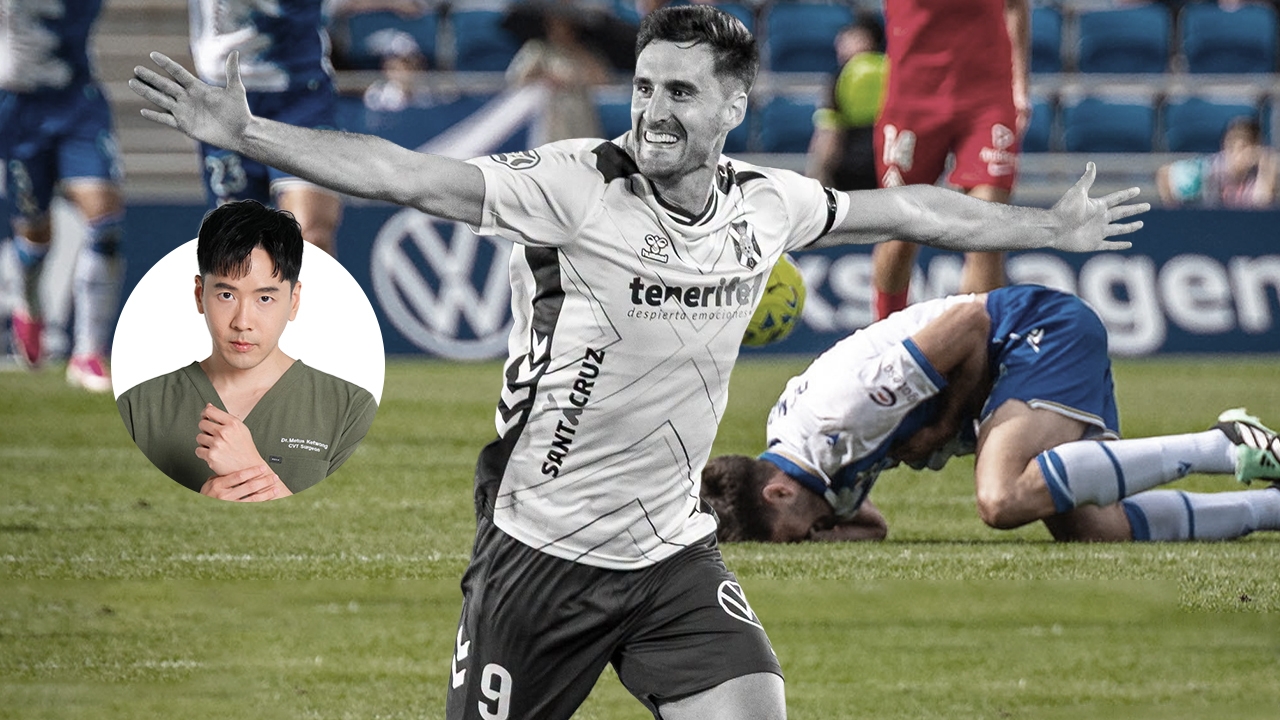
A cardiologist warns about “Commotio Cordis,” a condition causing sudden cardiac arrest from a chest impact, revealing that the first 3 minutes are decisive for survival.
Following the death of 30-year-old Tenerife striker Jesús de Miguel after a violent collision with FC Andorra goalkeeper Jesús Ovono during Spain's Segunda División, Dr. Methus Ketwong, a cardiothoracic surgeon and owner of the Facebook page “Bad Fat with Dr. Methus,” published an article commenting on the incident involving these players in Spain’s second-tier football competition.
Dr. Methus provided medical insight about a condition called “Commotio Cordis,” one possible cause for such events, though it is not a confirmed conclusion in the case of the player involved.
Commotio Cordis occurs when a blow to the chest directly over the heart disrupts the heart’s electrical system severely, causing ventricular fibrillation (VF), which prevents the heart from pumping blood effectively. The affected person may lose consciousness within seconds.
What is frightening is that this condition can happen to individuals with a normal heart structure and no underlying heart disease, and it does not require a severe impact that fractures ribs. The key factor is the timing of the blow, which must occur during a very brief window when the heart is electrically vulnerable.
Data from U.S. patient registries show most cases occur in males with an average age of about 15 years, often during sports involving balls or hard equipment like baseball, hockey, and lacrosse. However, football and contact sports also carry risk.
The most important factor is prompt life-saving action.
Dr. Methus stated that rapid CPR and use of an automated external defibrillator (AED) significantly improve survival chances. Data cited indicate that resuscitation within 3 minutes yields about a 40% survival rate, while delays beyond 3 minutes reduce survival chances to around 5%.
He cited the example of Damar Hamlin, an NFL player who collapsed on the field in 2023 after a chest impact, but survived thanks to immediate CPR and AED use, eventually returning to play.
Call emergency number 1669 immediately.
If the person is unresponsive and not breathing normally, suspect cardiac arrest.
Begin CPR with hard, fast chest compressions at 100-120 per minute.
Have someone nearby retrieve an AED quickly.
Turn on the AED and follow its instructions.
Continue CPR as directed until medical personnel arrive or the patient shows signs of life.
Dr. Methus concluded that both professional and amateur sports venues should be equipped with AEDs and personnel trained in CPR because in cardiac arrest every minute counts, and rapid assistance can save a life.
Commotio Cordis is only one possible cause of the incident involving de Miguel; official autopsy results are awaited to confirm the cause of death.
Source:https://www.facebook.com/photo?fbid=122136189993380924&set=a.122099192517380924

