
Brazil election court faces Supreme Court spillover before vote - Valor International
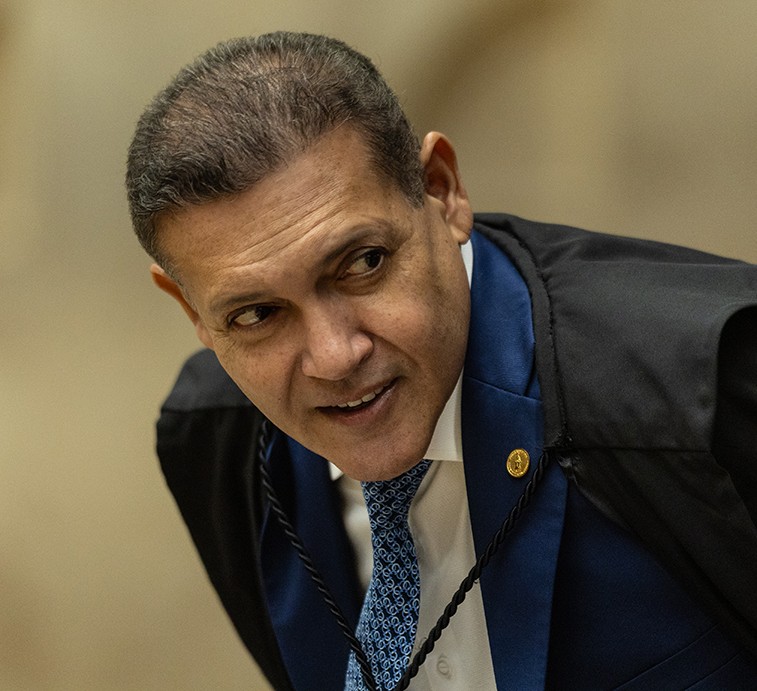
Brazil’s electoral court enters the final days before Sunday’s vote dealing with spillover from divisions within the Supreme Court, an institutional dispute that has competed for attention with issues the court had expected to dominate the campaign, including AI-generated disinformation and the security of electronic voting.
The latest chapter of the conflict reached the Superior Electoral Court, Brazil’s highest court for election disputes, through conflicting rulings by Justices André Mendonça, Flávio Dino and Luiz Fux over the removal of social-media posts linking presidential candidate Flávio Bolsonaro to alleged efforts to strip Our Lady of Aparecida of her status as Brazil’s patron saint.
On Wednesday, the electoral court narrowed Mendonça’s original order in a virtual session. The ruling also reduced the scope of the dispute pending before the Supreme Court.
The episode nevertheless drew criticism. Superior Electoral Court President Kassio Nunes Marques complained this week to Supreme Court Chief Justice Edson Fachin about what he viewed as interference by the Supreme Court in election matters after Dino overturned an order issued by Mendonça.
The dispute may not be over. A petition filed by the Solidarity party asks Dino to bar Nunes Marques and Mendonça from handling campaign-related cases, alleging excessive delays in submitting their individual injunctions for review by the full electoral court.
At the electoral court’s final plenary session before the first round, Nunes Marques defended its record, thanking fellow judges for their work and emphasizing the large volume of cases brought before the court. He highlighted how quickly injunctions involving election advertising had been submitted for full-court review.
According to Nunes Marques, the court has already reviewed more than 200 such cases. At the same time, another 100 await consideration and are expected to be examined in a virtual plenary session by 11:59 p.m. this Friday.
In a gesture of support for the electoral court, Fachin issued a statement Thursday reaffirming “the commitment to democracy and the freedom of choice of Brazilian men and women in an environment of peace.” He said holding elections in the country “is only possible thanks to the tireless efforts of Brazil’s electoral justice system.”
The presidential campaigns have also waged a battle through the courts.
Lula’s legal team has filed 283 cases with the electoral justice system, most involving negative election advertising, premature negative campaigning and irregular advertising. Flávio’s campaign has filed 217 cases, most frequently seeking rights of reply or challenging irregular campaign advertising.
A survey by newspaper O Globo in 2022 counted 189 cases filed from January through October that year by the campaigns of Lula and then-President Jair Bolsonaro.
Among the most closely watched cases this year was one involving the prohibition of deepfakes in election advertising. The dispute arose from an AI-generated video of Jair Bolsonaro shown at the party convention that formally nominated Flávio as its presidential candidate.
The electoral court declined to penalize Flávio in that case but established criteria for determining when AI-generated or manipulated content qualifies as a prohibited deepfake, including the degree of realism and its potential to deceive voters.
Another controversy arose from Nunes Marques’s June order restricting further publication of an AtlasIntel poll. The survey, originally released in May, showed a decline in support for Flávio after revelations that he had asked former Banco Master banker Daniel Vorcaro for money to finance the biopic Dark Horse.
A review of Nunes Marques’s order was suspended after one justice requested more time to examine the case, and it has not yet been concluded. The controversy prompted internal discussions, and the electoral court subsequently adopted requirements for additional methodological information from pollsters that will take effect after the first round.
Court cases over the weekend are expected to focus primarily on election advertising and rights of reply.
Another potential source of litigation is allegations of U.S. interference in Brazil’s election. The Workers’ Party had already asked the Supreme Court to investigate the matter. On Thursday, the Attorney General’s Office also asked the Federal Police and federal prosecutors to investigate alleged funding of conservative groups in Brazil by the Trump administration.
The electoral court is also preparing for possible disruptions to voter transportation because of the effects of El Niño, which have intensified drought in northern Brazil and rainfall in the South. Weather conditions could complicate election logistics.
To prepare for those risks, the court has established a climate situation room and coordinated measures with regional electoral courts to ensure voters can reach polling places.
Preparations include emergency transportation routes, reinforced communication systems, and guidance for election workers on handling emergencies. In the South, contingency plans also allow polling locations to be moved if heavy rainfall affects them.
The electoral court has also established rules governing the Federal Highway Police during voting days under a joint regulation issued with the Ministry of Justice and Public Security on Sept. 18.
The rules cover policing, inspections and patrols on federal highways and require cooperation with election authorities to ensure voters can travel freely to cast their ballots.
They also set conditions for roadblocks, allowing them only when authorities provide advance notice and justification as part of operational planning, or when police encounter a crime in progress.
In 2022, the Federal Highway Police carried out a series of vehicle inspections, particularly in northeastern Brazil. The operations led to allegations that enforcement targeted voters in ways that made it harder for some to reach polling stations.
The electoral court is using other measures for the first time in the 2026 election.
The court has barred the publication and paid promotion of newly generated or altered AI content using the image, voice, or statements of candidates or public figures during the 72 hours before voting and the 24 hours afterward.
The restriction took effect Thursday and runs through Monday. It is intended to reduce the risk of disinformation during the most sensitive period surrounding the election.
This article was translated from Valor Econômico using an artificial intelligence tool under the supervision of the Valor International editorial team to ensure accuracy, clarity, and adherence to our editorial standards. Read our Editorial Principles.
