Ballot measure takeaways: Voters back abortion rights, along with photo ID and citizenship requirements at the polls
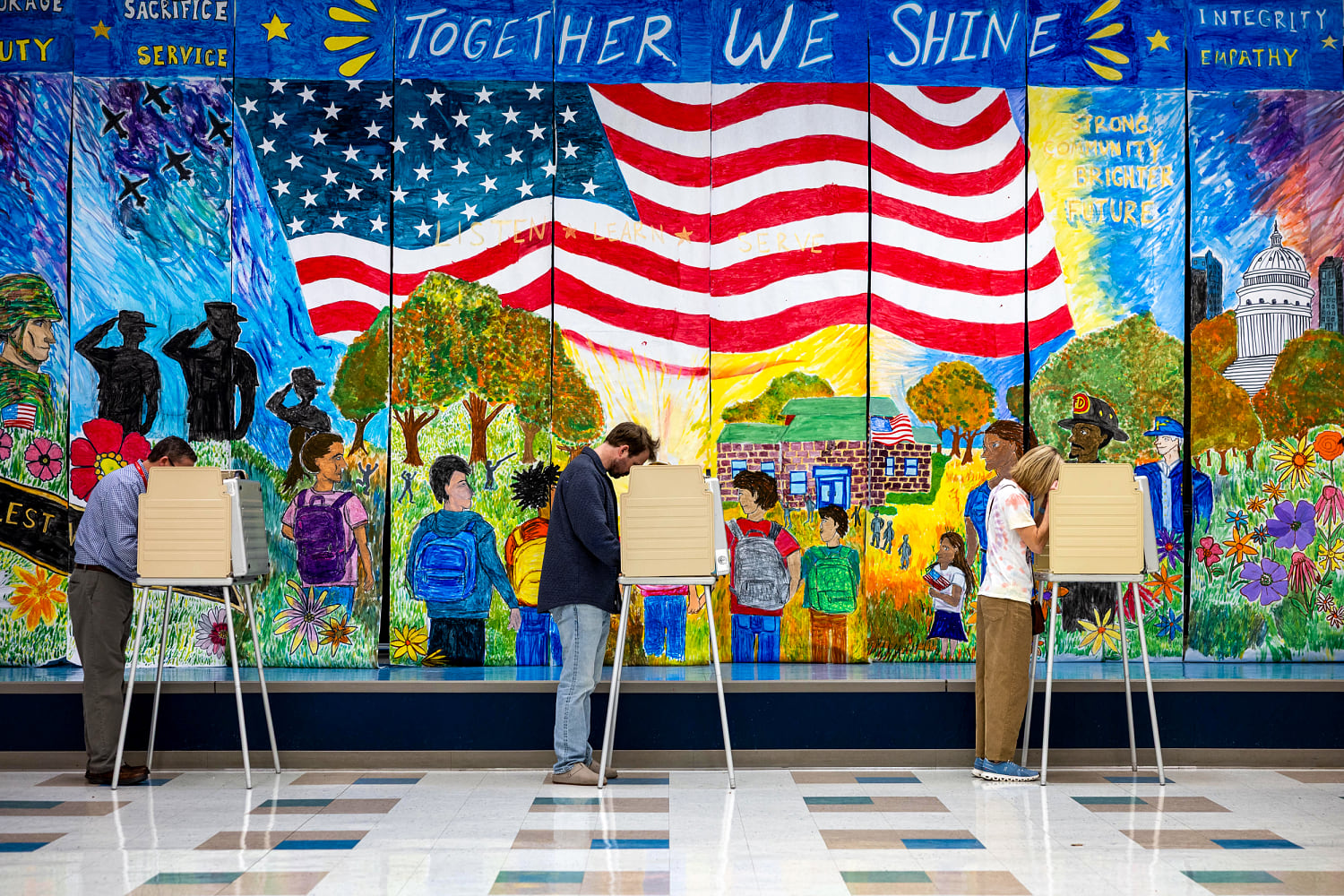
People vote at Robious Elementary School on Election Day in Virginia.Mike Kropf / Richmond Times-Dispatch via GettyShareAdd NBC News to GoogleNov. 4, 2026, 4:24 PM ESTBy Adam EdelmanIn ballot measures across the country Tuesday, voters mostly expressed support for abortion rights, while affirming voter identification requirements and upholding that only U.S. citizens can vote in state elections.
Nearly 150 ballot measures were at stake in more than three dozen states. The most prominent, and expensive, initiative was a proposed billionaire tax in California, but the outcome remained uncertain as votes continued to be tallied Wednesday.
Still, voters directly determined the direction of policies in their states related to other taxes, voting issues, transgender rights and more.
Here is a roundup of the most notable ballot measure results.
Four ballot measures asked voters to amend their state constitutions in ways that would affirm or retract abortion rights.
In Nevada and Virginia, where abortion access through fetal viability is legal, voters weighed in on ballot measures that would enshrine those rights in each state’s constitution.
Voters in both states overwhelmingly passed those initiatives by a margin of at least 24 percentage points. In Nevada, the vote was the second on the measure because the state constitution requires citizen-initiated constitutional amendments to pass in two consecutive general elections.
In Missouri, voters rejected a GOP-backed ballot measure that proposed stripping language enshrining abortion rights from the state constitution that had been added in 2024. That year, voters approved a constitutional amendment to protect abortion rights until fetal viability.
However, in ruby-red Idaho — where abortion is almost completely banned — voters roundly rejected a ballot measure that would have created a statutory right to an abortion through fetal viability.
In Washington state, voters rejected a ballot measure that would have repealed the state’s so-called millionaires tax — a 9.9% tax on annual income over $1 million that Democratic lawmakers enacted just earlier this year.
Meanwhile, California’s billionaire tax, on the ballot as Proposition 40, was trailing by 11 points with 60% of the expected vote in.
Voters in nearly a dozen states also decided on ballot measures that mostly reiterated existing laws regarding voter identification requirements and barring noncitizens from casting ballots in state elections.
FOR SUBSCRIBERSRepublicans bet the House on redistricting, but Democrats swept through the seats they targetedFOR SUBSCRIBERSWhat Democrats plan to do with House majority: Investigate Trump and tackle affordabilityFOR SUBSCRIBERSIran says Americans rejected Trump’s war as the world reacts to the midterms rout FOR SUBSCRIBERSVoters rejected Trump’s ‘booming’ economy narrative and the AI that underpins it FOR SUBSCRIBERS‘No one is going to outwork Hakeem’: Jeffries’ rise to the cusp of history has been rapidFOR SUBSCRIBERSAI chatbots cited dozens of spoofed campaign websites before midterm elections, researchers sayFOR SUBSCRIBERSWhy Devin Booker is unlike almost any superstar in the NBAFOR SUBSCRIBERSThe Data Dive: Steve Kornacki charts where Democrats sliced into GOP strongholdsFOR SUBSCRIBERSElection takeaways: The Trump coalition implodes. What comes next?FOR SUBSCRIBERS‘Everything is going to change’: Republicans begin grappling with how they lost so badly FOR SUBSCRIBERSThe battlegrounds our journalists are reporting fromFOR SUBSCRIBERSThe midterms are over, and Trump is over the midtermsFOR SUBSCRIBERSWhat is rhabdo? Rare muscle condition linked to marathon runner’s deathFOR SUBSCRIBERSDOJ is deploying a record number of monitors on Election Day FOR SUBSCRIBERSHow to watch election night: Key races, poll closing times, bellwether campaigns and moreSlide 1 of 1West Virginia, South Dakota, Kansas, Alaska and Arkansas voters all approved constitutional amendments affirming that only U.S. citizens can vote in state elections. The laws are expected to prevent any local jurisdictions from moving to allow noncitizens to vote in local elections, which some municipalities have sought to do in recent years.
FOR SUBSCRIBERSRepublicans bet the House on redistricting, but Democrats swept through the seats they targetedFOR SUBSCRIBERSWhat Democrats plan to do with House majority: Investigate Trump and tackle affordabilityFOR SUBSCRIBERSIran says Americans rejected Trump’s war as the world reacts to the midterms rout FOR SUBSCRIBERSVoters rejected Trump’s ‘booming’ economy narrative and the AI that underpins it FOR SUBSCRIBERS‘No one is going to outwork Hakeem’: Jeffries’ rise to the cusp of history has been rapidFOR SUBSCRIBERSAI chatbots cited dozens of spoofed campaign websites before midterm elections, researchers sayFOR SUBSCRIBERSWhy Devin Booker is unlike almost any superstar in the NBAFOR SUBSCRIBERSThe Data Dive: Steve Kornacki charts where Democrats sliced into GOP strongholdsFOR SUBSCRIBERSElection takeaways: The Trump coalition implodes. What comes next?FOR SUBSCRIBERS‘Everything is going to change’: Republicans begin grappling with how they lost so badly FOR SUBSCRIBERSThe battlegrounds our journalists are reporting fromFOR SUBSCRIBERSThe midterms are over, and Trump is over the midtermsFOR SUBSCRIBERSWhat is rhabdo? Rare muscle condition linked to marathon runner’s deathFOR SUBSCRIBERSDOJ is deploying a record number of monitors on Election Day FOR SUBSCRIBERSHow to watch election night: Key races, poll closing times, bellwether campaigns and moreSlide 1 of 1The initiatives appeared on the ballot amid the Trump administration’s broader crackdown on noncitizen voting, which is extremely rare.
Voters in Ohio, North Carolina and Nevada passed measures to add to their state constitutions the requirements that residents present photo ID when voting in person.
In Virginia, voters approved a Democratic-backed measure to enshrine in their state constitution the restoration of all felons’ right to vote after their release from prison. In Massachusetts, voters rejected a measure that would have replaced party primary elections with a top-two all-party primary.
The mid-decade redistricting war also extended to the ballot, with voters in two states siding with Democrats.
In Missouri, voters blocked a GOP-drawn congressional map from going into effect after a long-running legal battle. The new lines sought to carve up one of the state’s two Democratic-held districts.
Maryland voters, meanwhile, approved a constitutional amendment paving the way for Democrats to redraw their state’s congressional map. The state has just one district represented by a Republican.
Republicans and conservative groups also placed a series of measures targeting transgender individuals on the ballot in several states, including Arizona, Colorado and Washington.
Several were still too early to call as of Wednesday, but in Arizona, voters approved a GOP-backed measure requiring schools to designate sports and intramural teams as male, female or coed based on athletes’ sex assigned at birth.
Adam EdelmanI cover state legislatures, politics and policy — and how those topics coalesce into and intersect with national political trends. Given what state lawmakers have focused on in recent years, my coverage areas tend to veer into reproductive rights, voting rights and education policy. I was born and raised in Milwaukee, and I try to make my native state proud by covering as many of its fascinating political stories as I can.