Au Kam San: Macau’s ex-lawmaker who called ‘bluntly’ for democracy - The Straits Times
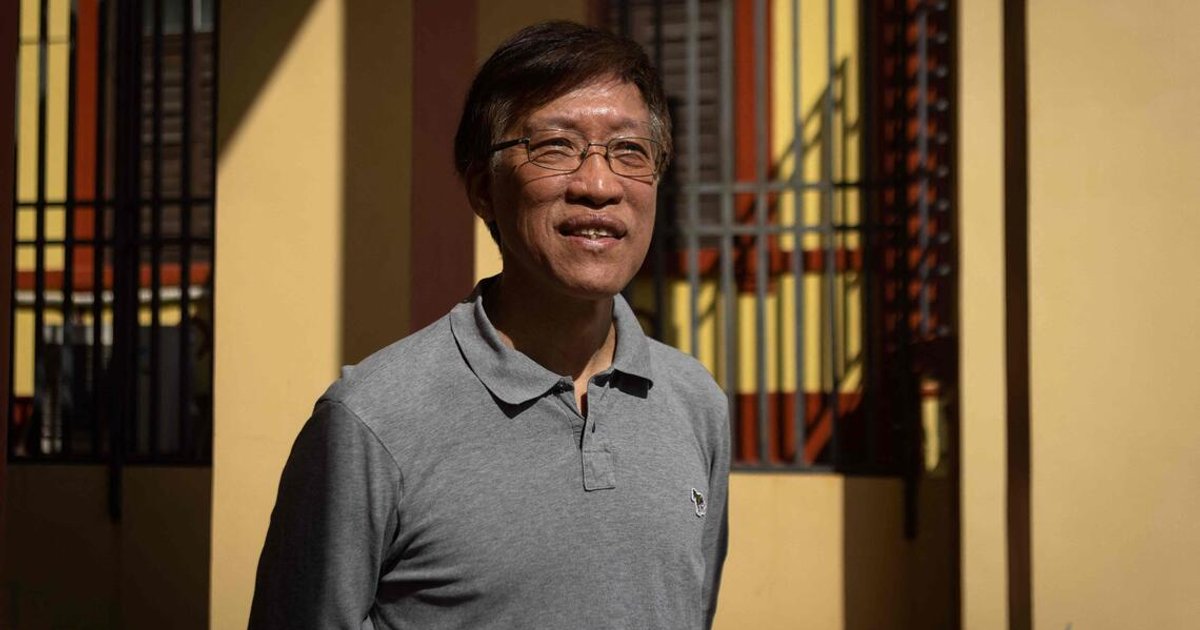
Au Kam San was tried behind closed doors, which observers say was unprecedented in the city, and the hearings lasted just three days.
MACAU – Former Macau lawmaker Au Kam San was once a leading figure in the Chinese casino hub’s fight for democracy, but will spend the next decade behind bars after he was found guilty on Nov 6 of “subversion”.
Au, who was sentenced to 12½ years in jail, was also accused of “building links with external groups and individuals” and “breaching confidentiality”.
His trial is the first case under the national security law, which was enacted in 2009 and toughened in 2023, in the former Portuguese colony.
Au was tried behind closed doors, which observers say was unprecedented in the city, and the hearings lasted just three days.
Au initially saw teaching as his life’s work, but he switched to politics following the 1989 Tiananmen Square crackdown in Beijing, believing that Macau should become open and democratic.
For decades, he helped to organise annual vigils to commemorate the victims of Tiananmen.
Au’s political career began in 1993 when he was elected as a municipal councillor.
Between 2001 and 2021, he was elected to Macau’s legislature five times and was one of the longest-serving lawmakers from the small pro-democracy camp.
“As a native Macau resident, I see many problems in society in my daily life, and there is a great need for someone to stand up and hold the authorities to account,” Au told a TV programme in 2013.
Jason Chao, a former activist ally, told AFP that Au was viewed in Macau as being “unafraid to stand up to those in power”.
He uncovered several corruption scandals involving officials during the 2000s, according to Chao.
In the eyes of former colleagues, Au had two contrasting sides: he would deliver fierce criticisms in the legislature but use gentle persuasion on the streets to encourage public participation in politics.
Eilo Yu, an expert in Macau and China politics, said Au was seen as someone who “speaks rather bluntly”.
In 2019, the Chinese financial hub of Hong Kong saw huge, sometimes violent protests, and the ensuing crackdown also chilled the political climate in neighbouring Macau.
Au said in 2021 that he would not run for re-election, though he said he would stay in Macau.
That year, the Macau authorities banned the Tiananmen vigil co-organised by Au, saying the event would “incite subversion”.
Macau later expanded the scope of its national security laws in 2023, which officials said was to prevent foreign interference.
Au conceded that Macau had made little progress towards democracy, but said he believed in “sowing seeds and giving them a chance to grow”.
“Even though we are in a bitter winter, if there are changes to the external environment, these seeds in Macau may yet have a chance to sprout and forge a new path towards democracy,” Au told AFP in 2024.
He continued to speak out on political and social issues after his term as lawmaker ended.
Days before his arrest in July 2025, Au condemned Macau’s national security law for “overturning the principle of the presumption of innocence”, in response to the authorities disqualifying some election candidates.
Au wrote on social media at the time: “Ironically, it is precisely those defined as ‘unpatriotic’ who are the ones most capable of criticising social ills, speaking out most boldly and advocating most vigorously for the people, whether in the legislature or in society at large.” AFP