Analyst: DA gains could leave ANC fighting for control of Gauteng, Nelson Mandela Bay metros - IOL
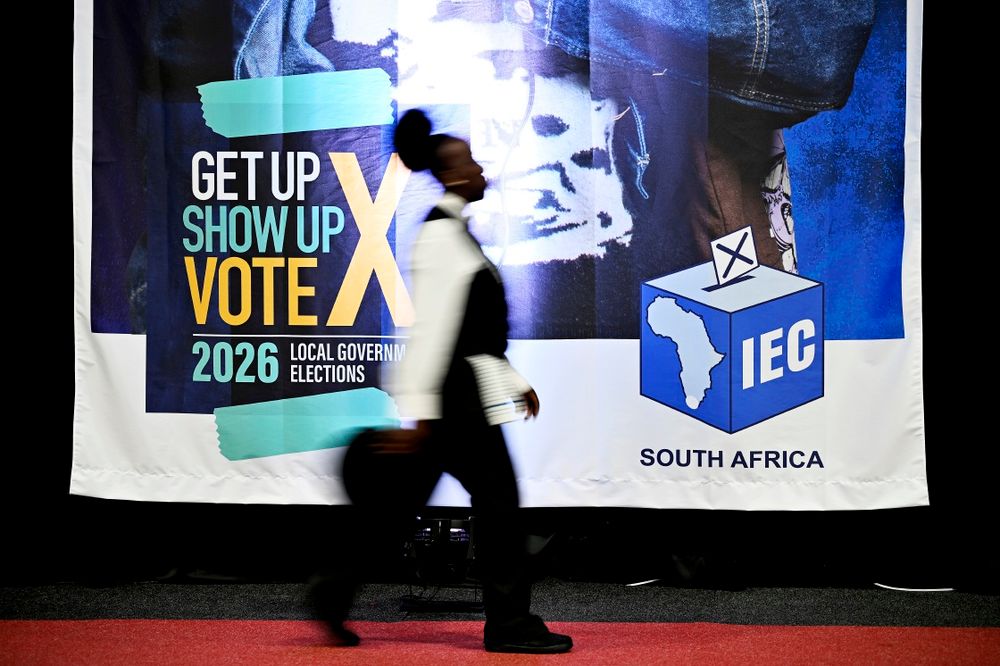
The ANC is heading into coalition talks with a weak hand in Gauteng’s metros and Nelson Mandela Bay, with projections putting the gap between it and the DA at about six percentage points.
The Council for Scientific and Industrial Research (CSIR) put the ANC’s national vote share at 31.7%, with the DA trailing on 25.7% in the municipal elections.
“The gap will indeed be 6%, a gamechanger,” Louw Nel, senior political analyst at Oxford Economics Africa told IOL.
In the 2021 local government elections, the ANC won 45.59% of the vote and the DA 21.62%.
Nel said the early results pointed to a chastening day for the ANC, which was not expected to win an outright majority in any of the country’s eight metros.
“The picture may yet change as more votes are counted, but current projections point to disaster for the ANC,” he said.
He said the DA was set to finish first in five or possibly six metros, and was leading in Johannesburg, Tshwane and Ekurhuleni, as well as in Nelson Mandela Bay and Mangaung.
The ANC was ahead in Buffalo City but was set to lose its majority there for the first time, while the MK Party was leading the DA in eThekwini, where counting was slow, Nel said.
The ANC remained ahead with 32.22% of the vote, while the DA had secured 27.29% and the MK Party 6.88%, with 37% of ballots counted as of 2.12pm on Thursday.
The ANC had won outright control of 11 of the country’s 213 councils, the DA two and the MK Party one, with 37 councils hung and 161 still to be calculated.
Voter turnout rose sharply compared with 2021, with 15.9 million of South Africa’s 29.2 million registered voters casting their ballots on Wednesday.
That puts turnout at about 54%, compared with 45.8% in 2021.
Nel said the DA had greatly improved its position in the Gauteng metros and Nelson Mandela Bay, and had held firm in its Western Cape stronghold.
He said the significant gains expected from the Patriotic Alliance (PA) and other community-based parties had not materialised, especially in Cape Town.
The DA was leading the ANC in Gauteng by about 17 percentage points, Nel said.
He said a DA-ActionSA coalition was emerging as an option in Gauteng, made possible by ActionSA’s strong showing in Tshwane, where it was second with nearly 25% of the vote.
“The early numbers suggest a coalition is possible, if the two parties can find a way to set their much-publicised animus aside,” Nel said.
He said Nasiphi Moya’s term as Tshwane mayor had boosted ActionSA’s profile, while Herman Mashaba’s party had performed well in Gauteng’s townships, making it a potential kingmaker in all three metros.
Nel said the ANC was on the back foot.
“The ANC’s negotiating position in the Gauteng metros and NMB is not a strong one. They also suffered embarrassment in Mangaung and Buffalo City, the ANC’s last stronghold,” he said.
He warned that the fallout could reach the Government of National Unity (GNU).
“The GNU could suffer if the ANC is frozen out of coalition negotiations in most metros,” Nel said.
He said the situation in eThekwini was unchanged, with the DA, ANC and IFP needing to work together to keep the MK Party out of power.
In KwaZulu-Natal, the IFP was doing well in the north of the province and the MK Party was dominating the south, but the MK Party had disappointed outside the province, Nel said.
He said support for the EFF appeared to have declined in most places, while smaller parties had largely failed to win over voters, with the PA fourth nationally on 3.7%.
Dr Morné Mostert, a strategic foresight adviser and commissioner on the National Planning Commission in the Presidency, said a large number of hung councils was likely as the political landscape became more crowded.
“As our political architecture diversifies, one scenario is a large number of hung councils,” Mostert said.
He said coalitions involving the MK Party, which is contesting its first local elections, would be new territory for South Africa, and named the Afrika Mayibuye Movement as one of the wild cards.
Mostert said how parties responded to the results would be a key test of the country’s democracy.
“One sign of democratic health will be that the elections are declared free and fair, and that the results are accepted by all parties,” he said.
He said social unrest in protest against the results would be a disappointing signal.
Mostert said 546 political parties had taken part in the elections, and that the 2029 general elections could see parties consolidate as they formed alliances.
“Having diverged, we can expect a reactive convergence in 2029,” he said.
Both analysts said investors would be watching how councils were formed.
Mostert said peaceful formation of councils would be a key sign of stability to the international community, especially investors.
“I think the markets are adopting a wait-and-see approach with many investors understanding that a clear picture could only emerge in two weeks’ time once councils are constituted,” Nel said.
Final results will only be declared after 5pm on Friday, the deadline for parties to lodge objections.