Analysis: New poll revives prospects of first-round Lula win - Valor International
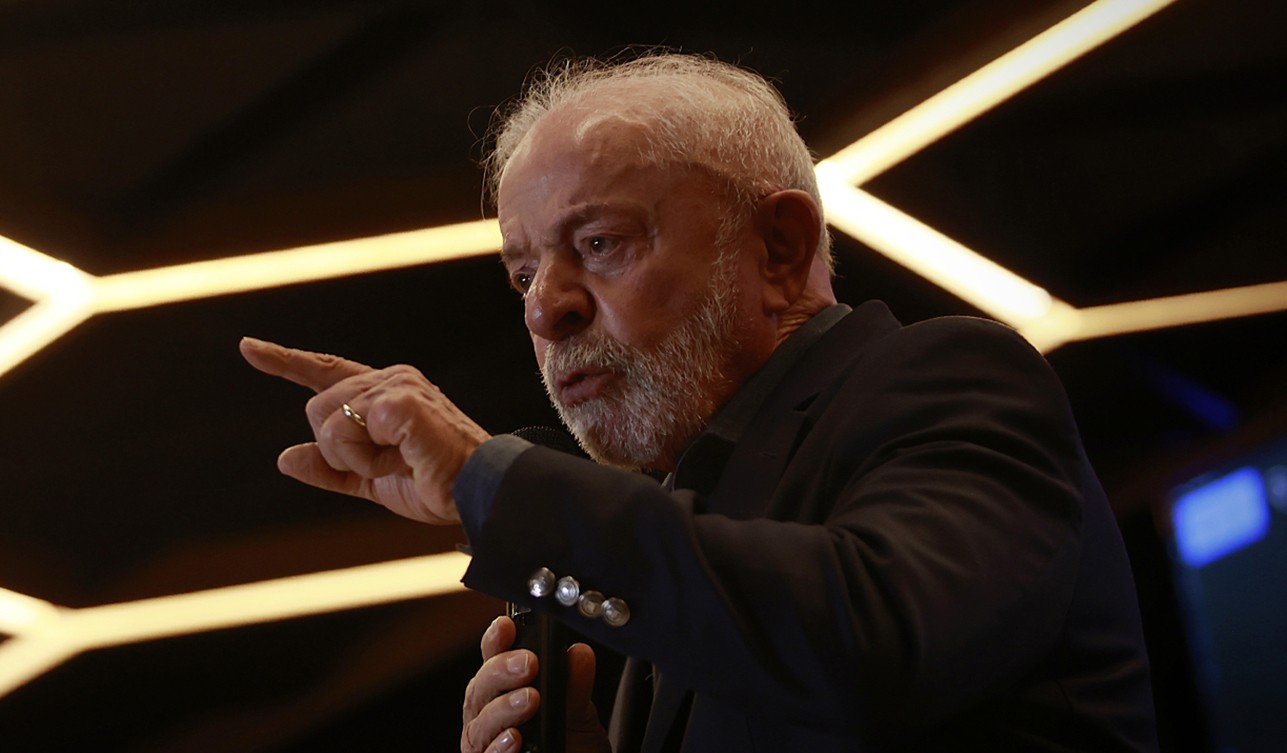
A new Quaest poll has revived the possibility that President Lula could secure re-election in the first round, although uncertainties about undecided voters and turnout still cloud that scenario.
Lula now commands 40% of voting intentions, compared with 28% for Flávio Bolsonaro of the Liberal Party (PL) and a combined 13% for the rest of the field. In Quaest’s June survey, Lula polled 39%, while all other candidates together reached 42%. However, questions remain about the durability of the latest result, as the share of undecided voters edged up from 10% to 11%.
Lula leads across every demographic group except among evangelical voters and residents of Brazil’s South. His rejection rate has fallen 5 percentage points since April, though it remains high at 50%. Flávio Bolsonaro’s rejection rate, meanwhile, has climbed steadily to 57% from 52% over the same period. Approval of Lula’s administration has also improved, reaching 48% against 47% disapproval—the first time in a year that positive ratings have overtaken negative ones.
This follows a familiar pattern among Brazilian incumbents seeking re-election: approval ratings tend to rise as the election year progresses, particularly once the campaign gains momentum. The trend has been observed in every presidential re-election race since the officeholder was first allowed to seek a second consecutive term in 1998.
Lula has experienced first-round optimism fading in the past. In 2006, he was on track for an outright win until a late-campaign scandal emerged involving an attempt to buy dossiers targeting opposition candidate José Serra for governor of São Paulo. Similarly, in 2022, some polls showed Lula above the runoff threshold; a Datafolha survey, for instance, indicated 48% of voting intentions, compared to 34% for Jair Bolsonaro and 13% for all other candidates combined. When considering valid votes, Lula exactly reached 50%.
The final outcome has shown remarkable consistency across Lula’s presidential victories. Measured against the total number of eligible voters rather than valid votes, he received 34.2% in 2002, 37.1% in 2006, and 36.6% in 2022. Former President Dilma Rousseff won 35.1% in 2010 and 30.3% in 2014.
Turnout has traditionally worked against the Workers’ Party because abstentions tend to reduce its overall vote share. Opinion polls are snapshots rather than forecasts—a distinction at the center of the recent debate sparked by Electoral Court chief justice Kássio Nunes Marques. Polls cannot predict who will actually cast a ballot. Lower-income and older voters, two groups in which Lula currently performs particularly well, are generally more likely to abstain.
Strategic voting also worked against Lula in 2022. Support for Ciro Gomes, Simone Tebet, Soraya Thronicke, and Felipe d’Avila fell sharply compared with polling in the campaign’s final stretch. Together, they received 8% of the total vote—roughly five percentage points below what surveys had suggested and almost exactly matching Jair Bolsonaro’s late surge.
This year, Ronaldo Caiado of the Social Democratic Party (PSD) and Romeu Zema of the Novo party appear particularly vulnerable to strategic voting. Renan Santos, by contrast, draws support largely from voters who reject both Lula and Flávio Bolsonaro, making him somewhat less exposed to that dynamic.
This article was translated from Valor Econômico using an artificial intelligence tool under the supervision of the Valor International editorial team to ensure accuracy, clarity, and adherence to our editorial standards. Read our Editorial Principles.