A Canada-EU partnership makes sense — and not just as a counterweight to two economic superpowers - Toronto Star
Critical minerals could both generate wealth and make Canada more independent.
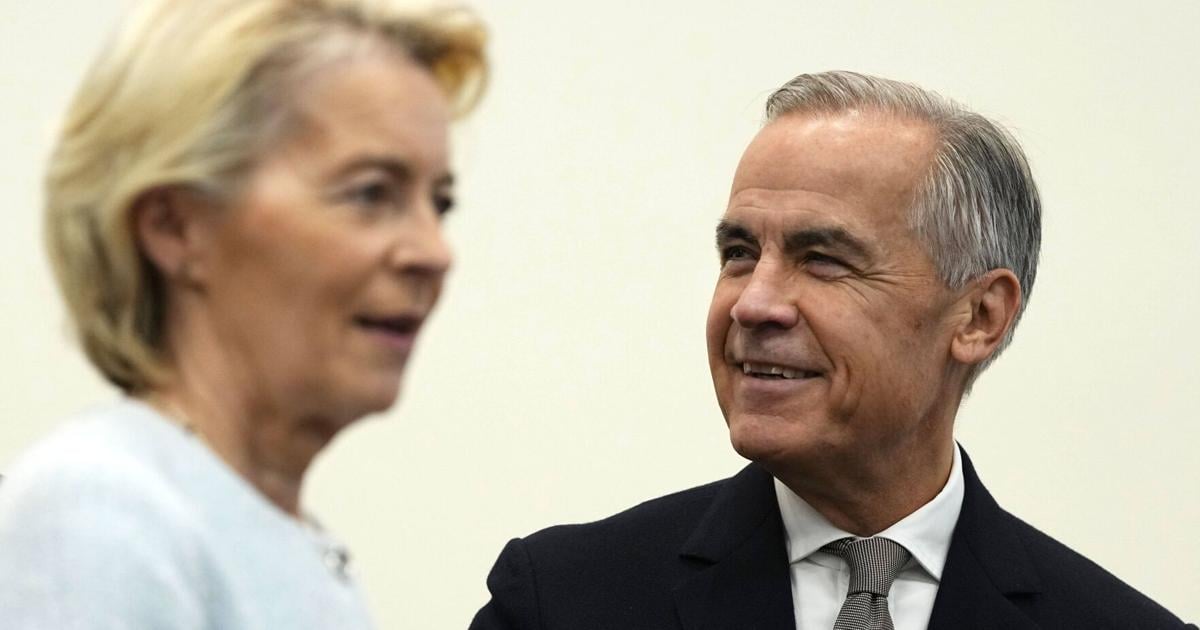
Prime Minister Mark Carney and European Commission President Ursula von der Leyen’s talks regarding closer ties is particularly pertinent to Canada’s vast reserves of critical minerals.
Vince Beiser is the author of Power Metal: The Race for the Resources That Will Shape the Future and the Power Metal newsletter.
When Prime Minister Mark Carney and the European Union’s top officials meet in Montreal later this month, they’ll have metal on their minds. Among other tactics for strengthening the Canada-EU partnership, both Carney and European Commission President Ursula von der Leyen have called recently for increasing trade and investment around critical metals — the basket of minerals needed for the 21st century’s most important technologies, including electric vehicles, renewable energy, digital tech and military weapons systems.
It seems like a no-brainer: Canada has the supply, in the form of some of the world’s biggest reserves of many critical metals. Europe has the demand, with its refineries and high-tech industries. Plus, we share history and culture, already have trade agreements, and are both (at least in principle) committed to decarbonizing our economies. But at the moment, Canada-EU critical metal trade is minuscule — a tiny fraction of what goes on between Canada and the U.S. Changing that will not be easy or quick.
Critical metals, such as lithium, copper, cobalt, nickel and rare earths, are used to make everything from cellphone touch screens to electric car batteries to the motors that drive military drones. Demand for these minerals is exploding worldwide, sparking a global scramble for new sources.
Carney rolled out the measures Thursday as part of a strategy to buffer the Canadian automotive industry from the fallout of the U.S.-led tariff